
Quick Answer: High Tide vs Low Tide – Which Should You Choose?
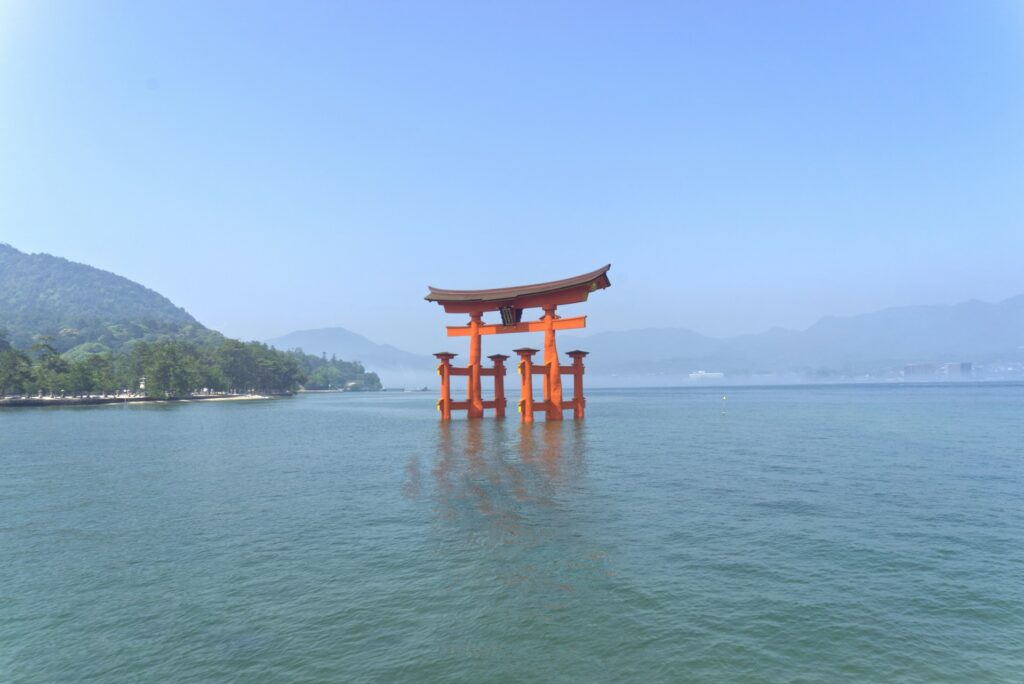
For most first-time visitors, high tide is the safest choice because it gives you the classic Miyajima floating torii gate view. Choose low tide if your main goal is to walk across the exposed shoreline and stand near the base of the giant torii.
- Choose high tide if you want the postcard view of the Miyajima floating torii gate appearing to float on the water. This is usually best for first-time visitors, photographers, and travelers with limited time.
- Choose low tide if you want to walk across the exposed shoreline and feel the scale of the gate up close. This is best for travelers who care more about the physical experience than the classic reflection photo.
- Choose both if you have about 5 to 6 hours on the island and want the most complete Miyajima experience.
As a practical rule, the gate usually looks most “floating” at around 250 cm or higher, while you can usually walk out toward it at around 100 cm or lower. Tide conditions change every day, so check the official Miyajima tide table for your exact travel date before you go.
The local tide table is based on Hiroshima Port data, and conditions around Itsukushima Shrine may shift slightly earlier in practice. Arriving with a little buffer is safer than aiming for the exact listed minute.
If you only have one day for both Hiroshima Peace Memorial Park and Miyajima, do not build the whole day around a perfect tide unless you enjoy planning transport in detail. In that case, a guided Hiroshima-and-Miyajima day tour can be the simpler option.
High Tide vs Low Tide at a Glance
| Decision Point | High Tide | Low Tide |
|---|---|---|
| Best for first-time visitors | Ideal if you want the iconic floating scene you see in photos. | Good if your main goal is to see the gate’s size and structure up close. |
| Best for photos | Excellent for wide scenic shots, reflections, and the shrine-on-water look. | Better for close-up shots showing scale, texture, and detail. |
| Can you walk to the gate? | No. The gate is surrounded by water. | Yes, when the tide is low enough and conditions are safe. |
| Best for a short visit | Works well if the timing matches your ferry and Hiroshima sightseeing schedule. | Works well if your main goal is the walk-up experience. |
| Best with sunset or evening views | Usually better for dramatic water views and reflections. | Less dramatic for the floating effect, but still interesting up close. |
| Footwear | Comfortable walking shoes are fine. | Wear shoes you do not mind getting sandy, wet, or muddy. |
| Risk if your timing is off | You may see the gate in shallow water rather than fully “floating.” | You may not be able to walk out if the water has not receded enough. |
| Best fit for a Hiroshima day trip | Best if you want the iconic view without spending all day on the island. | Best if you can time the tide carefully and want a more hands-on visit. |
High Tide: Best for the Iconic Floating View
High tide is the best choice if your priority is the view most travelers imagine before visiting Miyajima. When the water rises around Itsukushima Shrine, the vermilion gate appears to float offshore, and the shrine buildings feel more dramatic because they sit above the water on wooden stilts.
This is usually the better option for:
- First-time visitors who want the most recognizable version of the scene.
- Photographers looking for wide scenic shots with water around the gate.
- Sunset visitors if high tide lines up with golden hour.
- Travelers on a tight schedule who want a satisfying visit without waiting several hours between tides.
If you want the “floating shrine” feeling too, not just the torii gate, check the tide height before you commit. A tide that is only moderately high may still leave exposed ground around parts of the shoreline.
Low Tide: Best for Walking Near the Gate
Low tide gives you a completely different experience. As the water pulls back, the exposed shoreline lets you walk out toward the giant torii and appreciate how large it is from ground level.
This is the better option for:
- Travelers who care more about scale than reflections.
- Families with older children who can handle uneven ground carefully.
- Close-up photos showing the height, texture, and details of the structure.
- Return visitors who have already seen the classic floating view.
Be careful underfoot. The ground can be uneven, wet, sandy, or slippery. Do not add coins, stones, or anything else to the structure, and keep an eye on the rising tide so you do not stay out too long.
Kai’s tip: The mistake I see travelers make is treating low tide like a normal paved viewpoint. It is still a shoreline, so choose shoes that can handle sand and wet patches, and start walking back before the water visibly closes in around the lower areas.
How to Check the Best Tide Time for Your Date
Do not rely on a generic “morning is best” or “afternoon is best” rule for Miyajima. The best time changes by date, so you need to check the tide table for your exact visit.
- Open the official Miyajima tide table for your travel month and date.
- Look at both the time and the tide height. The height in centimeters matters more than the time of day.
- Aim for around 250 cm or higher if you want the floating view.
- Aim for around 100 cm or lower if you want to walk toward the gate.
- Build in buffer time for the train, ferry, walk from the pier, crowds, and small timing differences around the shrine.
If you are trying to see both high tide and low tide on the same day, check how many hours separate them before committing. Some days work beautifully; other days are awkward for a short Hiroshima day trip.
Kai’s tip: I always tell readers to work backward from the tide height, not from lunch or train convenience. Add time for the walk from the ferry terminal to the shrine area, photo stops with deer, ticket lines, and the fact that the waterfront is rarely empty at the exact moment you want a clean photo.
Can You See Both High Tide and Low Tide in One Day?
Yes, but you usually need about 5 to 6 hours on Miyajima to see the gate both floating in the water and exposed enough to walk near it. If you also want to eat, shop, visit Daisho-in Temple, or go up Mount Misen, a longer island stay is more comfortable.
This is the most rewarding plan if Miyajima is one of your main Japan highlights. It is harder to do well if you are also trying to fit in several timed stops in central Hiroshima on the same day.
If the tide gap is too long, use the time for nearby attractions instead of waiting at the waterfront. If the gap is too short or does not match your schedule, it is usually better to enjoy one tide experience done well rather than rush both.
My Recommendation If You Want Hiroshima and Miyajima in One Day
If your real choice is not “high tide or low tide,” but “how do I fit Hiroshima Peace Memorial Park and Miyajima into one day without losing time on logistics,” I would compare the Hiroshima and Miyajima UNESCO Sites 1-Day Tour before finalizing a DIY plan.
Why I’d book this one:
- It solves the transport problem. You do not need to coordinate city transport, ferry timing, and the move between Hiroshima’s peace sites and Miyajima by yourself.
- It matches the first-time visitor route. The value is strongest if you want both UNESCO World Heritage areas in one efficient day, rather than a slow tide-focused island stay.
- Reviewer feedback is consistently strong. Recent travelers often mention the organization, guide quality, English explanations, and smoother pacing as reasons the day felt easier than doing it alone.
This tour is not the best choice if your main goal is to wait on Miyajima for both exact tide conditions. But if you want a structured first visit to Hiroshima and Miyajima with less planning stress, it is the most relevant tour option in this article.
Check the current price, start time, meeting point, cancellation terms, and inclusions here: Hiroshima and Miyajima UNESCO Sites 1-Day Tour.
Sample Itinerary: Seeing Both Tides on Miyajima
This is only an example for a day when high tide falls in the morning and low tide falls in the afternoon. Always rebuild the timing around your actual tide table.
- Morning: Travel from Hiroshima to Miyajimaguchi, then take the ferry to Miyajima.
- After arrival: Walk from the ferry terminal to the shrine area. If the tide is high enough, enjoy the floating view and take photos from the waterfront.
- Late morning: Visit Itsukushima Shrine and allow time for photos, crowds, and a slow walk around the shrine area.
- Midday: Explore Omotesando Shopping Street, eat lunch, or visit Daisho-in Temple.
- Afternoon: Return to the waterfront when the tide is low enough. Walk toward the torii only if the ground and tide conditions are safe.
- Late afternoon: Take the ferry back to Miyajimaguchi, or stay later for sunset and illumination if your schedule allows.
If you have a long tide gap but do not want to hike or wait by the waterfront, compare the Rickshaw Experience in Miyajima as a low-effort way to explore part of the island between tides.
What Time of Day Is Best for Photos?
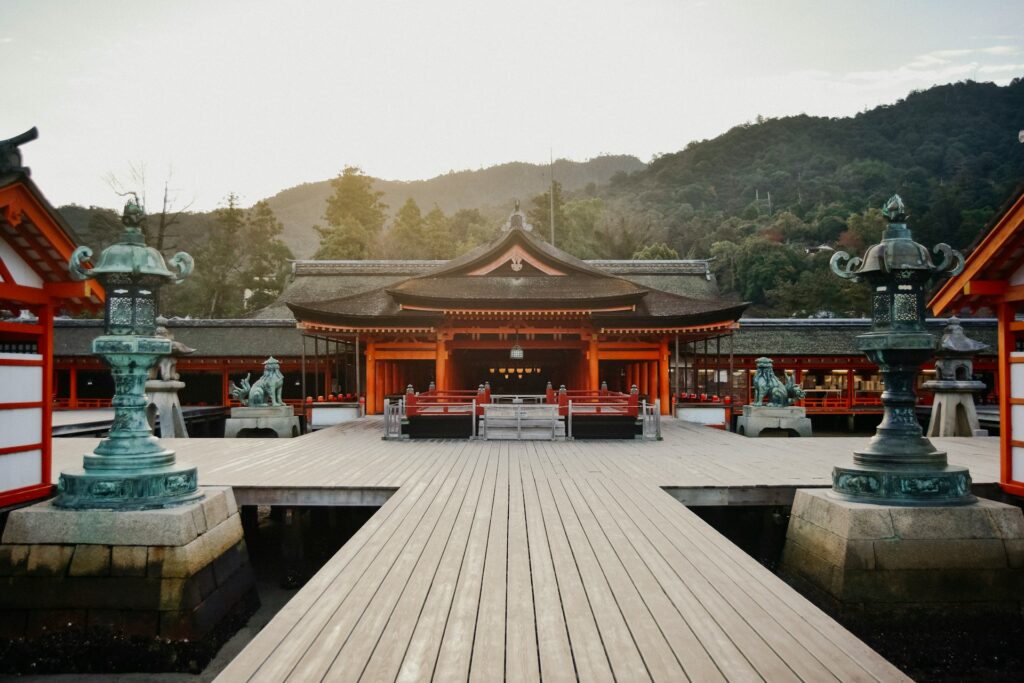
The tide matters most, but light also changes the mood of your photos. The gate faces northwest, so the look can vary noticeably through the day.
- Early morning: Often quieter, with fewer people around the waterfront. The light may be less direct, but the atmosphere can feel calmer.
- Afternoon to late afternoon: Often better for brighter color and clearer light on the gate, especially if the tide timing works.
- Golden hour and sunset: Best for warm light and mood, but also one of the busiest times for shoreline photos.
If you want the most vivid classic photos, try to match high tide with late afternoon or golden hour. If you care more about a peaceful atmosphere, early morning can still be worth it, but check the tide first.
If photos are your priority and you want a water-level angle rather than another shoreline shot, compare the Miyajima World Heritage Torii Kayak Tour before locking in your tide window.
What to Do Between Tides on Miyajima
If you are staying long enough to catch both high tide and low tide, Miyajima has several good ways to fill the gap. The trick is to avoid wasting your best energy standing around the waterfront for hours.
Kai’s tip: If I had one day, I would not wait beside the torii the whole time between tides. I would use the gap for Daisho-in Temple, Omotesando Shopping Street, or Mount Misen if the weather is clear, then return to the waterfront with enough time to check the ground and crowd conditions.
Daisho-in Temple
Daisho-in Temple is a peaceful stop near the base of Mount Misen and a good break from the busiest waterfront photo areas. It works well if you want a slower cultural stop between tide windows.
Omotesando Shopping Street
Omotesando Shopping Street is the easiest place to try local specialties such as grilled oysters, momiji manju, and anago meshi. Many tourist-facing shops accept cards or IC payments, but carry some cash as a backup, especially for small food stalls, lockers, or smaller purchases.
Mount Misen and the Ropeway
If you have several hours and the weather is clear, Mount Misen can be a rewarding addition. The ropeway can save time, but check the official Miyajima Ropeway website before you go. Weather, wind, maintenance, service interruptions, and peak-date reservation rules can affect your plan.
For families, rainy days, or travelers with several hours between tides, a Miyajima Aquarium ticket can be worth checking as an easy indoor stop on the island.
Tips for Families with Children
- At low tide: The seabed can be uneven and slippery. Keep younger children close and choose sturdy shoes that can get wet.
- With strollers: Main routes between the ferry terminal and shrine area are generally manageable, but expect crowds, slopes, and some uneven surfaces around side streets and temple approaches.
- Rainy day backup: The aquarium and shopping street are useful options if the weather turns poor.
Luggage and Coin Lockers
- Miyajimaguchi area: Coin lockers are usually easier to use before boarding the ferry, especially if you are arriving with larger bags.
- Miyajima Ferry Terminal: Lockers are available but limited, so do not rely on them during busy periods.
- Day trip tip: If possible, leave large luggage at your hotel or at Hiroshima Station before going to Miyajima.
What If the Tide Timing Does Not Work for Your Schedule?
If the best high tide or low tide does not line up with your train, ferry, or Hiroshima sightseeing schedule, you still have good backup options.
- Pick the tide that matches your main priority. If you only have a short visit, choose either the floating view or the walk-up experience instead of trying to force both.
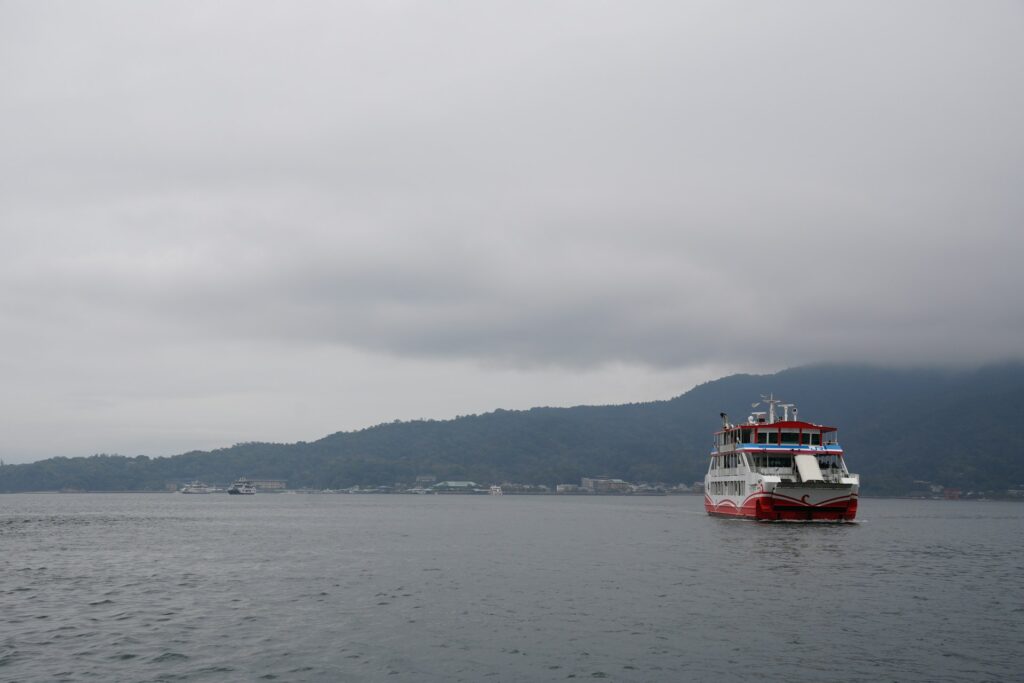
- Use the ferry view as a backup. JR Miyajima Ferry currently lists “Great Torii” route services from Miyajimaguchi during part of the day, giving passengers a water-level view before docking. Check the official JR Miyajima Ferry timetable before relying on this route.
- Stay later for illumination. The great torii and shrine area are usually illuminated in the evening, which can make a late visit feel worthwhile even if the tide is not perfect.
- Stay overnight on the island. If Miyajima is a priority, an overnight stay gives you a much better chance of seeing the gate in different light and tide conditions without rushing. For a simple island stay close to the ferry terminal and shrine area, Sakuraya on Miyajima is one practical option to compare with traditional ryokan stays.
If your schedule is tight, do not judge the whole experience by whether you saw the “perfect” tide. Miyajima is still worth visiting even when you build your visit around just one of the two tide conditions.
DIY vs Guided Tour: Which Is Better for You?
The better choice depends on how much time you have, how comfortable you are managing tide tables and transport, and whether you want to combine Hiroshima Peace Memorial Park and Miyajima in one day.
Choose a Self-Guided Visit If…
- You want to stay on Miyajima for 6 to 8 hours and try to see both tides.
- You prefer to move at your own pace and add side stops like Daisho-in Temple or Mount Misen.
- You are already following a structured 1-day Hiroshima itinerary.
- You are staying overnight on Miyajima.
If you like the flexibility of a self-guided visit but still want some local context, a short experience such as Hiroshima: Miyajima Local Eats and Sacred Sites in 2 Hours can be easier to fit around your tide timing than a full-day tour.
Choose a Guided Tour If…
- You only have one day for both Hiroshima Peace Memorial Park and Miyajima.
- You prefer someone else to handle the train, ferry, and basic logistics.
- You want historical context from an English-speaking guide while visiting both UNESCO World Heritage sites.
- You prefer an efficient schedule over waiting several hours between tides.
Reviewers of the Hiroshima and Miyajima UNESCO Sites 1-Day Tour consistently mention the guides, organization, transport flow, and ability to cover the major Hiroshima and Miyajima highlights in one day. That does not mean every traveler should book it, but it is a strong fit if your priority is a well-paced overview rather than a tide-perfect Miyajima-only day.
A guided tour is usually not the best fit if you plan to stay overnight on Miyajima, specifically want to see both high tide and low tide on the same visit, or prefer a very slow and unstructured island day.
Practical Information for Visiting Miyajima
Use these details as a starting point, but check official sources before your visit because transport fares, shrine hours, ropeway operations, and visitor rules can change.
Kai’s tip: What catches people out is luggage, not the tide table. For a clean day trip, I would leave large bags at your hotel, Hiroshima Station, or around Miyajimaguchi before boarding the ferry, then keep only a small day bag for the island.
- Itsukushima Shrine admission: The standard admission is 300 JPY for adults, 200 JPY for high school students, and 100 JPY for primary and junior high school students. Check the official Itsukushima Shrine admission page for the latest details.
- Miyajima visitor tax: A 100 JPY visitor tax is generally collected when entering Miyajima by ferry. Some exemptions apply, so check the latest rules if this matters for your group.
- Shrine hours: Itsukushima Shrine usually opens early in the morning, but closing time changes by season and date. Check the official shrine website before your visit.
- Footwear: Wear comfortable walking shoes. At low tide, the ground near the gate can be wet, uneven, sandy, or muddy. Inside the shrine, high heels are not ideal because of the gaps between the floorboards.
- Access from Hiroshima: The common route is to take the JR Sanyo Line or tram toward Miyajimaguchi, then take a short ferry ride to Miyajima. Ferry fares are low, but prices can change; check the latest ferry fare and visitor tax before travel.
- Transport passes: If you plan to use trams, buses, and ferries during your Hiroshima stay, compare the Visit Hiroshima Tourist Pass against individual tickets. For more route options, see how to get to Miyajima from Hiroshima.
- JR Pass holders: JR trains and the JR Miyajima Ferry may be covered by eligible JR passes, but always check the current pass rules before travel.
- Mount Misen ropeway: Check current operations before going. Weather, wind, maintenance, service suspensions, and peak-date reservation systems can affect your plan.
- Night illumination: The torii gate and shrine area are usually illuminated in the evening, but special events, weather, or shrine operations can affect lighting.
- Crowds: Weekends, Japanese holidays, Golden Week, autumn foliage season, and good-weather afternoons can be very busy. Arriving earlier helps if you want quieter photos.
Frequently Asked Questions
Can I see both the floating gate and walk near it on the same day?
Yes, but you usually need around 5 to 6 hours on Miyajima to do it comfortably. If you also want to eat, shop, visit a temple, or go up Mount Misen, plan for a longer island stay.
Is high tide or low tide better for first-time visitors?
For most first-time visitors, high tide is the better choice because it gives you the iconic floating-gate view that Miyajima is famous for. Low tide is better if your main goal is to walk out toward the torii and see its scale up close.
What if I miss the perfect tide?
You can still enjoy Miyajima. It is better to match your visit to one tide condition well than to rush both. If your timing is slightly off, focus on the best available view, explore the island, and stay later for sunset or illumination if possible.
Does the Miyajima floating torii gate light up at night?
Yes. The great torii and shrine area are usually illuminated in the evening, which can make a late visit especially memorable. If you want to enjoy the atmosphere without rushing back to Hiroshima, staying at a traditional Miyajima ryokan can be a great option.
How much time do I need on Miyajima Island?
- 3 to 4 hours is usually enough for one tide experience and a quick look around the shrine area.
- 5 to 6 hours is a better target if you want to see both tide conditions.
- 6 to 8 hours gives you time for both tides, a proper meal, and extra stops such as Daisho-in Temple or Mount Misen.
Is there a ferry that passes close to the torii gate?
JR Miyajima Ferry currently lists some daytime departures from Miyajimaguchi that take a route past the Great Torii before arriving at Miyajima. Check the official JR Miyajima Ferry timetable before planning around this, because ferry routes and schedules can change.
Are there coin lockers on Miyajima?
Yes, but availability can be limited during busy periods. If you are on a day trip from Hiroshima, it is usually easier to leave larger bags at your hotel, Hiroshima Station, or the Miyajimaguchi area before taking the ferry.
Final Verdict: Which Tide Is Right for You?
Choose high tide if…
You want the classic postcard photo, you are visiting Miyajima for the first time, or you only have a few hours on the island. This is the safest choice if your main goal is the famous floating-gate view.
Choose low tide if…
You want to walk toward the gate, feel the scale of the structure, and take close-up photos showing its height and texture. This is the better choice for return visitors, families with older kids, and travelers who prefer a more hands-on experience.
Choose both if…
You have about 5 to 6 hours or more on the island and Miyajima is one of the highlights of your Japan trip. This is the most rewarding option, but it requires checking the tide table and planning your day around it.
Best Booking Choice by Travel Style
| Travel Style | Best Fit | Price |
|---|---|---|
| First-time visitor with one day for Hiroshima and Miyajima | Hiroshima and Miyajima UNESCO Sites 1-Day Tour | Check booking page |
| Independent traveler focused on both tides | Self-guided Miyajima day using the official tide table | Check current transport and shrine fees |
| Photo-focused traveler wanting a water-level angle | Miyajima World Heritage Torii Kayak Tour | Check booking page |
If you want a simpler way to combine Hiroshima and Miyajima in one day without handling all the logistics yourself, check prices, availability, meeting point, cancellation terms, and inclusions for the Hiroshima and Miyajima UNESCO Sites 1-Day Tour.
Prices, opening hours, transport schedules, tide conditions, ferry routes, visitor tax rules, ropeway operations, tour inclusions, payment methods, and seasonal conditions can change. Always check official sources and your selected booking page before finalizing your trip.

Hi, I’m Kai. I’m a Tokyo-based travel writer, tourism industry insider, and the author of a published guidebook for international visitors to Japan. With over 10 years of professional experience at a leading Japanese tourism company, my mission is to help you skip the tourist traps and navigate Japan’s best destinations like a local. I believe the perfect day trip is like a traditional kaiseki meal: a beautiful balance of precise planning and unforgettable seasonal discovery. When I’m not out conducting field research, you’ll usually find me drafting new itineraries with one of my favorite fountain pens!