
If you are visiting Hiroshima on a day trip, arriving before hotel check-in, or stopping between Kyoto, Osaka, Hiroshima, and Fukuoka, your first practical question is simple: where can I leave my luggage?
For most travelers, Hiroshima Station is the best luggage storage base. It keeps you close to the Shinkansen, JR local trains, trams, buses, and the route toward Miyajima. More importantly, it stops you from dragging a suitcase onto local trains, ferry lines, and crowded sightseeing streets.
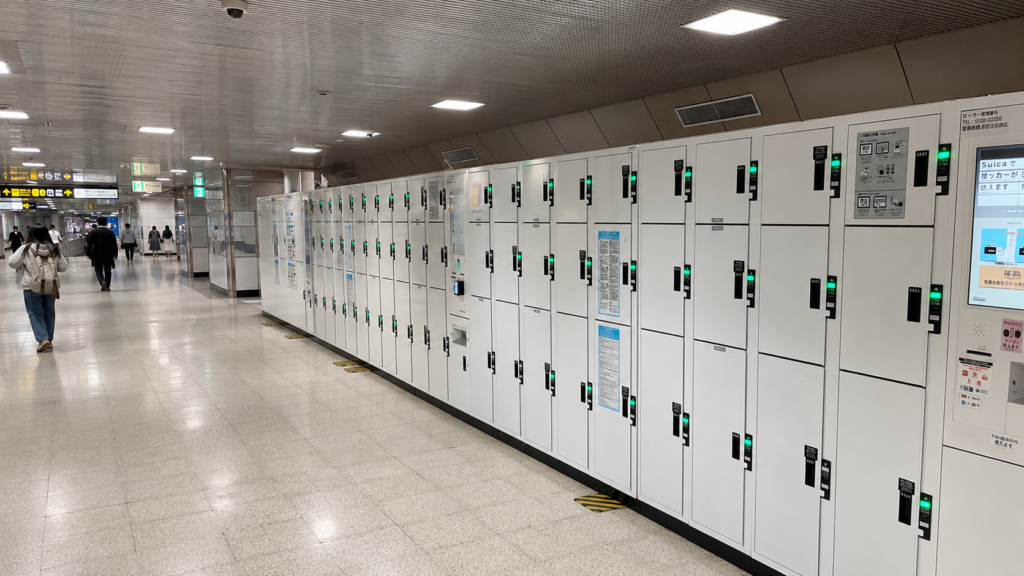
Quick Answer: Hiroshima Luggage Storage
Start at Hiroshima Station. Try the coin lockers first, then use a staffed baggage counter or reservation-based service if the size you need is full.
- Best default: Hiroshima Station coin lockers, especially if you are arriving by Shinkansen or continuing by train later.
- If large lockers are full: Use Crosta Hiroshima, Tours Hiroshima, Hiroshima Cloak, or a reservation-based luggage app.
- If you are going to Miyajima for the day: Leave large suitcases in Hiroshima. Take only a day bag to Miyajima.
- If you are sightseeing between cities: Compare locker storage with a guided Hiroshima and Miyajima tour, especially if train, tram, ferry, and timing logistics are the real problem.
- If you are staying overnight on Miyajima: Ask your ryokan or hotel about luggage support before bringing a full-size suitcase across.
Prices, opening hours, locker availability, delivery rules, app listings, and tour luggage policies can change. Treat this as a planning guide and confirm the latest details on official pages, station signs, and your booking page before you travel.
Best Option: Hiroshima Station Lockers and Baggage Storage
For most visitors, Hiroshima Station is the smartest place to leave bags before sightseeing. It keeps you flexible whether you are heading to Peace Memorial Park first, taking the JR line toward Miyajimaguchi, meeting a tour, checking into a hotel later, or continuing on the Shinkansen.
Why Hiroshima Station Works Best
- It is the main transport hub: Hiroshima Station connects Shinkansen arrivals, JR local trains, trams, buses, taxis, and onward routes toward Miyajima.
- You have more than one storage option: If the locker size you need is full, you can switch to a staffed counter or nearby baggage service.
- It avoids the worst luggage segments: Large suitcases are awkward on trams, local trains, ferry queues, and crowded sidewalks.
- It protects your Miyajima day: Day-trippers usually gain very little by carrying a full-size suitcase past Hiroshima Station.
Hiroshima Station Locker Locations
Locker areas are spread across Hiroshima Station and nearby station facilities, including areas around the Shinkansen side, the South Exit side, minamoa, and ekie. Do not rely on one fixed locker bank. Use station signs, the official station map, and on-site locker availability displays where available.
- Shinkansen side / North Exit area: Convenient if you are arriving by bullet train or want Crosta Hiroshima as your first staffed backup.
- South Exit / minamoa side: Useful if you are heading toward the tram stop or central Hiroshima.
- Inside ticketed areas: Useful during transfers, but less convenient if you need to collect bags later after leaving the gates.
If you want to check the station layout before arriving, see the official JR West Hiroshima Station map.
Hiroshima Station Locker Sizes and Typical Prices
Locker fees vary by location and locker type, but travelers can usually expect these broad ranges:
- Small: Around ¥300–¥400 for backpacks, shopping bags, or small personal items.
- Medium: Around ¥400–¥500 for carry-on cases or large backpacks.
- Large: Around ¥600–¥800 for standard checked luggage.
- Extra-large: Around ¥800–¥1,000 for oversized suitcases, though these are limited and often fill first.
These are only planning ranges. Check the posted price on the locker bank before using it, especially if you are using a newer digital locker system or a locker inside a commercial facility.
Payment and Practical Tips
Many modern locker banks support IC cards such as Suica, Pasmo, or ICOCA, while some older lockers may still require coins. Do not assume every locker bank takes the same payment method. Check the payment panel before you start, and keep either coins or an IC card as a backup.
Large lockers are more likely to fill later in the morning, especially on weekends, holidays, and busy travel periods. If you are carrying a full-size suitcase, check the station lockers first, but have your backup plan ready before you arrive.
Kai’s tip: The mistake I see travelers make is treating luggage storage as a tiny detail. In Hiroshima, a full suitcase can quietly steal an hour if you search every locker bank after the morning rush. I always tell readers to decide their first backup before arrival: coin locker first, Crosta second, then a reservation app or nearby staffed counter if the station is busy.
Backup Options: What to Do If Lockers Are Full
If you arrive after the morning rush or need to store a large suitcase, do not spend too much sightseeing time searching every locker bank. Once you have checked one or two convenient locker areas, switch to a staffed counter or reservation-based option.
| Option | Inside Station? | Walk from Station | Large Bags OK? | Reserve Ahead? | Typical Hours | Price Guide | Best For |
|---|---|---|---|---|---|---|---|
| Coin Lockers | Yes | Inside / nearby | Sometimes | No | Varies by area | About ¥300–¥1,000 | Fast self-service storage |
| Crosta Hiroshima | Yes | Inside the station area | Yes, with limits | Usually not required for basic storage | Often listed around 9:00 AM – 8:00 PM | Often listed around ¥800–¥1,000 | Closest staffed backup |
| Tours Hiroshima | No | About 4 minutes | Yes | No | Check current listing | Check current listing | Oversized bags and staffed help |
| Hiroshima Cloak | No | About 3 minutes | Usually | No | Check current listing | Check current listing | Walkable south-side backup |
| Storage Apps | No | Varies | Usually | Recommended | Depends on partner shop | Varies by app and location | Reserved space near your route |
Kai’s tip: My practical cutoff is simple: if the first station locker area does not have the size you need, do not turn luggage storage into a scavenger hunt. Hiroshima is a compact sightseeing city, but Peace Memorial Park and Miyajima still take real time. Paying a little more for staffed storage can be better than losing the first clean hour of your itinerary.
Crosta Hiroshima: Staffed Storage at the Station
Crosta Hiroshima is one of the most useful backups if the lockers you need are full. It is located on the Shinkansen side of Hiroshima Station and works well for travelers with larger bags who want a staffed counter instead of self-service lockers.
- Location: Inside the JR Hiroshima Station area, on the Shinkansen / North Exit side.
- Price guide: Temporary storage is often listed around ¥800 for smaller bags and ¥1,000 for larger bags.
- Hours: Often listed around 9:00 AM to 8:00 PM.
- Hotel delivery: Same-day hotel delivery may be available to selected Hiroshima city hotels, with a same-day acceptance deadline.
- Important limits: Size, weight, item type, capacity, payment methods, and pickup deadlines can apply.
Crosta’s hotel delivery can be useful if you do not want to return to the station before check-in. Check the current hotel list, deadline, price, and delivery conditions on the official Crosta Hiroshima page before relying on it.
Tours Hiroshima: A Useful Backup Near the Station
If you want a staffed option outside the station area, Tours Hiroshima is another practical fallback. It is especially helpful for oversized luggage that may not fit in standard lockers.
- Location: About a 4-minute walk from Hiroshima Station.
- Price guide: Luggage storage and hotel delivery prices should be checked on the current official listing before you go.
- Hours: Published hours can differ by page and language, so confirm the current reception time before relying on it.
- Best for: Travelers who want a staffed counter instead of relying on large locker availability.
Because storage and delivery are separate services, check the current counter details on the Tours Hiroshima official English information page before assuming what is included.
Hiroshima Cloak: Another Walkable Option
Hiroshima Cloak can be a walkable backup near Hiroshima Station, especially if you are already on the south side of the station. Treat it as a secondary option rather than your main plan, because small local counters can have limited capacity, irregular holidays, payment restrictions, or luggage acceptance cutoffs.
- Location: Walkable from Hiroshima Station.
- Price guide: Check the current listing before you go.
- Hours: Check the current listing before you go, especially if you need early-morning storage.
- Best for: Travelers who are already south of the station and need a staffed fallback.
Reservation Apps: ecbo cloak and Bounce
If you would rather secure a spot in advance, reservation-based services such as ecbo cloak and Bounce can help. These services partner with local hotels, shops, cafes, and other businesses around Hiroshima.
- Best for: Travelers who want to reserve space before arriving.
- Good for odd-shaped items: Some partner locations can accept bags that do not fit standard lockers.
- Main trade-off: Pickup hours depend on the host business, so check carefully before booking.
- Price caution: App prices and available locations change, so confirm the final rate in the app.
Should You Store Luggage Near Peace Memorial Park?
If you are already near Peace Memorial Park, limited lockers may be available at nearby facilities such as the museum or memorial hall area. These can be useful for smaller bags during a visit, but they are not a good default for full-size suitcases.
For most visitors, Hiroshima Station is still the better first choice because it gives you more onward transport options and avoids backtracking if you are continuing to Miyajima, your hotel, or the Shinkansen later in the day.
Kai’s tip: What catches people out is the direction of the day. Peace Memorial Park feels central once you are there, but it is not always the easiest place to solve a suitcase problem. If your day includes Miyajima or a Shinkansen departure, I would rather store the bag at Hiroshima Station and move through the city with only a day pack.
Miyajima Decision: Should You Bring Your Suitcase?
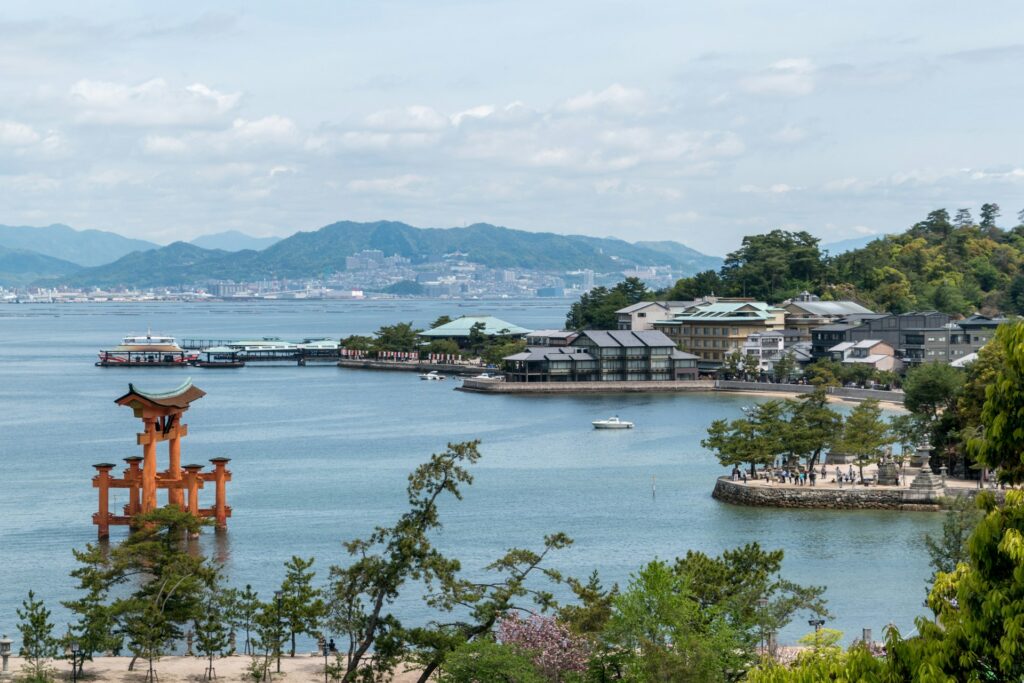
For most day-trippers, no. Even though there are storage options closer to the ferry, bringing a large suitcase from Hiroshima Station to Miyajima usually adds stress without saving meaningful time.
Miyajima Day-Trip Reality
The usual route involves a local train to Miyajimaguchi and then a short ferry ride. That is manageable with a backpack or small carry-on, but a full-size suitcase is much less pleasant. Local trains can be crowded, ferries are busy during peak sightseeing hours, and the island is far easier to enjoy when your hands are free.
- Local trains are not built for bulky luggage: You will not have the same space you get on a long-distance Shinkansen.
- Transfers are easier without a suitcase: Station platforms, ferry boarding lines, and walking routes are all simpler with smaller bags.
- Miyajima is better explored light: Crowds, uneven surfaces, deer, shopfronts, and frequent photo stops make large luggage frustrating.
Kai’s tip: If I had one day, I would treat the suitcase as something to solve before Miyajima, not during Miyajima. The island is best when you can pause, step aside, and change plans around the tide, shrine area, food streets, and ferry timing. A rolling suitcase makes every one of those small decisions harder.
Miyajima Exceptions: When Bringing Bags Can Make Sense
If you are staying at a ryokan on Miyajima, check your accommodation policy before deciding. Some overnight travelers may prefer to use storage near Miyajimaguchi or the passenger terminal, then collect bags later once check-in is possible. For a standard day trip, however, Hiroshima Station remains the better default.
If you are still planning your route, this guide on how to get to Miyajima from Hiroshima will help you compare the main transport options.
Recommended If Your Luggage Problem Is Really a Timing Problem
Some travelers do not just need a locker. They need a way to see Hiroshima and Miyajima in one day without spending the day coordinating station storage, trams, local trains, ferry timing, museum timing, lunch, and return transport.
In that case, I would compare the DIY route with this guided option before deciding: Hiroshima and Miyajima UNESCO Sites 1-Day Tour.
Why I’d Book This One
- It bundles the hard parts of the day: Peace Memorial Park, the Hiroshima peace sites, Miyajima, and Itsukushima Shrine are all possible independently, but linking them smoothly takes planning.
- It reduces transfer stress: If you are visiting Hiroshima as a one-day stop between cities, fewer self-managed moves can matter more than the storage fee itself.
- It has strong review signals: Public reviews on the booking page repeatedly praise smooth transportation, helpful guides, and the ability to understand both Hiroshima and Miyajima in one structured day.
Important: Do not assume every tour can store large luggage. Before booking, check the current pickup point, drop-off point, inclusions, lunch option, cancellation policy, and luggage rules on the booking page. If luggage acceptance is not clearly stated, message the provider before you reserve.
| Choice | Best If… | Luggage Situation | Cost Certainty | Main Risk |
|---|---|---|---|---|
| DIY: Hiroshima Station lockers + transit | You are comfortable navigating trains, trams, ferries, and timing independently. | Works well if you find a suitable locker or staffed counter early. | Storage prices are usually posted on-site, but availability varies. | Large lockers may be full, and transfers take planning. |
| Guided Hiroshima + Miyajima tour | You want the major sights in one structured day with less route planning. | Check the booking page or ask the provider before assuming luggage can come with you. | Tour price and inclusions must be confirmed on the booking page. | Less flexible than independent travel, and luggage rules vary. |
Tour Fit: When a Guided Day Tour Makes Sense
A guided day tour is not the best fit for every traveler, but it can be a practical option if your luggage is part of a bigger logistics problem.
Best Fit: Travelers Who Want to Sightsee Between Cities
This option makes the most sense if you are traveling between Kyoto, Osaka, Hiroshima, and Fukuoka, have limited time in Hiroshima, and want to see both Hiroshima and Miyajima in one day without handling every locker, train, tram, ferry, and route decision on your own.
- Good fit for first-time visitors: You can cover the major sights with less planning stress.
- Good fit for tight schedules: You avoid spending part of your sightseeing time searching for storage and coordinating transfers.
- Good fit for travelers who value context: Hiroshima and Miyajima are more meaningful when the route is not the only thing taking up your attention.
Reviewer themes are especially relevant here. Travelers often highlight smooth transport, guides who explain difficult history clearly, and the convenience of seeing Hiroshima and Miyajima in one day. I would use those signals as a reason to compare the tour seriously, not as proof that it is right for every itinerary.
Less Ideal: Travelers Staying Several Nights in Hiroshima
If you are staying in Hiroshima for more than one night, the simplest solution is usually to leave your luggage at your hotel rather than pay for station storage or book a guided tour just to solve a bag problem.
- Less useful for slow travel: Independent sightseeing is usually better if you have time.
- Less useful for light packers: A backpack or compact carry-on is easier to manage on your own.
- Less useful if your hotel can store bags: Hotel luggage storage is often the easiest answer before check-in or after check-out.
Tour Advantage: What It Actually Solves
The real benefit is not just transport. It is removing several common points of friction at once: route planning, time management, and coordination between Hiroshima Station, Peace Memorial Park, Miyajimaguchi, the ferry, and Miyajima. For travelers trying to fit both UNESCO sites into one day, that convenience can be worth more than the storage fee alone.
Verdict: The Best Way to Handle Luggage in Hiroshima
For most travelers, the simplest answer is still the best one: store your luggage at Hiroshima Station and explore with a small day bag. Start with the station lockers, use Crosta Hiroshima if the locker size you need is full, and only carry large luggage toward Miyajima if you have a confirmed reason to do so.
If you are planning a standard Hiroshima day trip, this approach gives you the most flexibility with the least stress. It works well for Peace Memorial Park, Miyajimaguchi transfers, and same-day Shinkansen travel.
Choose This If…
- For day-trippers: Leave your bag at Hiroshima Station lockers or Crosta. Take only a day pack to Miyajima.
- For overnight visitors: Use your hotel’s luggage storage before check-in or after check-out when available.
- For travelers continuing to another city: If your itinerary covers Hiroshima and Miyajima between Kyoto, Osaka, and Fukuoka, compare a guided Hiroshima and Miyajima day tour with the DIY locker-and-transit route before deciding.
- For light packers: A backpack or carry-on is easier to manage on trams and local trains. Use small lockers at the station or skip storage entirely.
- For families: If you are traveling with small children, a stroller, and luggage, consider a staffed counter such as Crosta or Tours Hiroshima rather than searching for large lockers that may not be available.
Final Recommendation
If your plan is simple, go DIY: Hiroshima Station locker, day bag, Peace Memorial Park, then Miyajima. If your plan is tight, you are changing cities, or you do not want to spend your Hiroshima day solving transport and timing questions, the guided tour deserves a serious look.
FAQ: Hiroshima Luggage Storage Essentials
Do Hiroshima Station Lockers Take Credit Cards?
Do not assume every locker bank takes the same payment methods. Many modern lockers support IC cards such as Suica, Pasmo, or ICOCA, while some may still require coins. Check the payment panel on the locker bank before queueing with your bags.
What If the Large Lockers Are Full?
Try Crosta Hiroshima first if you want the closest staffed option inside the station area. If that is not available, Tours Hiroshima and Hiroshima Cloak are both walkable fallbacks. For guaranteed space, consider booking through ecbo cloak or Bounce before you arrive.
Are There Lockers Near Peace Memorial Park?
Some nearby facilities may have limited lockers, but they are better for smaller bags than large suitcases. If you are starting from Hiroshima Station, it is usually easier to store your luggage there before going to Peace Memorial Park.
Can You Take a Suitcase to Miyajima?
Yes, but most day-trippers will have a better experience leaving large luggage in Hiroshima. The train-and-ferry route is much easier with a backpack or small carry-on, and sightseeing on the island is more comfortable when you are not dragging a full-size suitcase around.
How Long Can You Leave Luggage in a Hiroshima Locker?
This depends on the locker bank or storage service you use. Daily charges may reset overnight, and staffed counters have their own rules and pickup deadlines. If you need storage beyond the same day, check the posted terms before leaving your bags.
Is Hiroshima Station or Miyajimaguchi Better for Luggage Storage?
Hiroshima Station is better for most travelers. It gives you easier access to the city’s main sights and lets you travel to Miyajima without carrying a large suitcase on local trains and ferries. Miyajimaguchi storage is more useful as a niche backup or for some overnight stays on Miyajima.
Should I Book a Tour Just Because I Have Luggage?
Usually, no. If all you need is storage, use a locker or staffed counter. A tour makes more sense when luggage is only one part of a bigger timing problem: you want to see Hiroshima and Miyajima in one day, you are between cities, and you do not want to manage every transfer yourself.
If you want to avoid both the locker search and the Hiroshima-to-Miyajima planning burden, compare the current tour details here: Hiroshima and Miyajima UNESCO Sites 1-Day Tour.
Prices, opening hours, locker availability, payment methods, delivery rules, transport schedules, tour inclusions, cancellation terms, and luggage policies can change. Always check official sources and your selected booking page before finalizing your trip.
Optional Schema: FAQ + HowTo JSON-LD

Hi, I’m Kai. I’m a Tokyo-based travel writer, tourism industry insider, and the author of a published guidebook for international visitors to Japan. With over 10 years of professional experience at a leading Japanese tourism company, my mission is to help you skip the tourist traps and navigate Japan’s best destinations like a local. I believe the perfect day trip is like a traditional kaiseki meal: a beautiful balance of precise planning and unforgettable seasonal discovery. When I’m not out conducting field research, you’ll usually find me drafting new itineraries with one of my favorite fountain pens!