
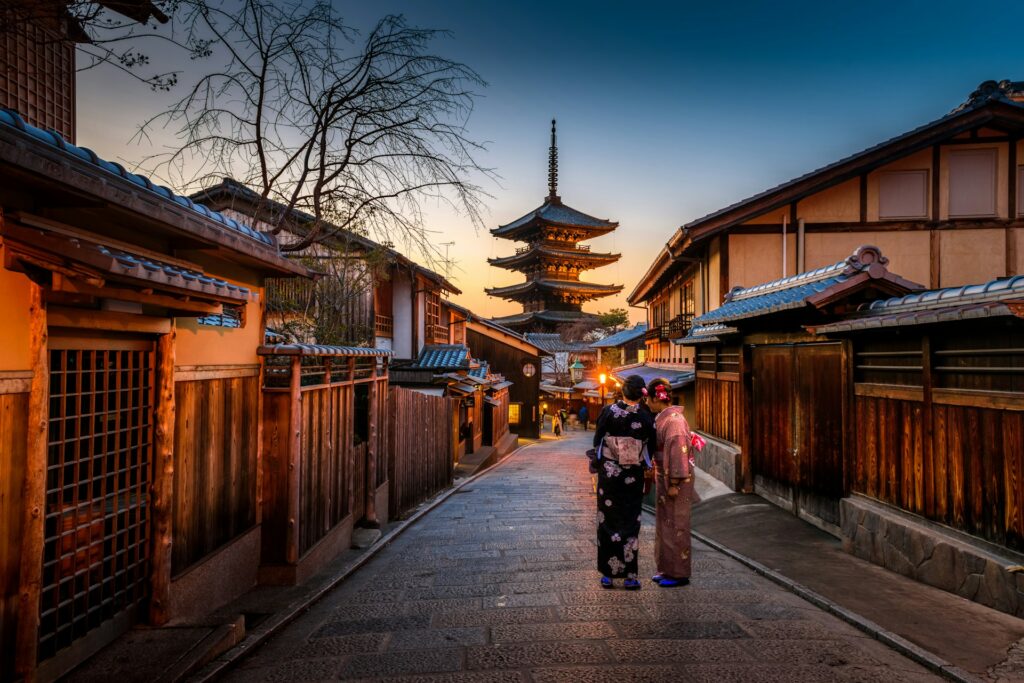
The Shinkansen bullet train is the fastest and most practical way to travel from Tokyo to Kyoto. The Tokaido Shinkansen runs directly between Tokyo Station or Shinagawa Station and Kyoto Station, with no airport transfers, no long security lines, and no connecting buses after arrival.
Quick Answer: What Is the Best Way from Tokyo to Kyoto?
For most travelers, the Tokaido Shinkansen is the best option. The fastest train, Nozomi, usually takes about 2 hours 15 minutes. The slightly slower Hikari usually takes about 2 hours 40 minutes and is the main practical choice for travelers using a standard Japan Rail Pass.
A regular one-way Shinkansen ticket from Tokyo to Kyoto usually costs around ¥13,000 to ¥15,000 for ordinary-class travel, depending on the train, seat type, season, and booking method. If you use a Japan Rail Pass and want to ride the Nozomi, you need a separate Nozomi/Mizuho supplement ticket in addition to your pass.
Best for: first-time visitors, families, couples, and anyone who wants the fastest city-center-to-city-center route.
Less ideal for: travelers on a very tight budget, people carrying large luggage without a seat reservation, or anyone trying to travel during major holiday periods without booking ahead.
One important thing to remember: reaching Kyoto Station is the easy part. Getting around Kyoto can take longer than many first-time visitors expect, especially during cherry blossom season, autumn foliage season, and long holiday weekends.
Tokyo to Kyoto at a Glance
| Method | Typical Time | Typical One-Way Cost | JR Pass Compatible? | Advance Booking Needed? | Best for a Day Trip? |
|---|---|---|---|---|---|
| Shinkansen: Nozomi | About 2h 15m | Usually around ¥13,000–¥15,000 ordinary class | Only with an extra Nozomi/Mizuho supplement ticket | Recommended, especially in peak seasons | Yes |
| Shinkansen: Hikari | About 2h 40m | Usually around ¥13,000–¥15,000 ordinary class | Yes, covered by the standard JR Pass | Recommended, especially in peak seasons | Yes |
| Highway Night Bus | About 7 to 9 hours | Often much cheaper than the train | No | Recommended for the cheapest fares | No |
| Domestic Flight | Usually 3.5 to 4+ hours door to door | Varies widely by airline, airport, and booking timing | No | Usually yes | Usually no |
For most visitors, the Shinkansen wins because it is fast, simple, and takes you directly from central Tokyo to central Kyoto without airport transfers or extra connections.
Shinkansen from Tokyo to Kyoto: The Best Option for Most Travelers
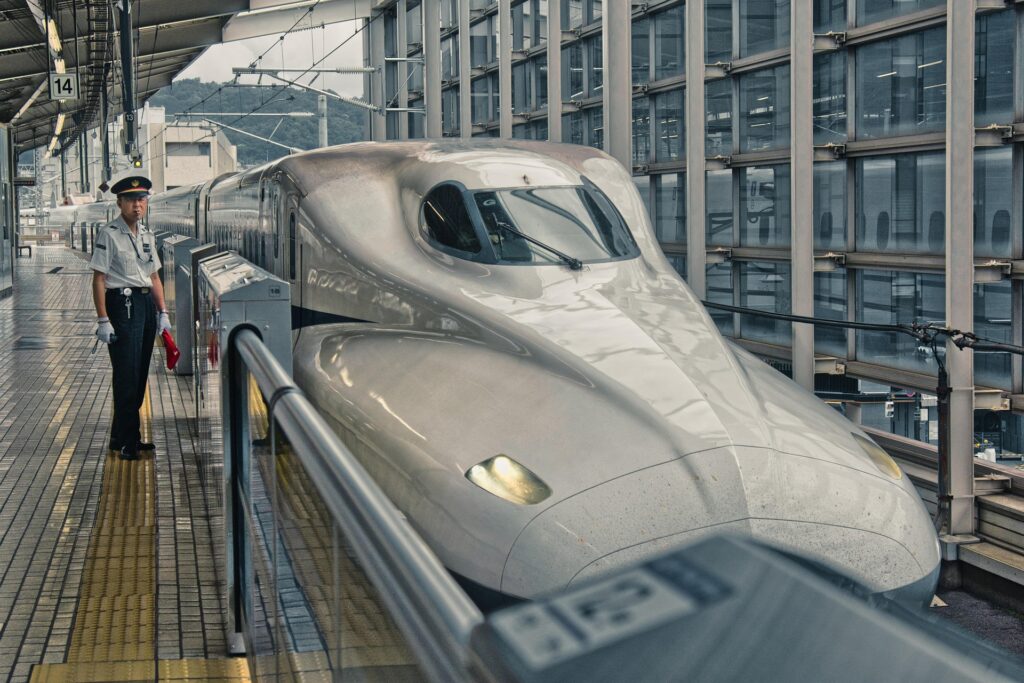
The Tokaido Shinkansen is the standard way to travel between Tokyo and Kyoto. Trains leave frequently from Tokyo Station and Shinagawa Station, then arrive directly at Kyoto Station. There is no airport check-in, no long security line, and no transfer from an Osaka-area airport after landing.
For most visitors, that convenience matters just as much as speed. Even when a flight looks competitive on paper, the Shinkansen is usually much easier in real life because it is a true city-center-to-city-center trip.
Nozomi vs Hikari vs Kodama: Which Should You Choose?
- Nozomi: The fastest and most practical option for most travelers buying individual tickets. It stops at major stations only and usually reaches Kyoto in about 2 hours 15 minutes.
- Hikari: Slightly slower, with a few more stops. Travel time is usually about 2 hours 40 minutes. This is the main choice for many JR Pass users.
- Kodama: The slowest service because it stops at every station. The trip usually takes around 3 hours 40 minutes. It only makes sense if you are using a specific discount ticket or need to stop at a smaller station along the route.
Simple rule: choose Nozomi if speed matters most and you are buying regular tickets. Choose Hikari if you are using a standard JR Pass and do not want to pay the extra Nozomi/Mizuho supplement. Choose Kodama only if you have a specific reason to prioritize price or stops over speed.
How Much Does the Tokyo to Kyoto Shinkansen Cost?
For ordinary-class travel, a one-way Shinkansen ticket from Tokyo to Kyoto is usually around ¥13,000 to ¥15,000. The exact price depends on seat type, season, train category, and whether you book through the official online system, a station machine, a ticket counter, or a third-party reseller.
| Seat Type | Typical Use Case | Notes |
|---|---|---|
| Ordinary Car, Non-Reserved | Flexible travelers who do not need a specific seat | Usually the cheapest Shinkansen rail option, but not ideal in busy periods. |
| Ordinary Car, Reserved | Most first-time visitors | Best balance of simplicity, comfort, and certainty. |
| Green Car | Travelers who want a quieter, roomier ride | Costs more, but can be worth it for comfort or busy travel dates. |
Children aged 6 to 11 generally pay child fares. Children under 6 may travel free when seated on an adult’s lap and not using their own reserved seat, but rules can vary by ticket type. Always check the latest fare conditions before booking.
Can You Use the JR Pass from Tokyo to Kyoto?
Yes, but there is an important catch. The standard Japan Rail Pass covers Hikari and Kodama on the Tokaido Shinkansen, but it does not fully cover the Nozomi by itself.
If you want to ride the Nozomi with a JR Pass, you need to buy a separate Nozomi/Mizuho supplement ticket. For the Tokyo to Kyoto route, this supplement has been around ¥4,960 one way, but you should confirm the latest price on the official Japan Rail Pass website before travel.
That means the JR Pass is not automatically the best deal for this route anymore. If you are only traveling between Tokyo and Kyoto, or making just one or two long-distance train journeys, regular Shinkansen tickets may be more practical than buying a nationwide pass.
When the JR Pass Makes Sense
- You are taking multiple long-distance JR trips within a short period, such as Tokyo to Kyoto to Hiroshima and back toward Tokyo.
- You are comfortable using Hikari instead of the faster Nozomi.
- You want the flexibility of wider nationwide JR coverage beyond this single route.
When Individual Tickets Make More Sense
- You want the fastest possible Tokyo to Kyoto trip on the Nozomi without supplement calculations.
- You are only doing one or two major train journeys in Japan.
- You want the simplest option without pass break-even calculations.
JR Pass prices and sales conditions can change. If your trip depends on a JR Pass saving money, check the official Japan Rail Pass website before buying.
How to Book Shinkansen Tickets
Smart EX: Official Online Booking
Smart EX is JR Central’s official online reservation service for the Tokaido, Sanyo, and Kyushu Shinkansen. It lets you search trains, choose seats, and use a QR ticket or registered IC card at the Shinkansen gates.
Smart EX is convenient if you want to book before arriving in Japan, choose a Mount Fuji side seat, reserve oversized luggage space, or avoid ticket counter lines. You need to register and use a compatible credit card. Some foreign cards may not work smoothly, so keep station ticket machines or JR ticket counters as a backup.
At the Station
- Ticket machines: Useful for same-day or advance tickets. Major stations usually have English menu options.
- JR ticket counters: Helpful if you need assistance with seat selection, oversized luggage reservations, JR Pass activation, or complicated itineraries.
- Third-party platforms: Services such as Klook or KKday may sell Shinkansen tickets or vouchers. These can be convenient, but check exchange rules, fees, and seat selection options carefully.
When to Book in Advance
During ordinary travel periods, many travelers can still buy Shinkansen tickets at the station on the day of departure. However, advance booking is strongly recommended if any of the following apply:
- You are traveling during cherry blossom season, Golden Week, Obon, New Year holidays, or another major domestic travel period.
- You want a specific departure time.
- You want a reserved Mount Fuji side seat.
- You are carrying oversized luggage.
- You are planning a same-day return between Tokyo and Kyoto.
- You are traveling as a family or group and want seats together.
During some major peak periods, Nozomi services may operate as all-reserved seating, meaning unreserved Nozomi seats are not available. Check the latest official Shinkansen information before travel if your dates fall around a major Japanese holiday.
Practical Tips for the Journey
Mount Fuji Seat: Which Side Should You Sit On?
One of the best bonuses of taking the Shinkansen is the chance to see Mount Fuji along the way. From Tokyo to Kyoto, Mount Fuji is usually on the right-hand side of the train heading south. In an ordinary car, this is often Seat E. In the Green Car, it is often Seat D.
From Kyoto to Tokyo, the view is on the opposite side of the train. In an ordinary car, this is often Seat A.
Views are never guaranteed. Clouds, haze, rain, and timing can hide Mount Fuji completely. If the view matters to you, book a window seat on the correct side and aim for a clear morning departure, but do not build your whole itinerary around it.
Large Luggage Rules: The 160 cm Rule
If you are traveling with large suitcases, do not skip this. On the Tokaido Shinkansen, luggage with total dimensions of 160 cm or more and 250 cm or less generally requires a reservation for a seat with access to the oversized baggage area. If you bring oversized luggage without the correct reservation, you may be charged a carry-on oversized baggage fee and asked to move your luggage.
To avoid problems, measure your suitcase before travel. The total dimension means length + width + height. Most standard carry-on bags are usually fine, but large checked suitcases can fall into the oversized category.
If you need oversized luggage space, reserve it when booking through Smart EX, a station ticket machine, or a JR ticket counter. This is especially important for families, long Japan itineraries, and travelers boarding during busy periods.
Food, Wi-Fi, and Power Outlets
- Buy food before boarding: Trolley service is no longer something you should rely on. Pick up drinks, snacks, or an ekiben at Tokyo Station, Shinagawa Station, or Kyoto Station before getting on the train.
- Wi-Fi: Free Shinkansen Wi-Fi is available on many services, but the connection can be inconsistent in tunnels or crowded trains.
- Power: Some trains and seats have power outlets, but availability can vary by train type and seat location. Bring a power bank if you need your phone for maps, tickets, or translations after arrival.
- Bathrooms: Toilets are available onboard, usually between cars.
Tokyo Station or Shinagawa Station: Which Is Better?
Both stations work well for Kyoto. Tokyo Station has more connections, more shops, and more food options, but it is large and can feel confusing for first-time visitors. Shinagawa Station is often easier to navigate and may be more convenient if you are staying in Shinagawa, Shibuya, Ebisu, Roppongi, or parts of southern Tokyo.
If you are staying near either station, choose the one that gives you the simpler morning transfer. The Shinkansen travel time to Kyoto is almost the same.
Can You Do Kyoto from Tokyo as a Day Trip?
Yes, a Tokyo to Kyoto day trip is possible. With an early Nozomi departure, you can arrive in Kyoto in time for a full sightseeing day and return to Tokyo in the evening. But it is only worth doing if you plan carefully and keep your route focused.
Kyoto is not as compact as many first-time visitors expect. The city’s top sights are spread out, and local transport between them can be slow during busy seasons. A self-guided day trip works best if you focus on two or three main areas, not an overambitious checklist.
A Realistic Day Trip Plan
| Part of Day | Suggested Plan | Why It Works |
|---|---|---|
| Early Morning | Take an early Nozomi from Tokyo or Shinagawa to Kyoto. | Arriving early gives you a usable sightseeing window. |
| Morning | Visit Fushimi Inari Taisha or another sight with easy rail access from Kyoto Station. | Starting with a rail-accessible spot reduces bus stress. |
| Midday | Move to eastern Kyoto, such as Kiyomizu-dera, Sannenzaka, Ninenzaka, or Gion. | This keeps your sightseeing in one broad area instead of crossing the city repeatedly. |
| Afternoon | Explore Gion, Yasaka Shrine, or a nearby shopping street at a slower pace. | It leaves room for crowds, meals, and tired legs. |
| Evening | Return to Kyoto Station, eat nearby, and take a reserved Shinkansen back to Tokyo. | A reserved seat reduces stress after a long day. |
A Tokyo to Kyoto day trip is a good fit if:
- You are comfortable with an early start and a long day.
- You want a quick look at Kyoto’s highlights rather than a deep dive.
- You are traveling light.
- You can accept that weather, crowds, and delays may reduce what you can see.
It is less ideal if:
- You want a relaxed pace with long temple visits and cafe breaks.
- You are traveling with several young children or a lot of luggage.
- You want to cover Arashiyama, Kinkaku-ji, eastern Kyoto, and Fushimi Inari all in one day.
- You would be disappointed if one delayed transfer changed your plan.
After You Arrive at Kyoto Station: Getting Around the City
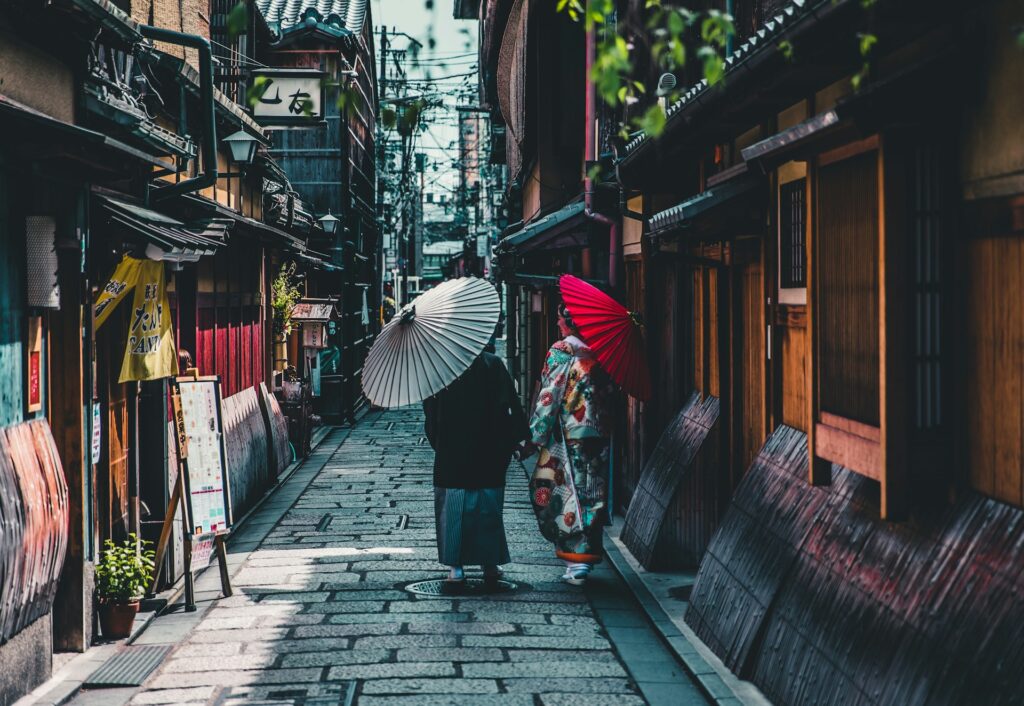
Kyoto Station is convenient, but the city’s top sights are spread out. Unlike Tokyo, Kyoto relies on a mix of trains, subways, buses, taxis, and walking. During peak seasons such as cherry blossom, autumn foliage, and holidays, the busiest bus routes can become very crowded, especially around Arashiyama, Kiyomizu-dera, and Gion.
What Usually Works Best in Kyoto
- Use rail or subway first: Take trains and subway lines where possible, then add a short bus ride, taxi ride, or walk for the final section.
- Travel light: If you have large suitcases, consider station lockers, hotel luggage storage, or luggage delivery instead of taking everything onto local transport.
- Group sights by area: Eastern Kyoto, northern Kyoto, western Kyoto, and southern Kyoto each need time. Crossing the city repeatedly wastes energy.
- Use taxis strategically: A short taxi ride can be worth it when buses are crowded, kids are tired, or your day-trip window is short.
If you are planning to visit Arashiyama’s bamboo grove, Kinkaku-ji, the Golden Pavilion, and Fushimi Inari on the same day, transport planning matters just as much as your Tokyo to Kyoto train choice.
For families with strollers, our stroller-friendly guide to Kyoto covers route planning, station access, and easier sightseeing areas.
If you only have a short window in Kyoto and want to reduce the stress of local transfers, a private tour with transport can be a practical add-on after your Shinkansen ride. It is not necessary for everyone, but it can help families, multigenerational groups, and first-time visitors who want to cover several spread-out sights efficiently.
Check current availability, inclusions, and pricing for a Kyoto private highlights tour
Alternative Ways to Travel from Tokyo to Kyoto
Highway Night Bus
A highway night bus is usually the cheapest way to travel from Tokyo to Kyoto. Fares vary widely depending on season, seat type, operator, and how far in advance you book, but they are often much cheaper than the Shinkansen.
This option works best if you want to save money and do not mind sacrificing comfort. It can also help you save one night of accommodation because you travel overnight. The main downside is simple: sleeping well on a bus is never guaranteed, and arriving tired can make your first day in Kyoto much less enjoyable.
Best for: budget travelers, backpackers, and flexible itineraries.
Less ideal for: families with small children, light sleepers, older travelers, and anyone on a short Kyoto stay where energy matters.
Domestic Flights
Flying from Tokyo to the Osaka area can sometimes look competitive on headline price, but it is usually less convenient door to door. You still need to travel to the airport, allow time for check-in and security, fly to Kansai or Itami, then transfer again to Kyoto.
For most tourists, that extra friction cancels out the short flight time. Flights are usually only worth a closer look if you are already near the airport, using airline miles, or combining Kyoto with onward travel that makes the airport routing more practical.
Best for: specific flight deals, mileage bookings, or airport-based itineraries.
Less ideal for: first-time visitors who simply want the easiest Tokyo to Kyoto transfer.
Frequently Asked Questions
Can I take Nozomi with a JR Pass?
Yes, but not with the base pass alone. The standard JR Pass covers Hikari and Kodama on this route. To ride Nozomi, you need a separate Nozomi/Mizuho supplement ticket in addition to your pass. Check the latest supplement price on the official Japan Rail Pass site before booking.
Do I need to reserve Shinkansen seats in advance?
Not always, but advance booking is strongly recommended during busy travel periods, for same-day Tokyo to Kyoto day trips, when you want a specific departure time, when you want a Mount Fuji side seat, or when you are carrying oversized luggage. It is also the safer choice for families and groups who want to sit together.
What is the cheapest way to do Kyoto from Tokyo?
The cheapest option is usually the highway night bus. It takes much longer than the Shinkansen and is less comfortable, but it can reduce transportation costs significantly. Among rail options, ordinary-class non-reserved Shinkansen seats are usually the cheapest standard train option, though they are not ideal during crowded periods.
Is Kyoto from Tokyo realistic as a day trip?
Yes, if you start early, keep your route focused, and avoid trying to do too much. A day trip works best when you choose a small number of key areas, such as Fushimi Inari and eastern Kyoto, instead of trying to cover the entire city. If you want Arashiyama, Kinkaku-ji, Fushimi Inari, and Gion at a relaxed pace, stay overnight.
Can I use Suica, Pasmo, or Icoca for the Shinkansen?
You cannot simply tap a regular IC card balance to pay for a Tokyo to Kyoto Shinkansen ride in the same way you would use local trains. However, if you register an IC card with Smart EX, you can use that card to pass through the Shinkansen gates while the Shinkansen fare is charged through your Smart EX booking. For local travel within Kyoto, IC cards are very useful on many trains, subways, and buses.
What if I have large luggage?
Plan ahead. On the Tokaido Shinkansen, baggage with total dimensions of 160 cm or more and 250 cm or less generally needs a reservation for a seat with access to the oversized baggage area. Once you arrive in Kyoto, dragging large suitcases onto local buses can be difficult, especially during peak hours. Use station lockers, hotel storage, or luggage delivery if you are sightseeing before check-in.
Can weather affect the Shinkansen?
Yes. The Tokaido Shinkansen is generally very reliable, but heavy rain, typhoons, snow, earthquakes, and other disruptions can affect service. If you are traveling during rainy season, typhoon season, winter weather, or on a fixed same-day return schedule, check the latest train status before departure and leave some buffer in your plan.
Check JR Central Shinkansen operation information
Final Verdict: Which Option Should You Choose?
For most travelers, the answer is clear: take the Tokaido Shinkansen. It is the fastest, simplest, and most reliable way to get from central Tokyo to central Kyoto.
Choose Nozomi with an individual ticket if:
- You want the fastest Tokyo to Kyoto trip.
- You are only taking one or two major train journeys in Japan.
- You want the simplest option without JR Pass supplement calculations.
Choose Hikari with a JR Pass if:
- Your wider Japan itinerary makes the JR Pass worthwhile.
- You do not mind adding about 25 minutes compared with Nozomi.
- You prefer to avoid paying the extra Nozomi/Mizuho supplement.
Choose the night bus if:
- You are on a strict budget.
- You are comfortable with overnight bus travel.
- Saving money matters more than comfort, sleep quality, and arrival energy.
Choose a domestic flight only if:
- You have a very good flight deal or airline miles.
- You are already staying near an airport.
- Your wider itinerary makes an Osaka-area airport more convenient.
For first-time visitors with limited time, the best balance is usually a reserved Nozomi ticket, booked in advance through Smart EX or at the station. Once you arrive in Kyoto, focus on one or two areas rather than trying to cover the whole city.
If your goal is to make the most of one day in Kyoto with minimal stress, door-to-door sightseeing support can be a smart add-on after your Shinkansen trip. Check what is included, where the tour starts, whether transport is private or shared, and how much walking remains before you book.
Compare current Kyoto private tour availability, inclusions, reviews, and pricing
Prices, opening hours, transport schedules, pass conditions, train operations, luggage rules, tour inclusions, payment methods, and seasonal travel restrictions can change. Always check official railway sources and your selected booking page before finalizing your trip.

Hi, I’m Kai. I’m a Tokyo-based travel writer, tourism industry insider, and the author of a published guidebook for international visitors to Japan. With over 10 years of professional experience at a leading Japanese tourism company, my mission is to help you skip the tourist traps and navigate Japan’s best destinations like a local. I believe the perfect day trip is like a traditional kaiseki meal: a beautiful balance of precise planning and unforgettable seasonal discovery. When I’m not out conducting field research, you’ll usually find me drafting new itineraries with one of my favorite fountain pens!