
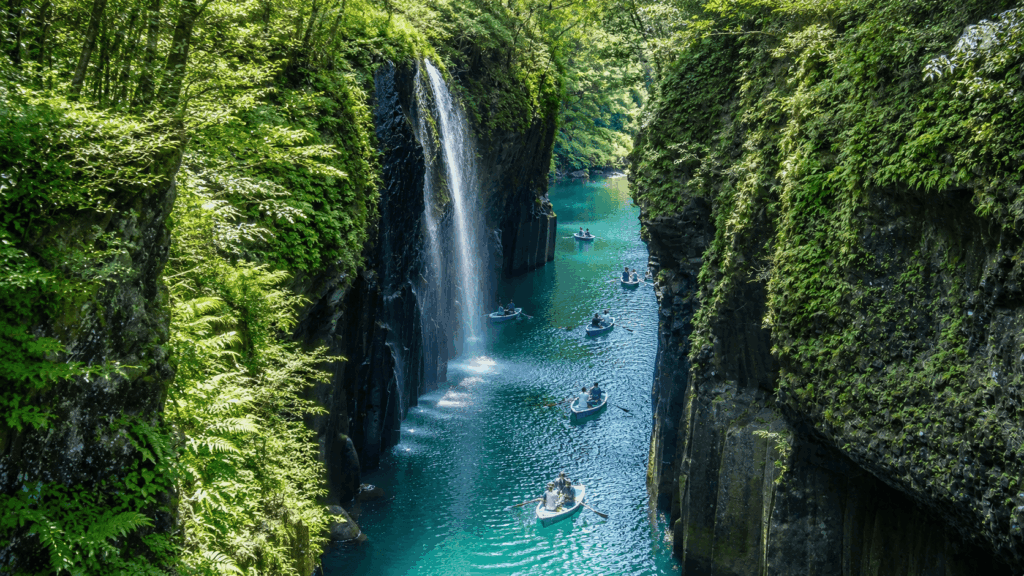
Can you visit Takachiho Gorge from Tokyo? Yes, but it is not a realistic day trip for most travelers. Takachiho sits deep in the mountains of northern Miyazaki on Kyushu, far from Tokyo and away from the main Shinkansen corridor. Even after you fly from Tokyo to Kyushu, you still need a rural bus, rental car, taxi connection, or guided tour before reaching the gorge area.
The smarter way to think about this trip is simple: Tokyo to Kyushu first, then Takachiho. Plan it as a 2 to 3-day Kyushu detour, not as something you squeeze into a Tokyo-based itinerary.
If you only have about one week in Japan and your route is Tokyo, Kyoto, and Osaka, choose a closer nature destination instead. If you have 10 days or more, already plan to visit Kyushu, or really care about Takachiho’s gorge scenery and mythology, the detour can be worth it.
Quick Answer: Is Takachiho Gorge a Day Trip from Tokyo?
Not realistically. You may find same-day combinations on paper, but they leave very little margin for airport transfers, flight delays, rural bus connections, boat availability, weather, and the final movement between Takachiho Bus Center and the gorge.
The most realistic plan is to travel from Tokyo to Kyushu, stay overnight in Fukuoka or Kumamoto, then visit Takachiho the next day by guided tour, rental car, or limited public transport.
| Question | Best Answer |
|---|---|
| Can you go from Tokyo to Takachiho? | Yes, but it is a long Kyushu detour. |
| Is it a good Tokyo day trip? | No. Treat it as overnight or multi-day travel. |
| Best gateway? | Kumamoto for efficiency, Fukuoka for ease and guided tours. |
| Best no-car option? | Fly to Kyushu, then use a limited highway bus or guided tour. |
| Biggest mistake? | Assuming the boat ride, rural buses, and weather will all line up perfectly. |
Who Should Visit Takachiho Gorge from Tokyo?
A Takachiho detour makes sense if:
- you have 10 days or more in Japan
- you already plan to visit Kyushu
- you can turn this into a 2 to 3-day detour
- you are interested in both the gorge and nearby mythology sites
- you are comfortable with rural transport, a rental car, or a guided tour
It is usually a poor fit if:
- you have about one week or less
- your trip is mainly Tokyo, Kyoto, and Osaka — although a Takachiho detour from Osaka has its own challenges too
- you want a simple nature day trip from Tokyo
- you expect to go there and back comfortably in one day
- the boat ride is the only reason you want to visit
Route Comparison: Tokyo to Takachiho Gorge
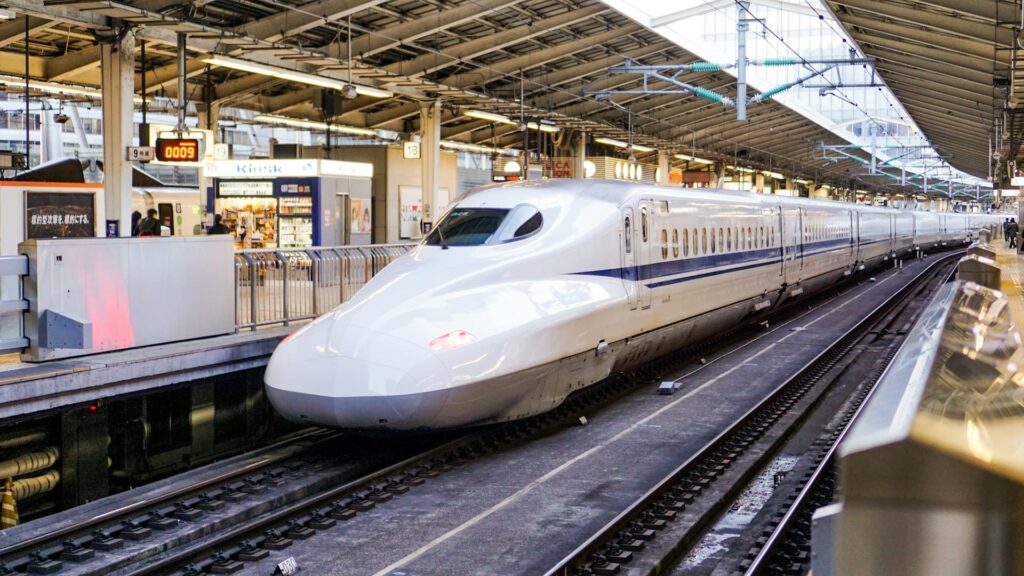
There is no single “easy” route from Tokyo to Takachiho Gorge. The best option depends on whether you value speed, comfort, cost, or flexibility.
| Route | Typical Travel Logic | Same-Day Realistic? | Best For | Main Weakness |
|---|---|---|---|---|
| Fly to Kumamoto → Bus or rental car to Takachiho | Usually the most efficient public-transport logic | No | Travelers prioritizing the shortest practical Kyushu access | Limited rural bus services and reservation planning |
| Fly to Fukuoka → Bus, rental car, or guided tour | Smoother city base with more hotel and tour options | No | First-time Kyushu visitors who want easier logistics | Longer ground journey to Takachiho |
| Shinkansen to Hakata or Kumamoto → Bus or car | Long rail journey, then rural connection | No | Travelers already using rail heavily in Japan | Time-consuming and often poor value if Takachiho is your only Kyushu stop |
| Overnight bus to Kyushu → Local connection | Budget-first route | No | Very budget-conscious travelers | Long, tiring, and connection-dependent |
Bottom line: do not ask, “How do I force Takachiho Gorge into a Tokyo day trip?” Ask, “Which Kyushu base makes Takachiho easiest to visit?”
Kumamoto vs Fukuoka: Which Base Is Better?
| Base | Best For | Main Strength | Main Drawback | Choose This If… |
|---|---|---|---|---|
| Kumamoto | Travelers prioritizing efficiency | Stronger access position for Takachiho and central Kyushu | Less convenient as a broad city base than Fukuoka | You want the shortest practical route or plan to continue around central Kyushu |
| Fukuoka | Travelers prioritizing comfort and ease | More flights, hotels, dining, and guided tour options | Longer ground journey to Takachiho | You want the smoothest overall trip, not the absolute shortest route |
Simple rule: choose Kumamoto for speed and Fukuoka for ease.
Kai’s tip: The mistake I see travelers make is choosing a Kyushu base only by map distance. For Takachiho, the better base is the one that makes your whole day work: hotel location, luggage storage, dinner after the tour, and the next morning’s onward travel. A slightly longer ground journey can be easier than a “shorter” route with awkward rural transfers.
Option 1: Fly from Tokyo to Kumamoto
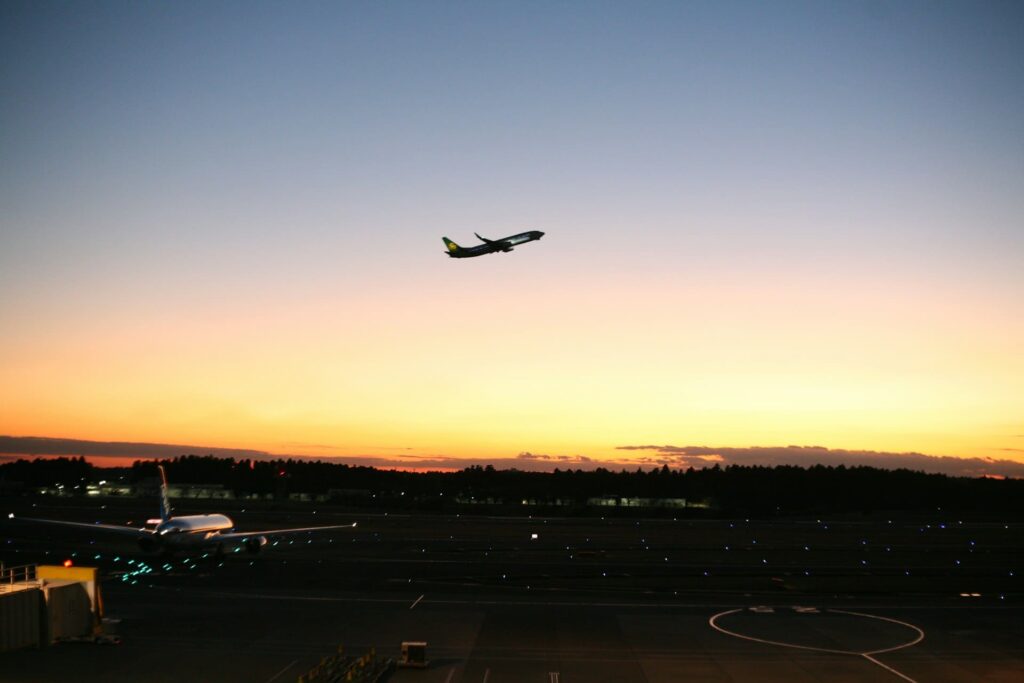
For many travelers, the Kumamoto route is the most efficient way to approach Takachiho without driving all the way across Kyushu. You fly from Tokyo to Kumamoto, then continue toward Takachiho by highway bus, rental car, or a guided option.
However, “efficient” does not mean effortless.
- There is no airport in Takachiho.
- There is no Shinkansen station in Takachiho. If you prefer rail, read how the closest train connections to Takachiho actually work.
- Highway bus services between Kumamoto, Takachiho, and Nobeoka are limited and usually require advance planning.
- After reaching Takachiho Bus Center, you still need to reach the gorge area.
A realistic Kumamoto-based route looks like this:
- Travel from central Tokyo to Haneda or Narita Airport.
- Fly to Kumamoto.
- Use the Kumamoto–Takachiho/Nobeoka highway bus, a rental car, or a guided trip.
- Arrive at Takachiho Bus Center.
- Walk, take a local bus, or use a taxi for the final approach to the gorge area.
The Kumamoto route works best if you can stay overnight in Kyushu before or after visiting the gorge. Do not build a tight plan around a rural bus connection unless you have checked the latest timetable and reservation rules.
For current access details, timetables, and transfer notes, check the official page before travel: Takachiho official access guide.
If you want to reduce the stress of coordinating rural transfers after flying down from Tokyo, check this Takachiho day trip option from Kumamoto and compare the current route, inclusions, meeting point, and price before booking.
Option 2: Fly from Tokyo to Fukuoka
Fukuoka is usually not the shortest route to Takachiho, but it is often the easiest base for international travelers. It has frequent flights, a convenient airport, many hotels, strong food options, and more guided day-trip choices than smaller cities.
Fukuoka makes sense if:
- you want a comfortable first night in Kyushu
- you prefer a guided day tour rather than rural bus transfers
- you are pairing Takachiho with a wider Kyushu itinerary
- you want easier dining, luggage, and hotel logistics
The trade-off is distance. The ground journey from Fukuoka to Takachiho is longer than from Kumamoto, so Fukuoka is best when you value comfort and simplicity more than the absolute shortest access route.
If your main interest is Takachiho’s shrines, mythology, and gorge scenery rather than Mt. Aso, compare a Fukuoka-based guided option that focuses more on the Takachiho area: see the Takachiho Gorge, Shrines & Cave day trip details on GetYourGuide.
Option 3: Take the Shinkansen from Tokyo
You can travel from Tokyo toward Kyushu by Shinkansen, usually via Hakata or Kumamoto, then continue by bus or rental car. This can work if you already have a rail-heavy itinerary, dislike flying, or are using a Japan Rail Pass in a way that makes the long rail leg worthwhile.
For most visitors, however, the Shinkansen is not the most efficient way to reach Takachiho from Tokyo. It still leaves you with a rural connection after the long-distance rail journey. Also, bus routes to Takachiho are not covered by the Japan Rail Pass, and pass conditions can change, so check the latest official JR Pass rules before relying on this option.
Best for: travelers who already planned to move through western Japan and Kyushu by rail.
Weak for: travelers whose only Kyushu goal is Takachiho Gorge.
Option 4: Overnight Bus from Tokyo to Kyushu
An overnight bus to Kyushu can be the cheapest approach, but it is also the most tiring. You still need a daytime bus, rental car, or tour connection after arrival, which means the journey can become very long before you even reach the gorge.
This option is only worth considering if you are very budget-conscious, can sleep on buses, and have enough flexibility to recover after arrival. For most international visitors, flying to Kyushu and staying overnight is a better balance of time, comfort, and reliability.
Should You Go DIY or Join a Guided Tour Once in Kyushu?
Once you accept that Takachiho Gorge from Tokyo really means Tokyo to Kyushu first, then Takachiho, the next decision becomes easier: should you arrange everything yourself or join a guided trip?
| Option | Best For | Main Advantage | Main Trade-Off |
|---|---|---|---|
| DIY by bus | Travelers comfortable with timetables and reservations | More independence and potentially lower cost | Limited services, less room for delays, and more planning stress |
| DIY by rental car | Confident drivers exploring more of Kyushu | Maximum flexibility after leaving the city | Mountain roads, parking, weather, and driving fatigue |
| Guided tour | Travelers who want the lowest-stress day | Transport and the broad schedule are usually arranged for you | Less flexibility, fixed pace, and inclusions vary by tour |
DIY makes sense if you want control, plan to stay overnight, or want to add stops that do not fit neatly into a standard tour day.
A guided tour makes sense if you want to reduce schedule stress, especially from Fukuoka, or if you want to combine Takachiho with nearby sights without juggling several rural transfers on your own.
Recommended low-stress option from Fukuoka
If you are already flying from Tokyo to Kyushu and want the easiest version of a Takachiho day, I would start by comparing a Fukuoka-based guided tour before building a DIY bus plan. This is especially true if you want to include both Mt. Aso and Takachiho Gorge in one long sightseeing day.
Why I’d book this one
- It solves the hardest part of the trip: the long rural movement between a major Kyushu city and Takachiho, without asking you to coordinate multiple buses after arriving from Tokyo.
- It combines two big Kyushu landscapes: Mt. Aso and Takachiho are both difficult to fit smoothly into a short Kyushu detour, so a single structured day can be more efficient than piecing the route together yourself.
- Reviewers consistently mention the same strengths: recent user feedback on the booking page tends to highlight organized timing, helpful guides, and the convenience of seeing remote places without self-driving. Several reviewers also note that the day is long, which is exactly why I would not attempt it straight from Tokyo.
| Choice | Best If You Want… | Check Before Booking |
|---|---|---|
| Mt. Aso & Takachiho Gorge tour from Fukuoka | A broad Kyushu nature day with less transport planning | Current price, meeting point, Aso access conditions, boat option, cancellation rules |
| Takachiho Gorge, Shrines & Cave day trip | More focus on mythology sites, shrines, and the Takachiho area | Walking difficulty, stair sections, time at each stop, current itinerary |
If you are leaning toward the DIY bus route, check whether a Kyushu SunQ Pass fits your wider itinerary before comparing it with a guided day tour: check the Kyushu SunQ Pass options on Klook.
For a deeper breakdown of whether a guided tour is the right fit, read our companion guide: Mt. Aso & Takachiho Gorge Day Tour from Fukuoka: What to Expect Before You Book.
Takachiho Gorge Boat Ride: Reservations, Fees, and Reality Check
If the boat ride is one of your main reasons for visiting, treat it as a reservation-dependent activity, not a casual add-on. The gorge is still beautiful from the walking path, but the rowing boat is limited by reservations, same-day availability, river conditions, safety checks, and weather.
The official boat page usually explains these key rules:
- Online reservations normally open at 9:00 AM JST two weeks before the planned boarding date.
- Online reservations normally close at 9:00 AM JST two days before the planned boarding date.
- Phone reservations are not accepted.
- Cancellation waiting lists are not accepted.
- Online reservations require advance credit card payment.
- Some busy dates may operate by advance reservation only, with no same-day tickets.
Boat pricing is set by the official fare calendar and can vary by date. The standard ride is usually around 30 minutes, and the usual capacity is up to 3 people per boat, but rules for children, safety, and operating conditions can change. Always check the official boat page for your exact travel date before finalizing your plan.
Check the latest rules, fare calendar, reservation status, and operating updates here: Takachiho Gorge official boat information.
For a detailed walkthrough, read our dedicated guide: Takachiho Gorge Booking Guide: Boat Reservations, Rules & Timing.
Kai’s tip: I always tell readers to treat the boat as a bonus highlight, not the foundation of the whole Kyushu detour. If you would feel the trip was wasted without rowing under the waterfall, Takachiho becomes a much riskier choice from Tokyo. Build your day around the gorge walk, viewpoints, shrines, and mythology sites first, then add the boat if the reservation and operating status line up.
What Happens If the Boats Are Sold Out or Suspended?
A sold-out or suspended boat ride does not automatically ruin Takachiho Gorge. The walking path, cliffs, waterfall viewpoints, and surrounding scenery are still worth seeing. However, it does change the value equation if you are coming all the way from Tokyo.
If the boat is your only reason for visiting, the trip becomes much riskier. If you also care about the gorge scenery, shrines, mythology, and wider Takachiho area, the detour is easier to justify even without rowing.
If the boat is unavailable, consider adding:
- Amanoiwato Shrine — one of the area’s most important mythology-related sites
- Amanoyasukawara — an atmospheric riverside cave area linked to the Amaterasu legend
- Takachiho Shrine — a peaceful shrine in town surrounded by large trees
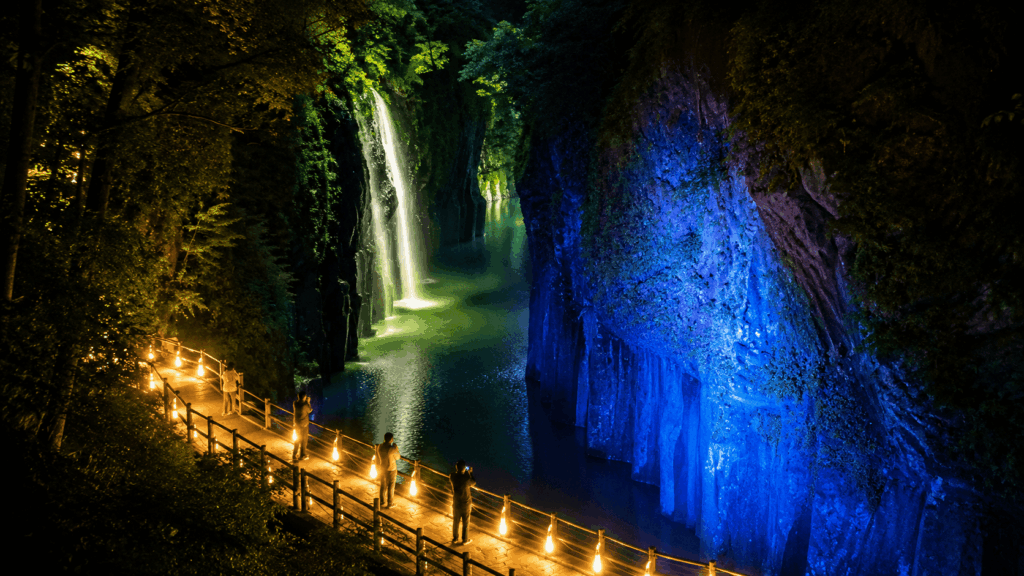
- Takachiho Kagura — traditional nighttime performances, subject to current schedules and availability
The best planning mindset is:
- Treat the gorge as worthwhile without a boat.
- Treat the boat as a highlight, not a guarantee.
- Check the official operating status close to your visit date.
How Much Time Do You Need at Takachiho Gorge?
For most travelers, 2 to 4 hours in the gorge area is a realistic target.
- About 1.5 to 2 hours if you only walk the gorge path and take photos
- About 2.5 to 4 hours if you have a boat reservation and want a relaxed visit
- Half a day or more if you add Amanoiwato Shrine, Amanoyasukawara, Takachiho Shrine, or a meal in town
This matters because Takachiho is so far from Tokyo. Once you have made the Kyushu transfer, it rarely makes sense to rush in, glance at the gorge, and leave immediately. Give yourself enough time for the path, viewpoints, and a bit of breathing room.
Best 2 to 3-Day Kyushu Itinerary Including Takachiho
For most travelers, the smartest plan is to stop thinking about Takachiho as a Tokyo excursion and start treating it as a Kyushu side trip.
Kai’s tip: If I had one day for Takachiho inside a Tokyo-based trip, I would not spend that same day trying to fly in, reach the gorge, and return. The safer pattern is to arrive in Kyushu the day before, sleep near your departure point, and protect the Takachiho day from airline or Shinkansen delays. That one overnight buffer often matters more than shaving a small amount off the route on paper.
Simple 3-Day Plan
- Day 1: Fly or take the train from Tokyo to Fukuoka or Kumamoto. Stay overnight and avoid rushing rural transfers on arrival day.
- Day 2: Visit Takachiho Gorge by bus, rental car, or guided tour. Add the boat ride if reserved and operating, plus nearby shrines if time allows.
- Day 3: Continue around Kyushu or return to your next major destination.
Overnight in Takachiho
If you stay overnight in Takachiho, you gain a quieter evening, a better chance to see the area without rushing, and more flexibility if transport or boat timing changes. This is especially useful if you want to add Takachiho Shrine, Amanoiwato Shrine, Amanoyasukawara, or Takachiho Kagura.
Accessibility, Weather, and Practical Tips
Kai’s tip: What catches people out is that Takachiho Bus Center is not the same thing as arriving at the gorge viewpoint. You still need to handle the final stretch, and the return can feel harder because parts of the approach involve slopes. I would keep luggage at your Kyushu base whenever possible and arrive with a small day pack, comfortable shoes, and enough cash for backup transport.
- The gorge area involves slopes, stairs, and uneven walking. Comfortable shoes are important.
- Takachiho Bus Center is not right beside the gorge. You still need to walk, take a local bus, or use a taxi for the final stretch.
- The walk can feel harder on the return. Some approaches are downhill toward the gorge and uphill back toward town.
- Boat operations can stop because of water levels, safety checks, typhoons, heavy rain, or other local conditions.
- Driving gives flexibility but adds responsibility. Mountain roads, parking, weather, and fatigue all matter.
- Parking fees vary by lot. Closer lots may cost more than outer lots, and payment rules can change.
- Carry cash as a backup. Some local transport, taxis, small shops, or older systems may not work the way you expect.
- Leave large luggage at your Kyushu base if possible. Rural buses, paths, and small facilities are easier without heavy bags.
For current practical updates, check the official tourism page before travel: Takachiho official FAQ.
How Much Does Takachiho Gorge from Tokyo Cost?
The total cost depends heavily on airfare, rail pass use, hotel choices, season, and whether you join a tour. This is not a cheap little side trip from Tokyo. The bigger cost is often the total travel burden: time, transfers, waiting, and energy.
Think about the cost in three layers:
- Tokyo to Kyushu: flight, Shinkansen, or overnight bus
- Kyushu to Takachiho: highway bus, rental car, local transport, or guided tour
- On-site costs: boat fee, parking, taxis, meals, luggage handling, and possible overnight stay
For a realistic comparison, price it as a Kyushu detour, not as a Tokyo day trip. A guided tour may look more expensive at first, but it can reduce the stress of rural transfers and timing. A DIY route can be cheaper, but only if the transport schedule actually fits your itinerary.
Best-value decision point
If your Tokyo itinerary already includes flights or rail into Kyushu, the main decision is not just “Which option is cheapest?” It is which option protects the most time and energy once you reach Kyushu.
Why I’d compare the Fukuoka guided tour before committing to DIY
- DIY costs can spread out: airport access, local buses, taxis, lockers, possible hotel location changes, and backup transport can make the “cheap” version less simple than it first appears.
- The tour price is easier to understand upfront: you can check the current price, meeting point, itinerary, included transport, cancellation policy, and optional boat information in one place.
- It fits the article’s main conclusion: once you accept that Takachiho is a Kyushu detour, not a Tokyo day trip, the easiest version is usually to sleep in Fukuoka and let a structured day trip handle the remote sightseeing loop.
Good Alternatives If Takachiho Feels Too Far from Tokyo
If Takachiho feels too remote for your current trip, that is not a failure. It is smart planning.
For travelers who want nature without a major Kyushu detour, consider these easier options from Tokyo:
- Nagatoro: river scenery, rock formations, and a much easier day-trip profile
- Hakone: scenic transport, hot springs, lake views, and Mount Fuji views on clear days
- Okutama: mountain and river scenery within the wider Tokyo travel orbit
Takachiho is special partly because it is remote. If your Japan trip is short, a closer nature destination may deliver more enjoyment with far less exhaustion.
FAQ: Takachiho Gorge from Tokyo
Is Takachiho Gorge from Tokyo possible without renting a car?
Yes. The most realistic no-car approach is to travel to Kyushu first, then continue from a base such as Kumamoto or Fukuoka by highway bus or guided tour. It is possible without a car, but it is not a comfortable same-day outing from Tokyo.
Can you do Takachiho Gorge as a day trip from Tokyo?
Not realistically for most travelers. Even a fast route requires airport access, a flight, rural transport, local movement around Takachiho, and a return journey. One delay can make the day very stressful.
Is Kumamoto or Fukuoka better for Takachiho?
Kumamoto is usually better for efficiency. Fukuoka is usually better for comfort, hotels, flights, and guided tours. Choose based on whether you value speed or ease more.
Do I need to reserve the Takachiho boat in advance?
If the boat ride matters to you, yes. Book online as soon as your reservation window opens, and check the official page close to your visit date. Same-day tickets may sell out or may not be available on certain busy dates.
Is Takachiho still worth it without the boat?
Yes, if you also want to see the cliffs, walking path, waterfall viewpoints, shrines, and mythology sites. If the boat is your only reason for visiting, think carefully before making a major detour from Tokyo.
How expensive is Takachiho Gorge from Tokyo?
It depends on airfare, rail pass use, hotel nights, bus connections, rental car costs, tours, and boat availability. Price it as a Kyushu detour rather than a Tokyo day trip. The time cost is often just as important as the money cost.
What is the cheapest way to get from Tokyo to Takachiho?
The cheapest route is usually some combination of long-distance bus travel to Kyushu and local transport onward to Takachiho. However, it is also the most tiring. For many travelers, flying to Kyushu and staying overnight is a better value overall.
When is the best time of year to visit Takachiho Gorge?
Spring and autumn are often comfortable for walking and scenery. Summer can be hot and rainy, and typhoon season can affect transport and boat operations. Winter is quieter but can bring colder conditions and road concerns in mountain areas.
Final Verdict: Is Takachiho Gorge from Tokyo Worth It?
Yes, but only if you plan it as part of a Kyushu detour.
If your trip is a classic first-time Japan route focused on Tokyo, Kyoto, and Osaka, Takachiho is usually too remote to justify the effort. But if you have extra time, already plan to visit Kyushu, or are happy to reshape your itinerary around a major nature stop, it can be one of the most memorable scenic experiences in Japan.
Choose Takachiho if:
- you have 10 days or more in Japan
- you are already visiting Kyushu
- you can spare 2 to 3 days for the detour
- you care about both gorge scenery and nearby cultural sites
Skip it if:
- you only have about a week in Japan
- your itinerary is tight and focused on the Golden Route
- you want a comfortable same-day trip from Tokyo
- you would be disappointed if the boat ride is sold out or suspended
The winning mindset is simple: do not try to conquer Takachiho from Tokyo in one day. Shift your base to Kyushu first, then do the gorge properly.
If you want the easiest version of that plan, a Fukuoka-based guided day trip is often the cleanest option. If you want more control and do not mind extra coordination, Kumamoto remains a strong DIY gateway.
Check the latest reviews, pricing, schedules, meeting point, boat option, and inclusions for guided Takachiho tours from Fukuoka before you finalize your Kyushu leg.
Prices, opening hours, transport schedules, pass conditions, boat reservation rules, tour inclusions, payment methods, parking rules, and seasonal operations can change. Always check official sources and your selected booking page before finalizing your trip.

Hi, I’m Kai. I’m a Tokyo-based travel writer, tourism industry insider, and the author of a published guidebook for international visitors to Japan. With over 10 years of professional experience at a leading Japanese tourism company, my mission is to help you skip the tourist traps and navigate Japan’s best destinations like a local. I believe the perfect day trip is like a traditional kaiseki meal: a beautiful balance of precise planning and unforgettable seasonal discovery. When I’m not out conducting field research, you’ll usually find me drafting new itineraries with one of my favorite fountain pens!