
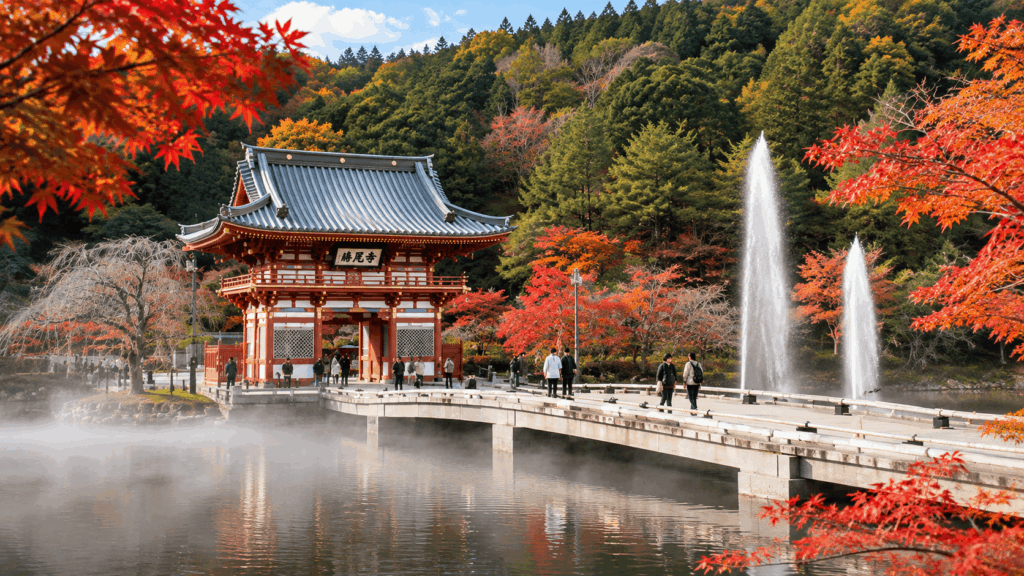
Yes, you can plan a walk from Katsuoji Temple to Minoh Falls, but “the Katsuoji to Minoh Falls hike” is not one route, and that is where most trip planning goes wrong. As of November 2026, part of the forest trail network between the two is closed for forestry work, with reopening scheduled for late February 2027. The alternative is a road walk of roughly an hour to an hour and a quarter along the Minoh Driveway, sharing the way with taxis and sightseeing traffic. The paved Takimichi from the falls down to Hankyu Minoh Station reopened in early August 2026 after the fire closure, and that stretch alone gives you most of the scenery with far less uncertainty.
Best for: travelers who are comfortable with a longer walk and with checking current conditions themselves.
Think twice if: you want a traffic-free forest hike with no navigation doubt.
Check first: official trail closures and the autumn road restrictions on the Minoh Driveway.
Trail and road information last checked: November 2026.
Prefer to skip the roadside walk? If your main goal is to see both Katsuoji Temple and Minoh Falls without managing the connections yourself, an English-guided day trip is worth comparing with the DIY options. It combines public transport with a taxi transfer rather than a forest hike. Check the current itinerary, available dates, and recent traveler reviews for the Katsuoji and Minoh Falls guided tour before deciding which approach suits your day.
Can You Hike From Katsuoji to Minoh Falls Right Now?
Short answer: possibly, but not on autopilot. There is a genuine walking connection between the two sights, and there is no direct public bus linking them. What matters is separating three things that get blended together in most search results: paths that are officially open, paths that are officially closed, and paths whose present condition nobody has confirmed.
The mistake I see most often is treating this as one route with one walking time. It is at least three different journeys. A forest trail through the Minoh hills, a paved driveway shared with vehicles, and a taxi ride followed by an easy riverside stroll are not interchangeable, even though all three start at the same temple gate and end at the same waterfall.
- Confirmed open: the Takimichi between Minoh Falls and Hankyu Minoh Station, and the road-based approach along the Minoh Driveway.
- Confirmed closed: sections of Nature Research Trail No. 4 and its branches, covered below.
- Unconfirmed: a continuous forest route from the Katsuoji side through to the falls. No official source currently confirms one end to end.
That last point is the one to hold on to. Old GPX tracks, AllTrails recordings and Google Maps walking directions can all show a line across the hills without reflecting this season’s closures. Treat them as history, not as a plan.
Which Forest Trails Are Closed in 2026?
The closure that affects this connection is on Nature Research Trail No. 4, in the Minoh National Forest. Thinning work has closed the section between points F14, F7 and F15, along with two branches: the link from F7 to the Tokai Nature Trail junction, and the link from F7 toward the land adjoining Katsuoji Temple. The closure began in late August 2026 and is scheduled to run until 26 February 2027.
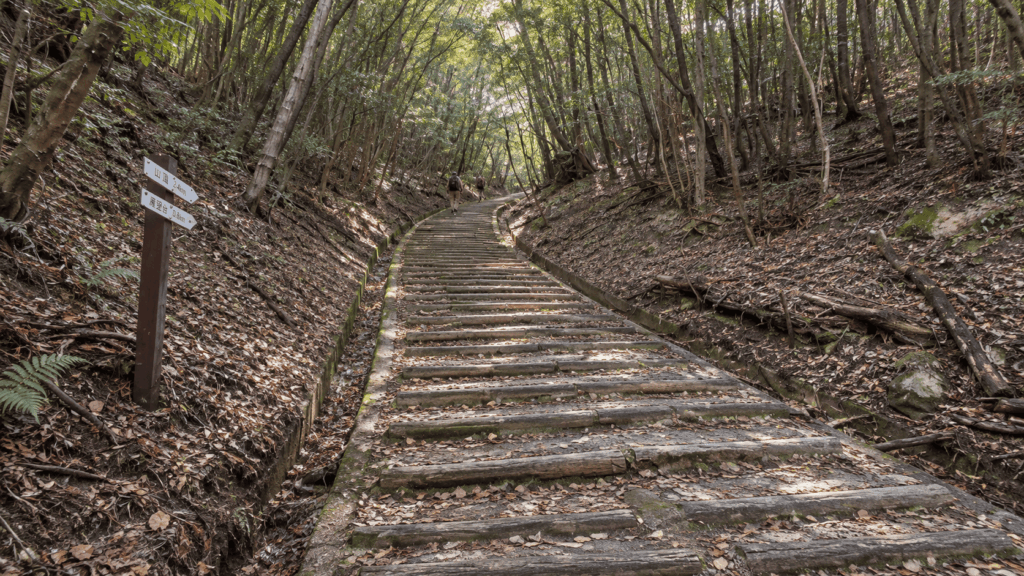
Two details stop readers from drawing the wrong conclusion. First, the branch from F7 toward the Tokai Nature Trail junction was already closed before this forestry work, so it is not a temporary autumn inconvenience. Second, one stretch of Trail No. 4 remains passable, from point F14 toward the park interior. Trail No. 4 being “closed” does not mean the entire trail is impassable, and it does not mean the Tokai Nature Trail itself is shut.
The Tokai Nature Trail is not part of this forestry closure. What is missing is confirmation of a continuous, currently open route from Katsuoji down to the falls using it. Those are different statements, and the gap between them is exactly where travelers get caught out. Separately, the fallen-tree closure on Nature Research Trail No. 2, between E8 and B6, was lifted on 28 October 2026, so older posts describing that section as blocked are now out of date.
Before you commit to a forest route, check the Osaka Prefecture trail status page, the Minoh City hiking closure page, and the Minoh Park official site for the Takimichi. All three are updated when conditions change, and all three outrank any blog post, including this one.
Three Ways to Get From Katsuoji to Minoh Falls
Here is the same journey split into the three options that actually exist. Times are deliberately given as ranges, because the current forest route has no published walking time that applies to today’s closures.
| Option | Approximate time | Terrain | Main concern | Best for | Current status (Nov 2026) |
|---|---|---|---|---|---|
| Forest trail (Trail No. 4 / Tokai Nature Trail) | No reliable current figure; the open connection is not confirmed | Dirt, roots, repeated short climbs and descents | Closures and unverified route | Hikers who will confirm conditions before setting out | Partly closed until late February 2027 (scheduled) |
| Road-based walk (Minoh Driveway) | About 1 hour to 1 hour 15, walking steadily | Paved road, guardrailed shoulder in places, open stretches without a footway | Vehicle traffic, especially in the first half | Confident walkers who accept road walking | Walkable; no dedicated footpath throughout |
| Taxi, then the Takimichi | Roughly 10 minutes by taxi (traffic permitting), then about 15 minutes down the steep path from the upper parking area to the falls, followed by 40 to 50 minutes down to the station | Taxi on mountain road, then paved riverside path | Fare and route vary; autumn one-way rules | Casual walkers, families, anyone short on time | Operating; direct route not guaranteed in autumn |
If what you want is a walk in the woods, only the first row really offers it, and only if the connection is open. If what you want is to see both places in one day without a logistical gamble, the third row is the honest answer. The middle row is a real option, but it is a road walk, not a forest hike, and it should be chosen with that in mind.
The Forest Trail: What My Reverse Hike Taught Me
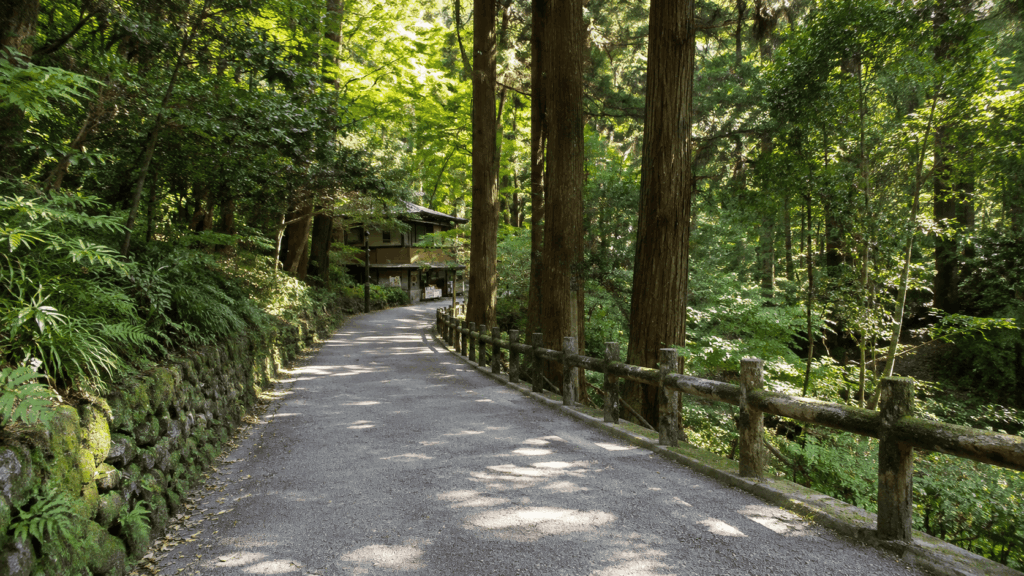
About three years ago, in early summer, I walked this connection in the opposite direction: from Minoh Falls up to Katsuoji Temple. The sign at the trailhead gave the walk as about 40 minutes. It took me about 50, over roughly 3 kilometres, and the extra time was not dawdling. The path rose and fell in short, repeated pulls, and there were sections where tree roots lay across the line of the trail and needed watching rather than striding over.
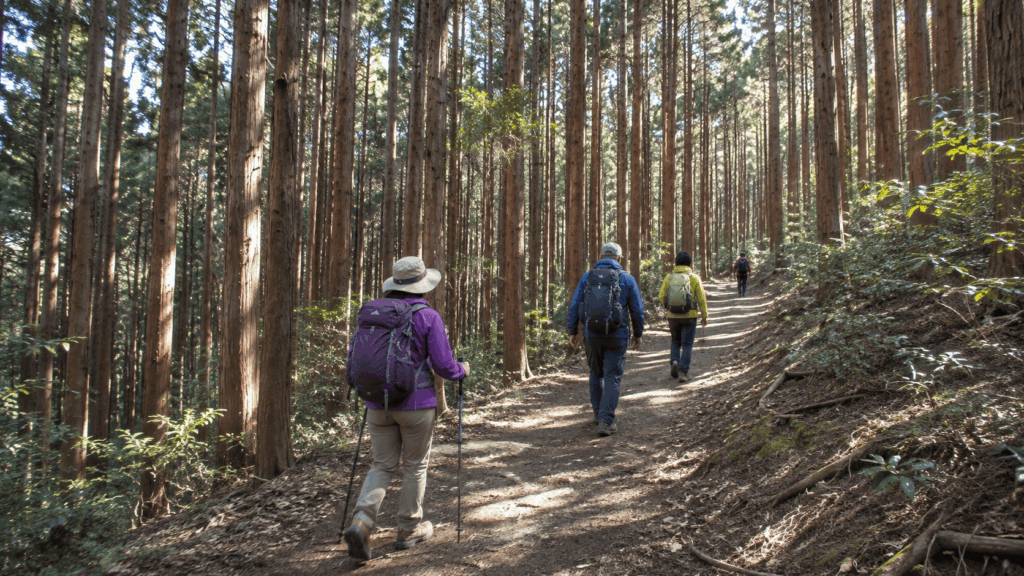
Two things stayed with me. There was no vending machine and no toilet anywhere on that stretch, so whatever water you carry is what you have. And the day was dry; after rain, the same roots and the packed earth between them would be a different walk altogether. I would not describe that route as suitable for someone in smooth-soled trainers who has not walked a hill in a year.
Now the caveat that matters more than the story. That 50 minutes is a figure from three years ago, in the uphill direction, on a route whose present status I cannot confirm. It is not the time from Katsuoji down to the falls today, and it is not evidence that the trail is open. Use it for what it is: a sense of how much work the terrain asks for, not a schedule.
Walking the Road: What to Expect
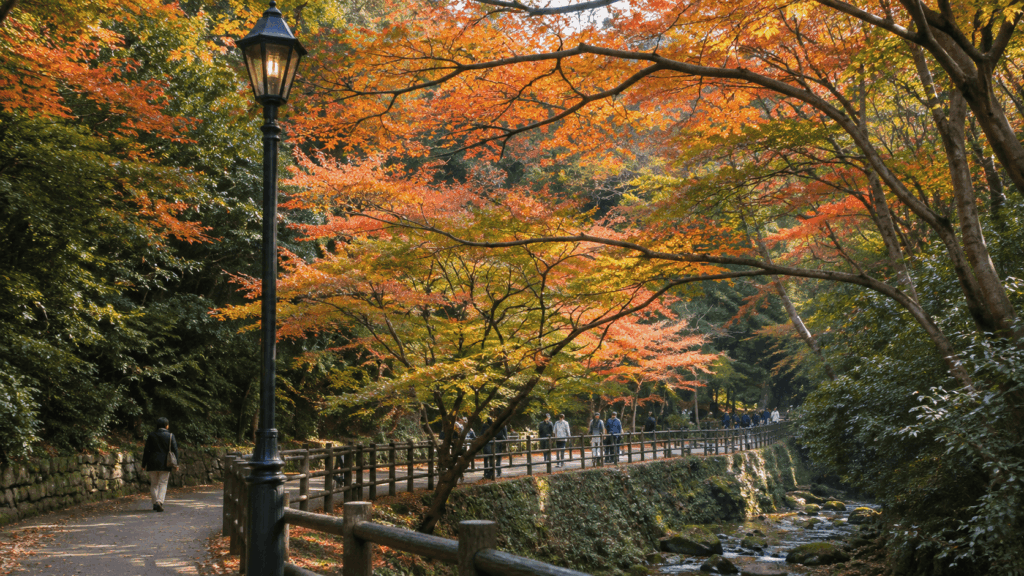
The road option follows the Minoh Driveway uphill from the falls side toward Katsuoji, and it is the route with the most documented recent walking time. A local reporter walked it from Katsuoji to the falls in late 2025 and clocked just over an hour, moving at an unhurried pace with photo stops. The shape of the walk is consistent: the first stretch out of the temple gate is exposed and carries the most traffic, including taxis running between the two sights. A long section further on has a properly built shoulder behind a guardrail. Near the falls, the driveway passes the upper parking area above the water, roughly 3 kilometres from the temple, before a short tunnel delivers you onto a pedestrian-only path.
What the road does not give you is a walking environment designed for pedestrians. For long stretches there is a shoulder rather than a footway, and traffic on a mountain road does not always leave much margin. The same account notes rockfall risk on the upper section and the possibility of icy surfaces in winter, and describes muddy ground as the falls come into view. Travelers who have done it describe two different experiences: one group finishes without drama and finds it a pleasant way to link the sights, while another is clear that they would not do it again and would take a taxi next time. Both are honest reports, and which one you get depends on the hour, the season and how comfortable you are walking beside moving vehicles.
Taxi, Then the Takimichi
The third option removes the road walking entirely. Take a taxi from the taxi rank outside Katsuoji toward the falls, then walk the paved Takimichi down to Hankyu Minoh Station. The taxi leg is short in distance but variable in practice: accounts range from under ten minutes to around twenty, depending on traffic, the drop-off point and the season, and fares vary accordingly. The usual drop-off is near the upper parking area, followed by about 15 minutes on foot down a steep slope to the falls. General vehicles cannot enter the park.
This is also the option most affected by autumn traffic management. During the maple season, part of the Minoh Driveway is restricted to one-way uphill traffic, which can rule out a direct descent from the temple side. Confirm with the driver before you get in, and do not build a tight schedule around a ten-minute transfer in late November.
How Long Does It Actually Take?
Walking times get quoted in isolation, which is how a 40-minute path turns into a six-hour day that ends in the dark. The table below is a planning allowance for the whole loop, not a stopwatch. The temple and waterfall figures are editorial estimates for a normal visit, not official opening hours.
| Section | Time allowance | Transport / terrain | Important note |
|---|---|---|---|
| Osaka Station area → Minoh-Kayano Station | About 30 minutes | Midosuji Line through to the Kita-Osaka Kyuko Line | No transfer needed on through trains; check the service pattern |
| Minoh-Kayano Station → Katsuoji Temple | About 20 minutes plus waiting | Hankyu Bus from stop 8 | Cashless payment only since 1 October 2026 |
| Katsuoji Temple | 60 to 90 minutes | Slopes, steps and gravel inside the grounds | Temple closes at 17:00, 18:00 on Saturdays |
| Katsuoji Temple → Minoh Falls | About 1 to 1.25 hours by road; no reliable figure for the forest route | Paved driveway, or forest trail if open | The two options are not comparable in effort |
| Minoh Falls | 30 to 45 minutes | Flat area around the basin and bridge | Benches fill quickly at weekends |
| Minoh Falls → Hankyu Minoh Station | 40 to 50 minutes | Paved Takimichi, about 2.7 km | Gentle downhill the whole way |
| Hankyu Minoh Station → Osaka-Umeda | About 30 minutes | Minoh Line, change at Ishibashi-Handaimae | This is a different station from Minoh-Kayano |
Add it up and a road-walking version of this day runs roughly five and a half to six and a half hours door to door, before you allow for a long lunch or a slow start. A taxi-based version is shorter on foot but not necessarily shorter overall, because you still wait for buses and trains. In November, sunset arrives before 17:00, so the last two rows of that table are the ones to protect.
Starting at Katsuoji: Buses, Tickets and Timing
Katsuoji sits in the hills above Minoh, and the usual approach is by bus rather than on foot. Take the Midosuji Line north from central Osaka onto the Kita-Osaka Kyuko Line to Minoh-Kayano Station, then the Hankyu Bus direct service from stop 8. The ride takes about 20 minutes and drops you at the temple entrance. Since 1 October 2026 that route is fully cashless: adult fare is 800 yen, and you pay with a transit IC card or a dedicated ticket bought at the stop, which is credit card only. You cannot top up an IC card on the bus, so arrive with enough balance.
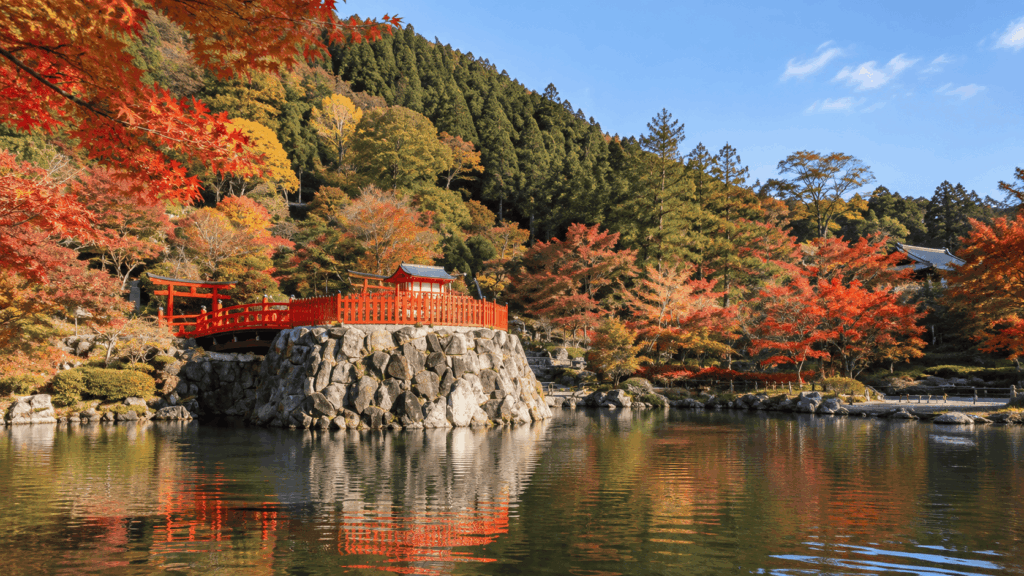
Entry to the temple is 500 yen for adults, with reduced rates for children. Gates are open 8:00 to 17:00, an hour later on Saturdays, and last entry is 30 minutes before closing. If you were thinking of driving, note that weekend and holiday parking at the temple is reservation-only, which is another argument for the bus.
What surprises most first-time visitors is how much ground the temple covers. The approach, the pond, the halls and the daruma shelves are spread across a slope, and the walk through the grounds is not a ten-minute stop. I remember the rest area feeling unexpectedly modern for a mountain temple, and small daruma figures tucked into gaps in the stone walls, which is the kind of detail you only notice if you are moving slowly.
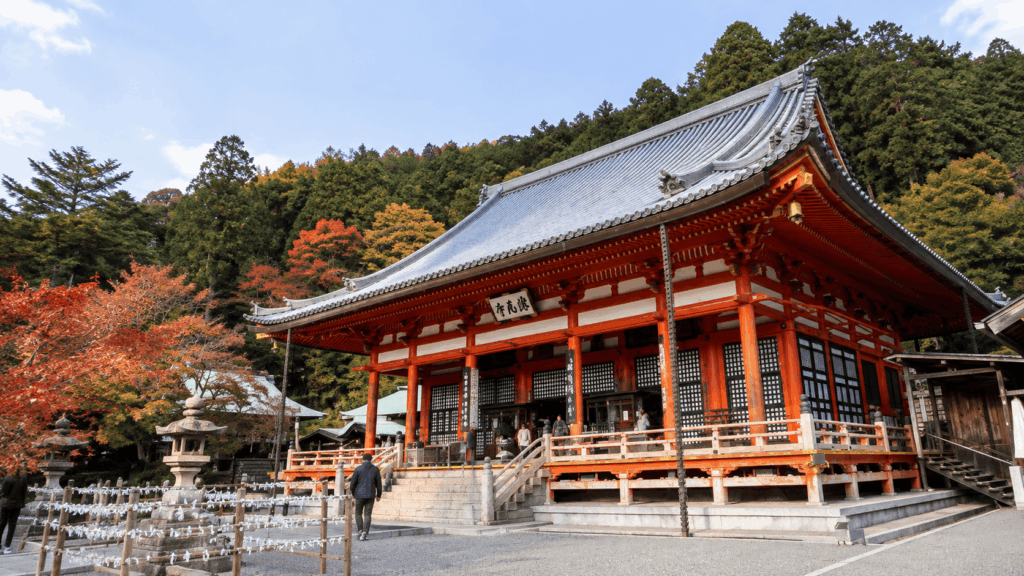
Kai’s tip: Decide how you are leaving before you go through the gate. When I visited, the gap between return buses was the part I had not planned for, and standing at the stop after a long temple walk is a poor time to start reading a timetable. Check the return times while you are still near the entrance, and if you are taking a taxi onward, ask at the rank about the current road restrictions first.
Minoh Falls and the Walk Down to Hankyu Minoh Station
The waterfall is 33 metres high and about 5 metres wide, dropping into a rocky basin that you reach through a short tunnel and a zigzag descent. The viewing bridge is the obvious photo stop, and there is a flat area in front of the falls where people sit, eat and let the spray cool them down. After the fire at a shop beside the falls in November 2025, the Takimichi was closed in stages; the park office lifted the final closure on 7 August 2026, and the tourism association announced full reopening from 8 August. Treat that as the current position rather than a permanent guarantee, since repair work can close sections again.
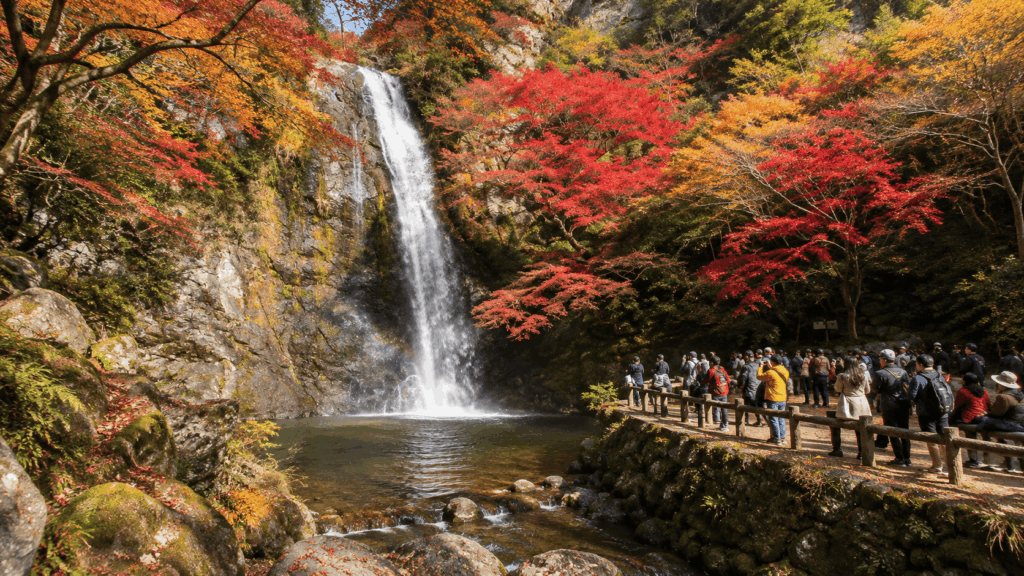
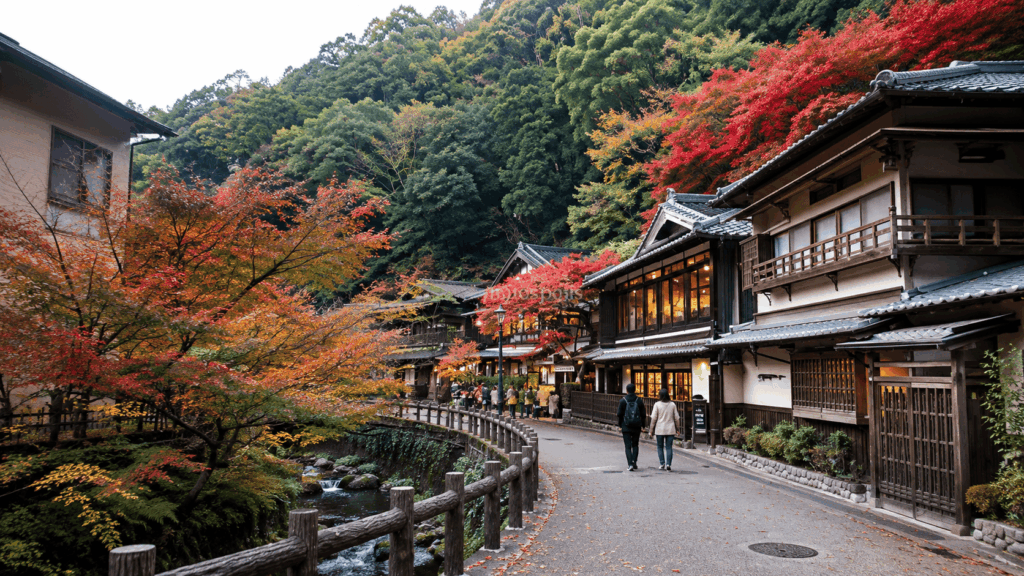
From the falls, the Takimichi runs about 2.7 kilometres along the river to Hankyu Minoh Station, on paved ground the whole way. Allow 40 to 50 minutes. It is an easy walk in the sense that there is nothing technical about it, but it is still a walk with a small climb near the start and a steady stream of people in the other direction. Landmarks along the way include Ryuan-ji Temple and the Minoh Park Insect Museum, both useful for breaking up the descent. For a closer look at this riverside route, see our detailed guide to the Minoh Falls hike.
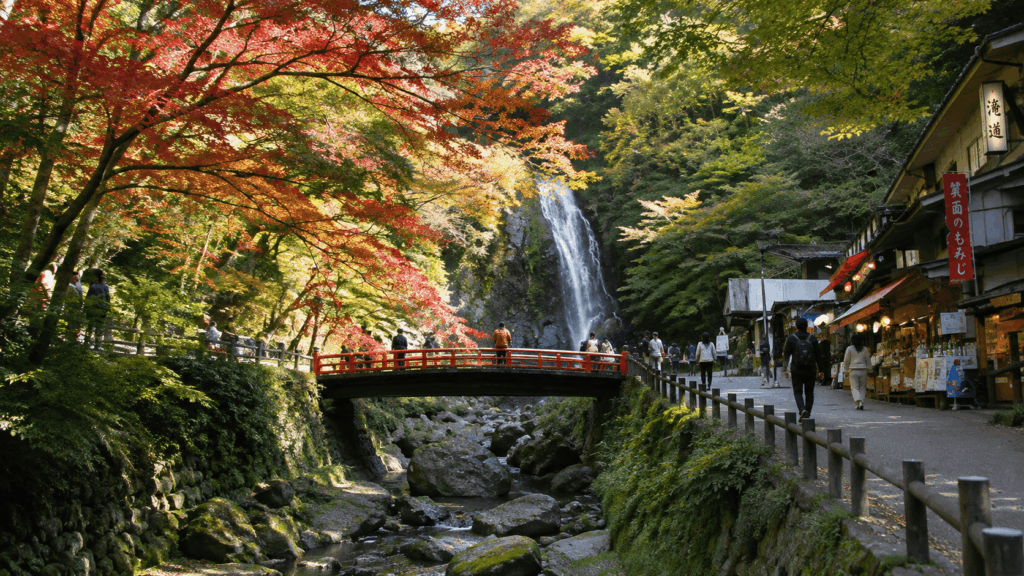
In early summer the maples along this path are a deep, luminous green, and the air near the falls is noticeably cooler than in the city. What I remember most, though, is the crowd. I visited on a weekend, and there were stretches where the pace was set by the group ahead rather than by me.
Kai’s tip: If you want photographs, take them at the falls and then put the camera away for the walk down. The path is wide but not empty, and stopping mid-flow to frame a shot is what turns a pleasant stroll into an obstacle course for everyone behind you. On a weekend, walking down before mid-afternoon also means you meet fewer people coming up.
What to Bring, and When to Call It Off
The Takimichi and the forest trail ask for different things. For the paved path, comfortable shoes with some grip are enough. For the forest route, you want a sole that holds on wet roots and packed earth, and you want to be honest about your knees on repeated short descents. Carry water from the start: on the stretch I walked between the falls and the temple there was no vending machine and no toilet, and the same is true of parts of the driveway route.
Toilets need planning. The public toilet beside the upper parking area at the falls, known as the Dainichi Bridge toilet, closed on 31 March 2026. The nearest alternatives are the toilet at the falls themselves and the one at the Minoh Visitor Center, which sits slightly off the driveway route. Do not count on either being open late.
Call the walk off in heavy rain or its immediate aftermath, in strong wind, in low cloud, or whenever an official notice flags a closed or dangerous section. Wet roots, wet leaves and wet road edges are a different proposition from the dry-day version, and no itinerary is worth a turned ankle on a mountain road.
Kai’s tip: Sort out water and a toilet at the falls before you start climbing or descending, not halfway along. Once you are on the forest section or the upper driveway, the options thin out fast, and the one facility that used to sit at the top of the falls is gone.
Autumn 2026 Road Restrictions You Need to Know
During the maple season, Minoh manages traffic on the driveway rather than letting it jam. For 2026, the restriction runs on Saturdays, Sundays and public holidays from 14 November to 6 December, between 9:00 and 18:00. The affected section is the Minoh Driveway between the Kazenomori lodge area and the junction below the dam, and vehicles, bicycles included, may only travel uphill, northbound. Traffic heading back toward Minoh Station and Osaka is directed onto a one-way southbound forest road.
For a walker this changes little, except that you should expect more vehicles on the sections that remain open. For anyone planning a taxi between the temple and the falls, it matters a great deal: a direct descent from the Katsuoji side may not be possible during those hours, and the driver may need a longer route. Ask before you set off rather than assuming the ten-minute transfer holds in peak foliage. Buses and roads are also busier, so build slack into the day.
Who Should Walk — and Who Should Take a Taxi
This is not a question of fitness alone. Purpose and weather matter as much as legs. The table is a starting point for your own judgment, not a safety certification.
| Traveler type | Recommended choice | Reason |
|---|---|---|
| Experienced hikers | Forest trail, only after confirming the current route | The terrain is the point, but the Trail No. 4 closure has to be checked first |
| Casual walkers | Taxi to the falls, then the Takimichi down | You still get 2.7 km of riverside walking without road traffic |
| Travelers with children | Taxi plus Takimichi, with a shorter walk | Depends on the child’s age, walking stamina and the day’s conditions |
| Visitors on a rainy day | Takimichi only, or skip the connection | Wet roots and road edges are where the risk sits |
| Travelers mainly interested in photos | Taxi to the falls, walk down | Best light and easiest access with the least time on a road |
| Travelers with limited time | Guided tour or taxi, not the road walk | The road walk alone can eat an hour and a quarter |
Three Itineraries for Three Kinds of Travelers
Option 1: For confident walkers. Visit Katsuoji first, check the closure page and the weather, then walk the driveway route to the falls. Allow about an hour and a quarter, keep to the shoulder, and skip the forest route unless you have confirmed an open connection. Best for people who actively want the walk; not for anyone hoping for a quiet woodland path.
Option 2: For casual nature lovers. Visit Katsuoji, then take a taxi toward the falls if the day’s restrictions allow, spend time at the waterfall, and walk the Takimichi down to Hankyu Minoh Station. This puts the nature walking where it is easiest and most scenic, and removes the road section entirely. Best for families and first-time visitors; not for hikers who want distance under their boots.
Option 3: For easier logistics. A small-group guided day trip from Osaka covers both sights in about six and a half hours with an English-speaking guide, meeting at Akatsuki Plaza by Osaka Station. It uses public transport to reach Minoh, a taxi between the temple and the falls, and a walk from the falls toward Ryuan-ji before the train back. Meals are not included, and it is not suitable for wheelchair users or travelers with limited mobility. Be clear about what it is: a guided visit with a taxi transfer, not a forest hike. If you want both sights without solving the transfer yourself, this is the option to weigh against the DIY routes above.
If you want both sights in one day but would rather spend your attention on the temple and waterfall than on coordinating the transfers, this is the guided option worth checking.
Why I’d book this one
- More context at Katsuoji: Recent travelers frequently praise the guides’ cultural explanations, helpfulness and relaxed pacing. That can make a difference if you want to understand the temple rather than simply photograph its daruma displays.
- Fewer transport decisions: The itinerary combines public transport with a taxi transfer between Katsuoji and the falls, avoiding the roadside walk described above. The precise route can still change with seasonal traffic restrictions.
- Room to check your plans: The booking page lists cancellation and payment options, so you can compare the conditions for your preferred date before committing.
See live availability, departure times, and recent traveler reviews for the Katsuoji Daruma Temple & Minoh Falls full-day tour. If you’re visiting during the autumn one-way restrictions, check the planned route and any itinerary adjustments before booking.
Getting Back to Osaka After the Falls
From the falls, walk the Takimichi down to Hankyu Minoh Station and take the Minoh Line. Most journeys involve a change at Ishibashi-Handaimae onto the Takarazuka Line for Osaka-Umeda, and the whole run is around half an hour plus waiting. Trains are frequent, but the walk down is not: give yourself the full 40 to 50 minutes rather than the 30 that a fast walker might manage.
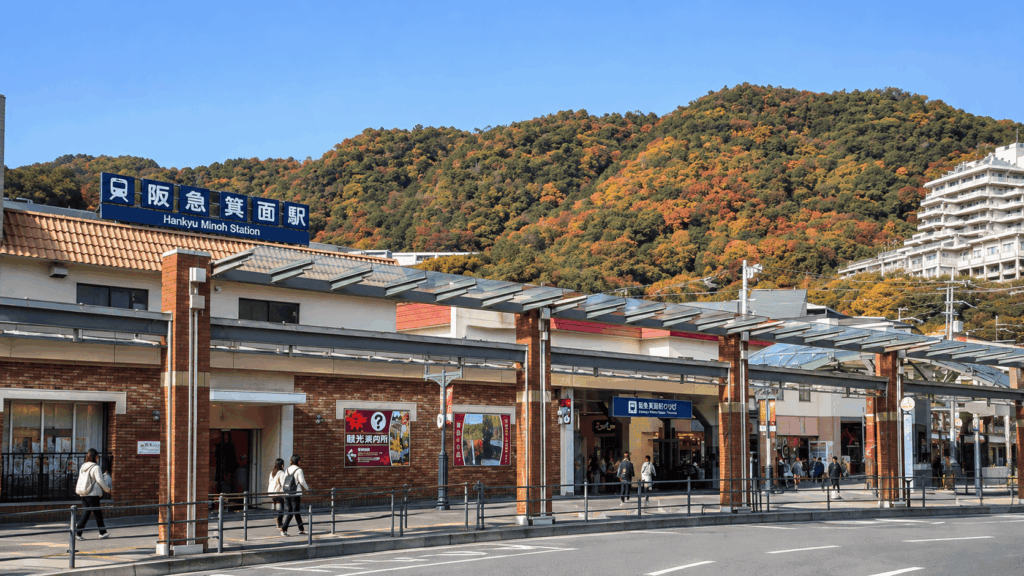
The single most common confusion here is the station name, and it is one I keep finding in itineraries sent to me for a check. Minoh-Kayano Station, where you started, and Hankyu Minoh Station, where you finish, are different stations on different lines, several kilometres apart. Do not plan to walk from the falls back to Minoh-Kayano, and do not buy a return ticket to the wrong one. If you came by bus from Minoh-Kayano in the morning, you will still be going home from Hankyu Minoh in the afternoon.
In autumn and winter, check the time of sunset before you leave the falls. The path is lit in places during events but is not a road you want to walk in the dark by accident, and the last connections from Ishibashi-Handaimae are earlier than central Osaka’s.
Frequently Asked Questions
Can you walk from Katsuoji Temple to Minoh Falls?
Yes, in principle, but there is no single signed route that you can simply follow. The forest connection through Nature Research Trail No. 4 is partly closed, and a continuous open path from the temple side to the falls is not officially confirmed. The reliable walking option is the road route along the Minoh Driveway, which shares the way with vehicles. Many travelers instead take a short taxi ride and walk the paved Takimichi down from the falls.
How long does it take to hike from Katsuoji to Minoh Falls?
By road, allow about one hour to one hour and fifteen minutes at an unhurried pace. There is no dependable walking time for the forest route at present, because the open connection has not been confirmed. The separate walk from the falls down to Hankyu Minoh Station takes 40 to 50 minutes over about 2.7 kilometres. Plan the whole day at roughly five and a half to six and a half hours including the temple.
Is the Katsuoji to Minoh Falls trail open in 2026?
Not entirely. Nature Research Trail No. 4 between points F14, F7 and F15, plus two branches, is closed for forestry thinning work until 26 February 2027 on the current schedule. One stretch from F14 toward the park interior remains passable, and the Tokai Nature Trail itself is not part of this closure. The Takimichi between the falls and Hankyu Minoh Station reopened in early August 2026.
Do you need hiking boots for the Katsuoji to Minoh Falls hike?
For the road route and the Takimichi, shoes with decent grip are enough; the surface is paved. For the forest trail, a sturdier sole helps on roots, loose earth and short steep sections, particularly after rain. Trail runners or light hiking shoes are a reasonable middle ground. Whatever you wear, check the tread before you rely on it on wet ground.
Can you take a taxi from Katsuoji Temple to Minoh Falls?
Yes. There is a taxi rank outside the temple, and the transfer is short, commonly around ten minutes, though reports range higher when traffic is heavy or the drop-off point is further from the falls. Fares vary. During the autumn one-way restriction on the Minoh Driveway, a direct descent may not be possible, so confirm the route with the driver before you set off.
Can you visit Katsuoji and Minoh Falls in one day without a car?
Yes. Take the train to Minoh-Kayano Station, the Hankyu Bus to the temple, then either walk the road route or take a taxi toward the falls. Finish with the Takimichi down to Hankyu Minoh Station and the Minoh Line back to Osaka. Note that Minoh-Kayano and Hankyu Minoh are different stations, so your return journey starts somewhere other than where you arrived.
The Verdict, by Traveler
Choose the road walk if you genuinely want to cover the ground between the two sights on foot, you are steady on a road shoulder, and you have checked that no new closure affects your route. It is the only self-powered way to connect them right now, and it rewards an early start.
Choose the taxi and Takimichi if your goal is the temple and the waterfall rather than the distance between them. You lose the forest, but you keep the best 2.7 kilometres of scenery, and you remove the part of the day that carries the most uncertainty.
For first-time visitors, the taxi-plus-Takimichi version is the safer introduction. It delivers the two things you came for, and it leaves the road walking for a return trip when you know the terrain.
For families, the same applies, with one condition: judge it on the youngest walker’s stamina, not the adults’. The Takimichi is stroller-friendly in parts but not throughout, and the falls area involves steps and uneven ground.
For travelers on a tight schedule, skip the connection entirely and pick one site. Katsuoji plus the Takimichi is already a full half day, and trying to add a road walk on top is how people end up at Hankyu Minoh Station after dark.
For repeat visitors and hikers, wait for the forestry work to finish, then check whether a continuous forest route has been officially confirmed before you build a day around it. When it reopens, the terrain I walked is worth the effort, and it is a very different experience from the driveway.
Whichever version you choose, check the closure pages on the morning you go. Conditions in these hills change with the season, and the only plan worth trusting is the one you confirmed today.

Hi, I’m Kai. I’m a Tokyo-based travel writer, tourism industry insider, and the author of a published guidebook for international visitors to Japan. With over 10 years of professional experience at a leading Japanese tourism company, my mission is to help you skip the tourist traps and navigate Japan’s best destinations like a local. I believe the perfect day trip is like a traditional kaiseki meal: a beautiful balance of precise planning and unforgettable seasonal discovery. When I’m not out conducting field research, you’ll usually find me drafting new itineraries with one of my favorite fountain pens!