
Choosing a family-friendly ski resort in Hokkaido usually comes down to one question: what happens on the day your child decides they have had enough of the cold? Every big resort here has beginner terrain and an English booking page, but they differ sharply on lesson ages, indoor backup plans, and how much walking and bus-riding a small child has to do. Tomamu is the strongest first-snow choice if you want a warm indoor plan B. Rusutsu is the clearest answer if English-led kids’ lessons are non-negotiable. Niseko HANAZONO offers group ski lessons from age three; Kiroro does too, while Tomamu also has a specialist private ski lesson for three-year-olds. Furano is the value option, while Kiroro and Sapporo Teine suit narrower cases.
This guide is for parents planning two to five nights on snow with children roughly aged three to twelve, where at least one adult wants to ski too. It is not for advanced skiers chasing powder, or for travellers who mainly want nightlife. Below, six real resorts are compared on the things that actually decide whether a family trip works.
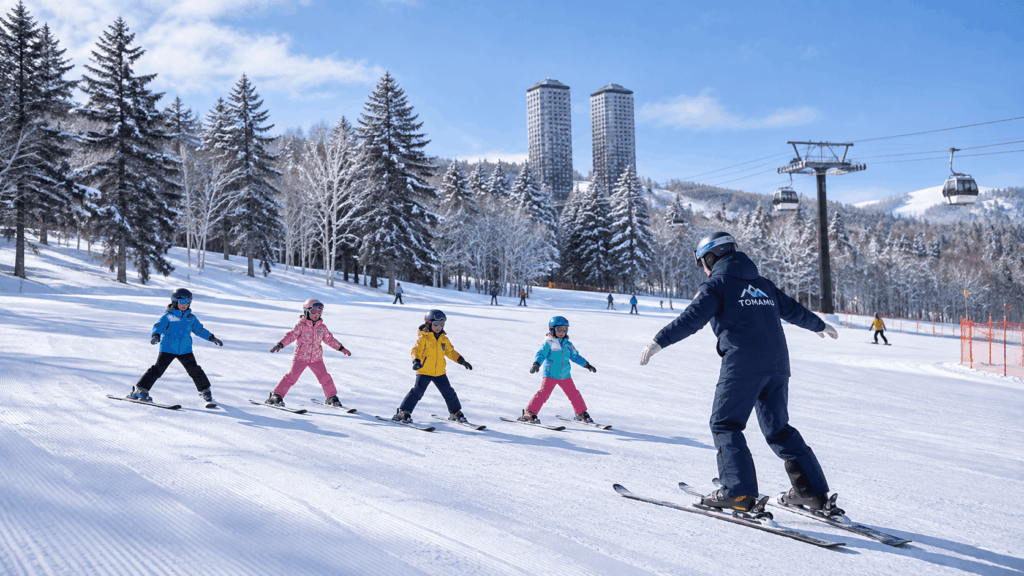
If Rusutsu is already on your shortlist because English instruction matters most, a private lesson is worth comparing with the resort’s Samurai Kids group programme — particularly if your family needs a more flexible teaching pace. Check Rusutsu private ski lesson availability, lesson formats and what’s included before deciding which arrangement suits your children.
Family-Friendly Ski Resorts in Hokkaido at a Glance
The table is deliberately blunt about drawbacks, because the useful question is not “which resort is best” but “which drawback can my family live with”. Lesson ages and programmes reflect each resort’s published 2026–27 information as of October 2026; always confirm on the resort’s own booking page before paying.
| Resort | Best for | Kids’ group lesson age | English instruction | Non-ski backup | Main drawback |
|---|---|---|---|---|---|
| Hoshino Resorts TOMAMU | First snow, indoor backup | 4+ (4–6 group in Japanese; 7–12 English/Japanese) | 7–12 group; standard private lessons from age 4. A separate ski-only private option accepts three-year-olds (confirm instruction language). | Mina-Mina Beach indoor wave pool, above 30°C | Cold ends sessions early; shuttle transfers |
| Rusutsu Resort | English-led kids’ lessons | 4–14 (split 4–7 and 8–14) | Native English-speaking instructors | Indoor wave pool, 14:00–21:00 in winter | Lesson, lift and rental costs add up |
| Niseko HANAZONO | Three-year-olds, small groups | 3–14 (Tic Tac 3–6, Yuki 7–14) | NISS international school; confirm language at booking | Indoor Kids Adventure, childcare on site | Highest per-day lesson price |
| Furano Ski Resort | Budget-conscious families | Varies by programme | Magic Lessons list English, Mandarin and Cantonese | Snowland tubing and snow rafting; beginner zones with escalators | Two separate base areas; confirm current kids’ lift terms |
| Kiroro Snow World | Kids’ academy, snow-focused stay | Ski 3–12; snowboard 7–12 | English-speaking children welcomed; English instruction via private academy lessons | Snow play areas (check current activities) | Instruction language needs confirming |
| Sapporo Teine | A ski day from Sapporo | 7+ in group programmes; private from 4 | English-only programmes listed by the school | SNOW-LAND tubing and sledding | Day trip only, not a resort stay |
Read the table by elimination: cross out any resort whose lesson age or indoor backup fails your family, then compare what is left on cost and transfers. If a first-snow holiday with a warm indoor fallback is your priority, the family-room layouts at Tomamu The Tower are the natural next thing to look at before you compare lesson prices.
One example of why the backup plan matters: when I guided a family at Tomamu in January 2026, the child managed about two hours outdoors before the cold ended the ski day — and the afternoon still worked, because there was somewhere warm to go. That trade-off is covered in detail further down.
The Six Resorts, and Who Each One Actually Suits
All six are genuinely family-friendly; they are friendly in different ways. To be clear about sources: I have visited Tomamu. For the other five, this comparison relies on each resort’s official lesson, lift and access information plus recurring themes in traveller reviews — not on personal visits, and not on pretending otherwise.
Hoshino Resorts TOMAMU — Best for a Child’s First Snow Holiday
Tomamu runs two hotels, Tomamu The Tower and RISONARE Tomamu, around a ski area with a dedicated beginner zone called Debut Park, which uses a snow escalator instead of a lift. That single detail matters more than it sounds: a first-timer can repeat short runs without negotiating a chairlift, and parents can watch from the bottom.
In January 2026 I guided a family whose child was seeing snow for the first time. It was below −15°C, the snow felt unusually light and dry, and the runs we used were wide enough that a beginner had room to make mistakes without being crowded. The child fell repeatedly without distress and, by the afternoon, was riding the lift and sliding down a gentle slope. That is one child’s day, not a promise about yours — children progress at very different speeds, and some will be done after forty minutes.
The reason Tomamu leads this list for first-timers is not the skiing. It is Mina-Mina Beach, an indoor beach kept above 30°C, with a 30m by 80m wave pool and a 30cm-deep kids’ pool. It is free for guests of the two main hotels, though not for Village Alpha. A family that skis in the morning and swims in the afternoon has a very different trip from one that tries to fill six hours on snow.
Best for: families with a child who has never seen snow, mixed-ability parents, and anyone who wants a resort where a non-skiing afternoon is a plan rather than a compromise.
Watch out for: three things. The cold genuinely limits outdoor time. Groups for ages 4–6 are listed as Japanese-language programmes, so English-speaking families with a four- or five-year-old are usually looking at private lessons instead. Tomamu also lists a separate two-hour, ski-only private lesson for children aged three at ¥18,300, including ski equipment during the lesson; confirm the language before booking. And the resort is spread out, so getting to dinner involves a shuttle — covered in its own section below.
Rusutsu Resort — Best for English-Language Kids’ Ski Lessons
If the non-negotiable is that your child is taught in English by an English-speaking instructor, Rusutsu is the most straightforward choice in Hokkaido. The Samurai Kids group programme takes ages 4–14, splits into 4–7 and 8–14, and is taught by native English-speaking instructors. It comes with a dedicated beginner area and magic carpet, a kids’ break room with toilets, supervised lunch on the five-hour programme, and priority lift lines so children spend less time queueing.
The programme is priced by season, and the differences are large enough to affect your dates. The 2.5-hour lesson is about ¥18,000 in regular season, ¥20,000 at peak and ¥16,000 in spring. The five-hour version with lunch is around ¥25,000 in regular season, about ¥28,000 at peak and roughly ¥23,000 in spring. Lift tickets and rental are not included, so the lesson figure is not the day’s cost.
Two conditions are easy to miss when booking. Children must be fully toilet trained — staff will help with toilet visits but will not change nappies. And there are no refunds if a child is tired or decides they no longer want to ski, which is worth weighing before you commit to the full-day option with a four-year-old.
Best for: families who want their children properly taught in English while the adults ski, and who accept a higher total cost in exchange for a programme built around that.
Watch out for: the add-ons. Lesson plus lift plus rental for two children can exceed the accommodation saving you thought you had made. The indoor wave pool is a genuine backup — open 14:00–21:00 in winter and free for hotel guests, excluding The Vale Rusutsu and Rusutsu Camp Village — but its aqua coaster requires a height of 130cm.
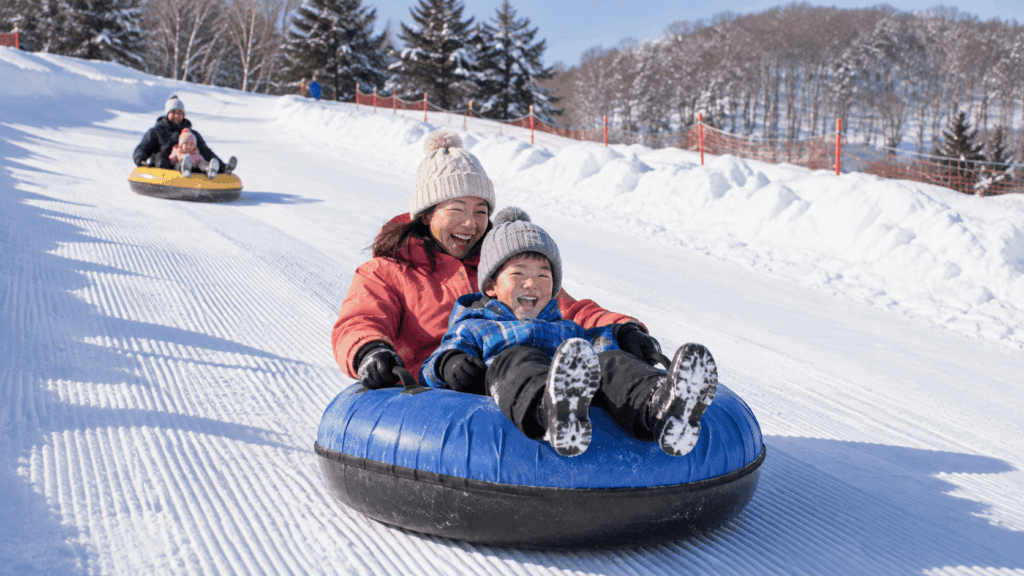
For families who like Rusutsu but would prefer individual attention over a group programme, there is another option to compare: a private ski lesson with an English-speaking certified instructor. This is a separate booking from Samurai Kids, so its age requirements, lesson arrangements and inclusions need to be checked independently.
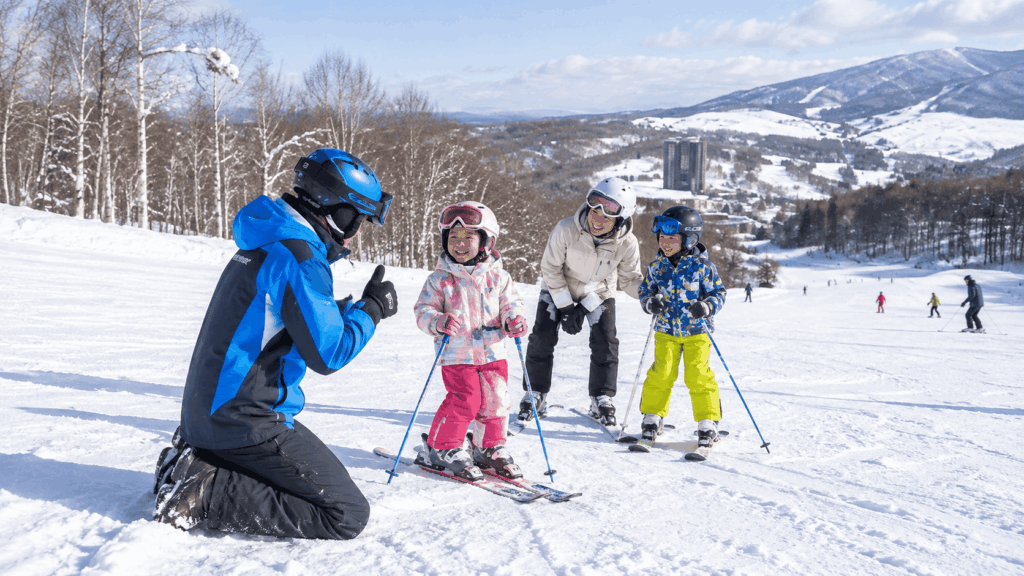
Why I’d book this one
- Individual teaching pace: Private instruction is better suited to families who want the lesson adapted to their ability rather than following a fixed group progression, especially when parents and children have different experience levels.
- English-speaking instruction: The listed experience offers an English-speaking certified instructor, giving families a way to discuss technique, confidence and lesson goals directly with their guide. Confirm the instructor language and each child’s eligibility for your chosen date.
- Flexible booking decisions: Half-day and full-day lesson options allow families to compare the time commitment. The listing also provides cancellation terms, while lift tickets, rental equipment and meals should be checked separately rather than assumed to be included.
This is most useful for families who value personalised instruction enough to consider a higher-priced private booking. Samurai Kids remains the more straightforward choice if supervised group activities and the five-hour lunch arrangement are essential. As the private experience is a newer listing without an established body of traveller reviews, compare its stated inclusions and conditions carefully rather than relying on a review score.
See current dates, private lesson options and booking terms for the Rusutsu ski lesson before deciding whether the extra flexibility is worth the cost for your family.
Niseko HANAZONO — Best for Three-Year-Olds and Small Groups
For a three-year-old who actually wants to ski, the search narrows quickly. NISS at Hanazono runs Tic Tac for ages 3–6 (skiing only) and Yuki for ages 7–14 (skiing and snowboarding). Both run 10:00–15:30 with lunch included, in groups capped at four children, at roughly ¥32,000 per child in regular and spring season and about ¥37,000 at peak.
The age rule is applied strictly: a child must be three on the start date, and must be toilet trained without assistance. If your child’s birthday falls during your trip, check the lesson date against it rather than assuming the holiday week qualifies.
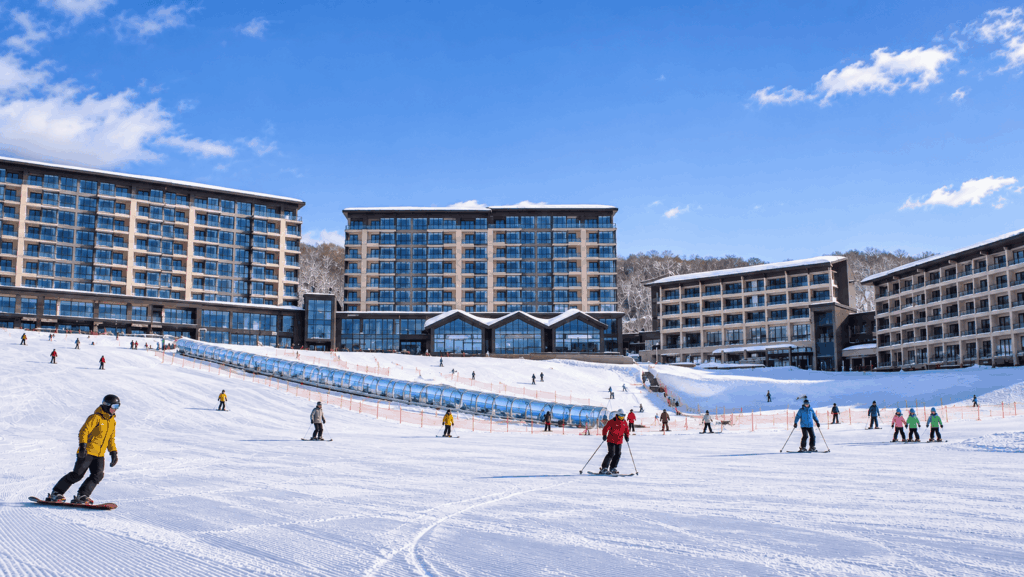
Two calendar details are worth checking before you build a trip around Hanazono. Group lessons do not operate between 28 November and 7 December 2026, and the published 2026–27 season dates (8 December to 4 April) are marked tentative. Hanazono is also one of four Niseko United areas: NISS’s conditions and prices apply at Hanazono, and should not be read as the terms for Hirafu or Niseko Village schools, which are run separately.
Best for: families with a three- to six-year-old, parents who value a four-child maximum, and travellers who want an English-speaking mountain environment and can absorb the cost.
Watch out for: the price per day, and the fact that five and a half hours is a long day for a small child regardless of how good the programme is. Lift tickets and rental need sorting before the lesson starts.
Furano Ski Resort — Best for Families Watching the Budget
Furano is the resort to look at seriously if the total bill matters more than the address. The resort’s official 2026–27 ticket page confirms that lift tickets are free for children up to elementary-school age, with a free ticket issued at the ticket office. Preschool children must ride lifts with a parent or guardian. This removes a major per-day cost for families with young children.
The mountain is split into the Furano Zone and the Kitanomine Zone, connected at the top. Both have beginner areas with snow escalators and free admission, which is useful for a child who wants twenty minutes of sliding rather than a lift pass. Shin Furano Prince Hotel has ski-in/ski-out access to the Furano Zone, not Kitanomine, so families staying there should book lessons meeting on the Furano side.
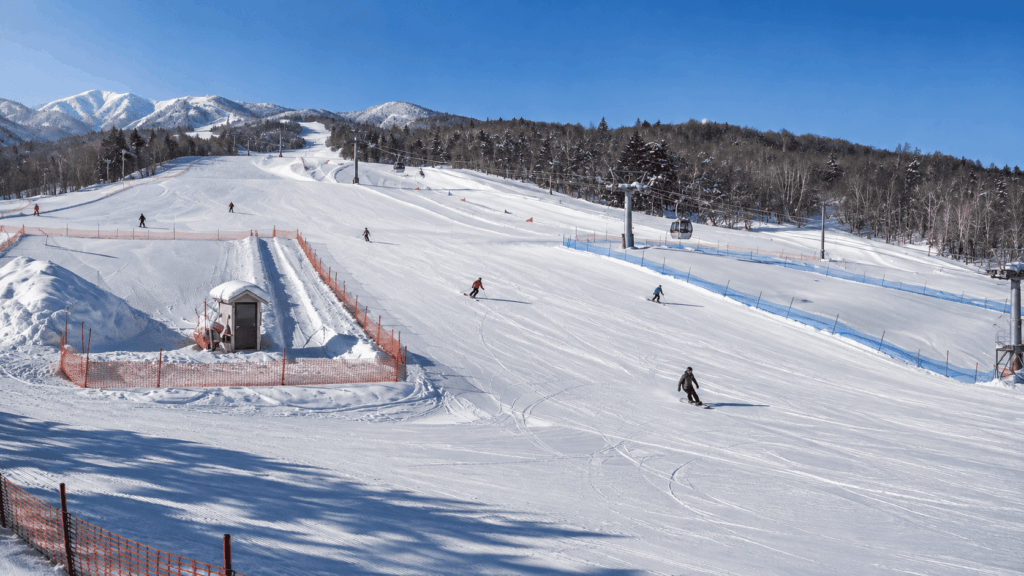
For lessons, there are two routes. Pandaruman runs Magic Kids Ski Lessons and takes bookings by phone or email. Separately, Magic Lessons for first-time and beginner skiers are listed in Japanese, English, Mandarin and Cantonese, with sign-up on the ground floor of Shin Furano Prince Hotel. Furano also runs a Snowland area with tubing, snow rafting and snowmobiles, usually split into morning and afternoon sessions.
Best for: families with school-age children where lift passes and accommodation dominate the budget, and parents who are happy to organise lessons by email rather than a slick online checkout.
Watch out for: the two-base layout, which means checking which zone your hotel and your lesson meet at, and the need to collect the free child lift ticket at the ticket counter before using the lifts.
Kiroro Snow World — Best for a Snow-Focused Stay with a Kids’ Academy
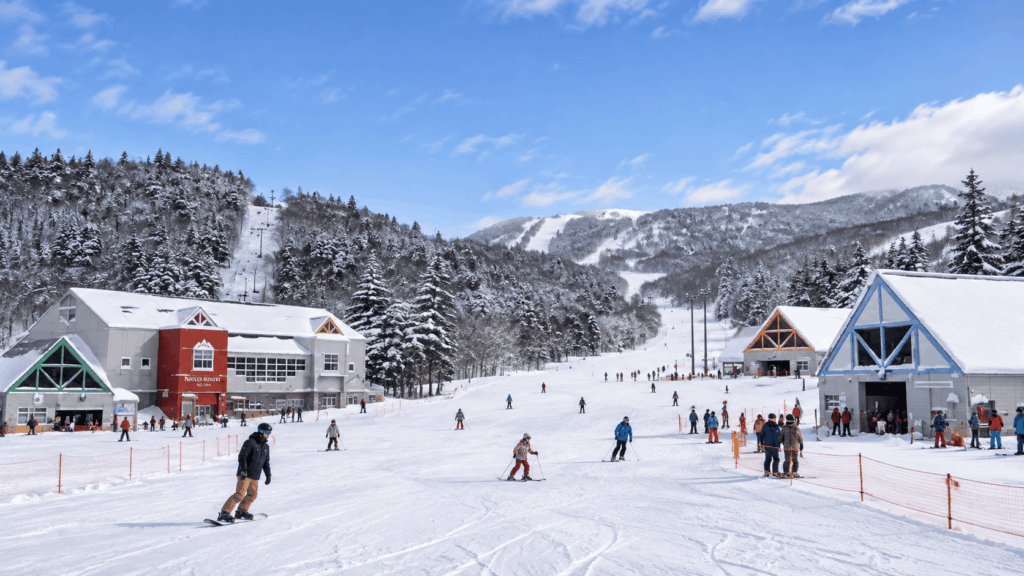
Kiroro’s appeal is simple: reliable snow, a compact resort layout, and a kids’ academy that starts at three. The Kids Academy covers skiing for ages 3–12 and snowboarding for 7–12, with half-day lessons around ¥8,000 and full-day lessons around ¥12,000, and the lesson fee includes the lift pass during lesson time. A half-day booking can usually be extended to a full day for an additional charge.
The language question needs care here. Kiroro’s own material welcomes English-speaking children, but the English-language instruction it advertises clearly sits with the Kiroro International Academy’s private lessons. Those are two different promises: a child who speaks English being looked after in a Japanese-language group is not the same as a lesson taught in English.
Best for: families who prioritise snow quality and a smaller, walkable resort, and who are willing to pay for private academy lessons if English instruction is essential.
Watch out for: programme details and prices, which should be confirmed directly — Kiroro’s site was undergoing maintenance when this was checked, so treat the figures as a guide rather than a quotation. Also ask specifically which language the instructor will use for the whole lesson, not whether English is “supported”.
Sapporo Teine — Best for a Day Trip from Sapporo
Teine is a different product from the other five, and it should be judged that way. It is a ski area close to Sapporo with two zones: Olympia, which holds the beginner facilities, and Highland, which has the longer runs. There is no resort hotel attached, no indoor pool, and no multi-day family bubble — you come for a day and go back to the city. If you don’t plan to drive, it is relatively straightforward getting to Sapporo Teine from the city.
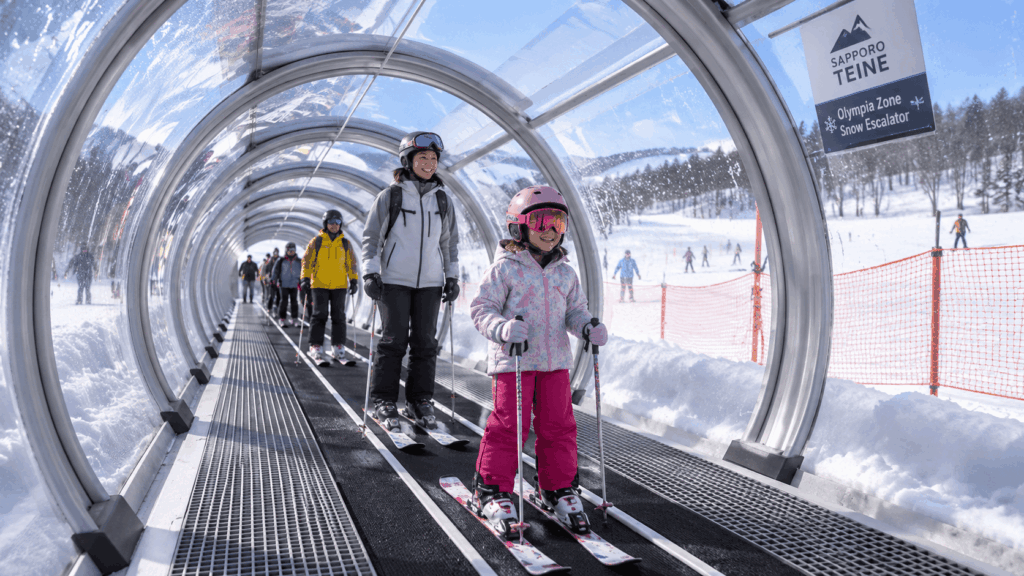
For that day, the infrastructure is genuinely useful. Bunny Slope is a beginner area served by a magic carpet, with a magic carpet pass around ¥2,300. SNOW-LAND adds tubing and sledding for children who would rather not ski, with a snow-land pass around ¥2,300 and a snow-play pass around ¥3,900 that also covers the snow escalator. The Teine Olympia Ski School lists English-only programmes: a first-timer group lesson for ages 7 and over at roughly ¥34,000 for 1.5 hours or ¥39,000 for a day, including rental gear and lift access, and private lessons from age 4 at around ¥36,000 for two hours.
Best for: families already staying in Sapporo who want to test whether their children like snow before committing to a ski resort, and children aged 7 and over.
Watch out for: the age floor on group lessons. Under-sevens cannot join the first-timer group programme and need private lessons, which changes the cost calculation completely. Children under 13 also need a parent or guardian present.
Kids’ Ski Lessons: Ages, Languages and What’s Included
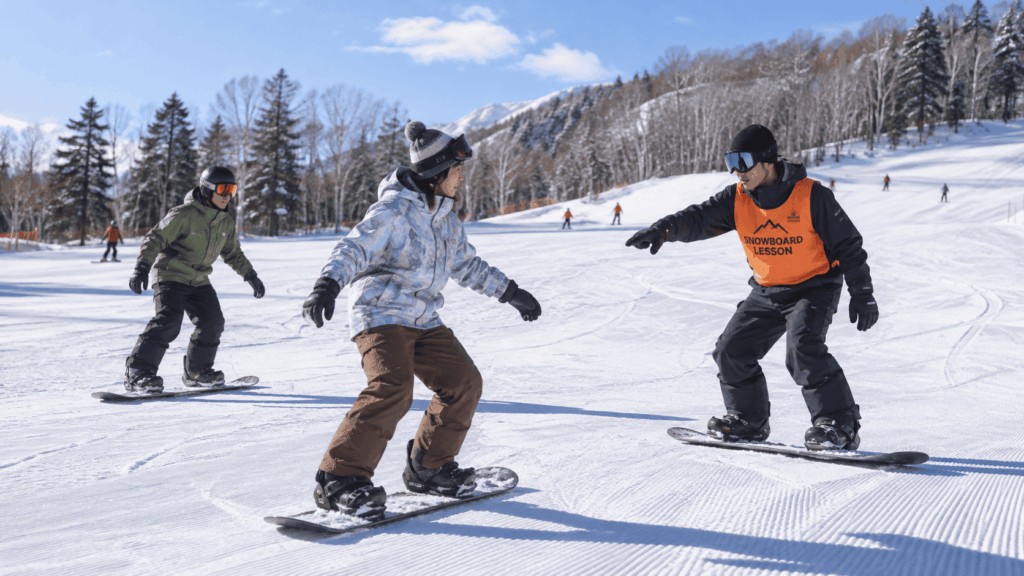
This is where most booking mistakes happen. Two lessons at similar prices can differ in duration, lunch, lift access, rental and language, and the age rule is usually applied by date of birth on the lesson date rather than by school year.
| Resort / school | Minimum age | Session length | English instruction | Lunch included | Lift / rental included | Booking notes |
|---|---|---|---|---|---|---|
| Tomamu (Tomamu Ski School / YUKIDS) | 4 | 120 minutes | 7–12 group in English or Japanese; 4–6 group listed as Japanese; private from 4 in English, Japanese or Chinese | No | No | Book online early; English places are limited |
| Rusutsu (Samurai Kids) | 4 | 2.5 or 5 hours | Native English-speaking instructors | Yes on the 5-hour programme | No | Toilet trained required; no refunds if a child stops |
| Niseko HANAZONO (NISS) | 3 | 5.5 hours, 10:00–15:30 | International school; confirm language when booking | Yes | No | Maximum 4 per group; no group lessons 28 Nov–7 Dec 2026 |
| Furano (Pandaruman / Magic Lessons) | Varies; Pandaruman from 3 | Varies by programme | Magic Lessons listed in English, Japanese, Mandarin and Cantonese | Check per programme | Check per programme | Pandaruman books by phone or email |
| Kiroro (Kids Academy) | 3 for ski, 7 for snowboard | Half day or full day | English-speaking children welcomed; English teaching via private academy lessons | Check per programme | Lift included during lesson | Confirm the instructor’s teaching language |
| Sapporo Teine (Teine Olympia Ski School) | 7 in group; 4 in private | 1.5 hours, full day, or 2/4-hour private | English-only programmes listed | No | Group first-timer includes rental and lift | Minimum 2 for group; under-13s need a guardian |
What “English Lessons” Actually Means at Each Resort
An English website does not mean an English lesson. When you enquire, separate three different things, because resorts answer all three with the same word.
- You can book in English. This only tells you the form is translated. It says nothing about the lesson.
- An English-speaking instructor is on staff. This is common. It does not guarantee that person is teaching your child on your date, and it does not guarantee the lesson is conducted in English.
- The programme is designed and taught in English. This is what parents usually think they have booked. In Hokkaido it is clearest at Rusutsu’s Samurai Kids programme, at NISS in Hanazono, and in Teine’s English-only school programmes.
The question worth asking in writing is: “Will the instructor teaching my child speak English for the whole lesson, and is that guaranteed for these dates?” At Tomamu, for example, the 7–12 group lesson is offered in English or Japanese, while the 4–6 group lesson is listed as a Japanese-language programme — which is exactly the kind of detail that decides whether a four-year-old’s lesson works. Confirm age rules and language availability on each school’s own booking page rather than a summary, including this one.
What Happens When Your Child Stops Skiing?
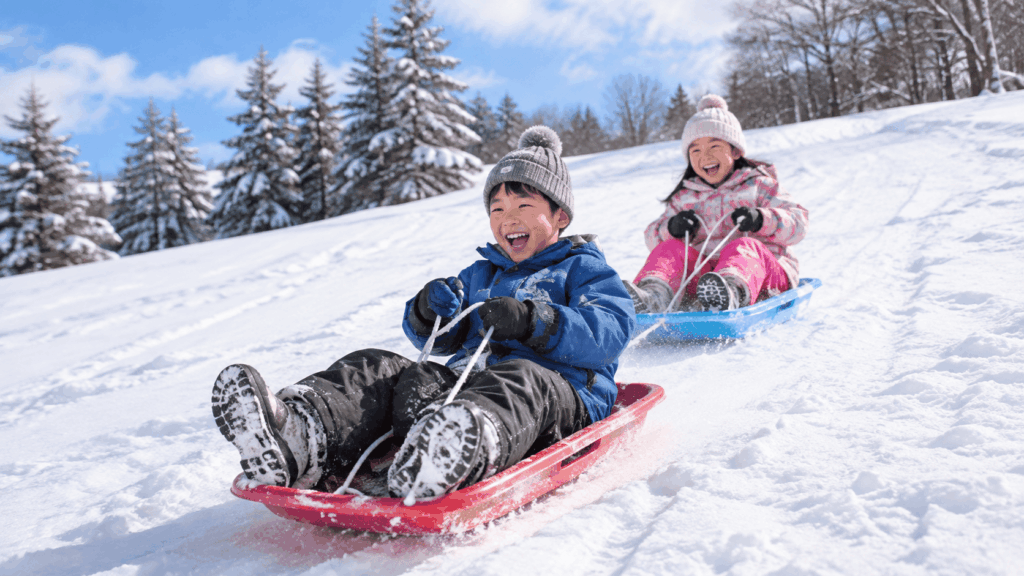
Children rarely stop because they are bored of skiing. They stop because they are cold, hungry, wet, or frightened, usually in that order, and usually earlier than parents expect. The resorts that handle this well are not the ones with the most terrain; they are the ones where leaving the snow is easy and the alternative is indoors.
Tomamu’s Mina-Mina Beach is the strongest version of this. It is an indoor beach kept above 30°C, with a 30m by 80m wave pool and a 30cm-deep pool for small children, generally open 11:00–20:00 in winter with last entry around 19:00. Admission is free for guests of Tomamu The Tower and RISONARE Tomamu, but not for guests at Village Alpha, so check which building you have booked.
Rusutsu has an indoor wave pool too, so this is not a Tomamu-only feature. It runs 14:00–21:00 in winter and is free for hotel guests, excluding The Vale Rusutsu and Rusutsu Camp Village. Note the 14:00 opening: a child who quits at 11:00 has a gap to fill. Furano’s Snowland and Teine’s SNOW-LAND cover the same need in a lower-key way, with tubing and sledding rather than swimming.
Kai’s tip: At Tomamu in January 2026, the child I was with lasted about two hours outside before the cold became the deciding factor, and the afternoon moved indoors to the wave pool. That reset the day rather than ending it. If you take one thing from this guide, take this: plan the morning as the skiing block and keep the afternoon flexible, and check the pool’s opening hours before you promise it.
Practically, that means booking lessons before lunch where possible, carrying a spare base layer, and agreeing in advance that stopping is allowed. A child who is told they must ski until 3pm often lasts less time than one who knows the pool is waiting.
The Tomamu Trade-Off: Getting Around With Small Kids
Tomamu deserves its place at the top of this list for first-timers, but it is not frictionless, and the friction is spatial. The resort is large and split between Tomamu The Tower, RISONARE Tomamu, the ski area and hotalu street, the dining cluster connected to The Tower by covered walkways. The area shuttle is free and runs at roughly 15–20 minute intervals, with some periods operating on request at the front desk rather than to a timetable.
Three details are worth knowing before you arrive. First, the free shuttle from JR Tomamu Station takes about five minutes to The Tower, but the return leg needs to be booked at the front desk. Second, rooms are not accessible before the 15:00 check-in or after the 11:00 check-out, even though guests can use facilities such as the pool before check-in — so an early flight means a morning with luggage, not a nap. Third, dinner needs planning: Buffet Dining hal takes online bookings from 30 days before, and does not take reservations by phone, while some restaurants on hotalu street do not take bookings at all.
One more practical note: there are no barrier-free guest rooms at Tomamu, though wheelchairs can be borrowed. Families travelling with a mobility aid should raise this with the hotel before booking rather than after.
Kai’s tip: We waited around 15 minutes for the shuttle while heading towards hotalu street for dinner, at roughly six in the evening. That is one wait on one day, not a permanent queue, but the pattern is worth planning around: the dinner window is when everyone moves at once, and a blizzard makes it worse. Eating early, or booking a restaurant before arrival, removes most of the stress of moving a tired child across a large resort.
A short checklist for Tomamu: confirm which building you are in and its distance from the lifts; reserve dinner before you fly; start moving towards dinner before your child is tired; check the shuttle arrangements at check-in, including whether it is on request that week; and allow slack on bad-weather days. If you are leaning towards Tomamu, compare room layouts as well as room rates — the choice between The Tower and RISONARE changes how much shuttle time you add to every day.
What a Family Ski Trip to Hokkaido Really Costs
Lesson prices are the most visible number and the least useful one on their own. A five-and-a-half-hour lesson with lunch is not comparable to a two-hour lesson without it, and neither includes lift tickets or rental unless it says so. The figures below are ranges from published 2026–27 information and will move with season and availability.
- Niseko HANAZONO (NISS): around ¥32,000 per child in regular and spring season, about ¥37,000 at peak, for 5.5 hours including lunch.
- Rusutsu (Samurai Kids): roughly ¥23,000–¥28,000 for the five-hour programme with lunch depending on season, and ¥16,000–¥20,000 for 2.5 hours.
- Tomamu: around ¥7,800–¥8,800 for a 120-minute standard group lesson; standard private lessons from about ¥26,300–¥27,800 for one participant, with an extra charge per additional person. A separate two-hour private ski debut lesson for three-year-olds is listed at ¥18,300, with ski equipment included for the lesson.
- Kiroro: around ¥8,000 for a half day and ¥12,000 for a full day, with the lift pass included during lesson time.
- Sapporo Teine: around ¥34,000 for a 1.5-hour first-timer group lesson that bundles rental and lift access.
| Cost item | Questions to check | Common extras |
|---|---|---|
| Accommodation | Which building, how far from lifts, is breakfast included, what is the cancellation policy? | Resort fees, late check-out, extra bedding |
| Lift tickets | Are children free, and from what age? Is a beginner-area ticket enough? | Card deposit, night-skiing add-on |
| Kids’ lessons | Duration, lunch, lift and rental included? Language guaranteed? | Helmet, lesson photos, extended day |
| Adult lessons | Group or private, English available? | Private instructor surcharge |
| Ski rentals | Is clothing included or only skis and boots? | Jacket and trousers, goggles, gloves |
| Helmets and clothing | Rental stock in children’s sizes? | Thermals, spare gloves, hand warmers |
| Transfers | Airport bus or train, and does it need booking? | Oversized luggage, late-arrival taxis |
| Meals | Is dinner reservation-only? Is there a children’s menu? | Buffet dinner, snacks, drinks |
| Childcare | Is there a nursery, and what ages does it take? | Hourly care, in-room babysitting |
| Indoor activities | Free for guests or day-rate? Any height or age limits? | Swimwear rental, pool toys, spa entry |
Two structural points matter more than any single price. First, resorts that look expensive often bundle more — Teine’s group lesson costs more than Tomamu’s in headline terms but includes rental gear and lift access. Second, a free child lift pass, where it applies, usually saves more than a cheaper lesson does. Furano’s confirmed 2026–27 free lift tickets for elementary-school-age children are the clearest example.
How to Choose the Right Resort for Your Family
Pick one non-negotiable and let it eliminate options. Families that try to optimise everything end up choosing on price and regretting it.
- If your child has never seen snow: Tomamu. The beginner zone, the indoor pool and the walkable dining street do more for a first trip than extra terrain would.
- If English-led lessons are the reason you came: Rusutsu. It is the clearest, most consistent English-language kids’ programme among the six.
- If your child is three: Niseko HANAZONO and Kiroro both have group ski lessons starting at three; Tomamu also offers a dedicated ski-only private lesson for three-year-olds. Confirm instructor language and the child’s eligibility before booking.
- If the budget is the constraint: Furano, once the kids’ lift terms are confirmed. It offers the same beginner infrastructure with lower accommodation pressure than Niseko.
- If you are already in Sapporo: Teine. Do not move hotels for a single day of skiing.
Then check the two things that quietly break plans: whether group lessons run on your exact dates, and whether the English instruction is guaranteed rather than merely available. Hanazono’s early-December gap and Tomamu’s Japanese-language 4–6 group are the two examples most likely to catch families out.
Families weighing Tomamu against Rusutsu usually find the decision comes down to lesson language versus indoor backup, while Niseko against Furano comes down to budget versus convenience. Both comparisons deserve more space than a paragraph, and both are covered separately. Once you have two candidates, compare their official lesson and room pages side by side before booking anything.
Before You Book: Access, Gear and Cold-Weather Planning
Access shapes the trip more than most parents expect, because a long transfer day is a lost ski day. Tomamu is about 90 minutes from New Chitose Airport by car via the expressway, and the train route requires a change at Minami-Chitose. Trains to Tomamu are limited expresses with reserved seats only, and there is no ticket counter at Tomamu Station, so buy tickets in advance or use the machine inside Tomamu The Tower. The free shuttle from the station to the hotels takes about five minutes. Tomamu also closes for maintenance in April and November, which matters if your dates sit at the edge of the season.
On clothing, the resort’s own winter guidance is more useful than generic packing lists: average temperatures sit around −10°C, and mornings in late January and February can drop towards −30°C. Because the air is dry, the cold reads as sharp rather than damp, and the parts people forget are the ears, neck and hands.
Kai’s tip: The day I spent at Tomamu was below −15°C, and what made the difference for the child was not a heavier jacket but coverage — a hood that stayed up, a neck warmer, mittens rather than gloves, and a warm-up break before anyone started complaining. Build the day around two shorter outdoor blocks with an indoor break between them, rather than one long session, and the cold stops being the thing that ends the holiday.
Finally, book lessons before you arrive rather than on the day. English-language group places are limited at every resort here, and the age rules are strict enough that a mis-booked lesson is usually not fixable on the spot. Check lesson dates against your child’s birthday, confirm what the price includes, and ask about height or age limits for pools and snow-play areas at the same time.
Frequently Asked Questions About Family Skiing in Hokkaido
Which ski resort in Hokkaido is best for beginners with kids?
It depends on the child’s age rather than on the terrain. For a first snow holiday, Tomamu is the easiest place to start: the beginner zone at Debut Park uses a snow escalator instead of a chairlift, and Mina-Mina Beach gives you an indoor option when the cold wins. For children aged four to fourteen who should be taught in English, Rusutsu’s Samurai Kids programme is the most consistent choice. For a three-year-old, both Niseko HANAZONO and Kiroro offer group ski programmes, while Tomamu lists a dedicated private ski debut option. All three have beginner-friendly areas; the difference is what happens around the lesson.
Can a three-year-old take ski lessons in Hokkaido?
Yes, but only at a small number of schools. NISS at Niseko HANAZONO runs Tic Tac for ages 3–6, and Kiroro’s Kids Academy starts skiing at three. Both apply the age rule strictly: the child must have reached the age on the lesson date, and Hanazono additionally requires that a three-year-old is toilet trained without assistance. At Tomamu the group lessons start at four, but a separate two-hour private ski lesson is available for three-year-olds at ¥18,300, with equipment included during the lesson; confirm the instructor language. The 4–6 group is listed as a Japanese-language programme. At Sapporo Teine, under-sevens cannot join the first-timer group lesson and need private tuition instead.
Are English-speaking ski instructors available in Hokkaido?
Yes, though “available” covers several different arrangements. Rusutsu’s Samurai Kids lessons are taught by native English-speaking instructors as standard. NISS at Hanazono is an international school, and Sapporo Teine’s listed school programmes are English-only. Tomamu offers English in its 7–12 group lessons and in private lessons from age four. Elsewhere, English-speaking staff may be on hand without the lesson itself being taught in English. When booking, ask whether the instructor will speak English for the whole lesson and whether that is guaranteed for your dates.
Is Tomamu or Rusutsu better for families?
They solve different problems. Tomamu is better if your child is new to snow, if you want an indoor pool as a genuine afternoon plan, and if you accept that outdoor time may be short and that getting to dinner involves a shuttle. Rusutsu is better if English-language instruction is the priority and you want the adults to ski while the children are properly taught and fed at lunchtime. Both have indoor pools, so that is not a point of difference. The real gap is lesson language and cost: Rusutsu’s five-hour programme runs roughly ¥23,000–¥28,000 per child, before lift tickets and rental.
Is Hokkaido too cold for young children to ski?
It is cold enough that the cold, not the skiing, usually ends the day. Tomamu’s own winter guidance puts average temperatures around −10°C, with mornings in late January and February that can drop towards −30°C. That does not make the resort unsuitable for children, but it does change how you plan: shorter outdoor blocks, an indoor break in the middle, proper coverage of ears, neck and hands, and a willingness to stop before a child becomes miserable. On my own visit the outdoor session lasted about two hours before we moved inside. Treat that as a planning assumption rather than a rule for every child.
Final Verdict: Which Hokkaido Resort Fits Your Family?
There is no single best family ski resort in Hokkaido, and any guide that names one is describing its own priorities. Here is how the six split once you decide what you will not compromise on.
Choose Tomamu if your child has never seen snow, you want a warm indoor alternative that is part of the plan rather than an emergency, and you are willing to organise dinners and shuttle rides in exchange for a resort where a non-skiing afternoon still feels like a holiday. It is the most forgiving first trip of the six. Choose another resort if you need English instruction for a four- or five-year-old in a group setting, or if you want to walk out of your room and onto the snow without planning transport.
Choose Rusutsu if English-led lessons are the reason for the trip and you would rather pay more for a programme built around that than save money and improvise. The five-hour format with supervised lunch is what makes it work for parents who want to ski. Choose another resort if your child is likely to bail halfway through the day — the programme does not refund for tiredness, and the full-day price is a real commitment.
Choose Niseko HANAZONO if your child is three or four and you want a small group, a full day with lunch, and an English-speaking mountain environment. Choose another resort if the per-day lesson price is the deciding factor, or if your dates fall between 28 November and 7 December 2026, when group lessons do not run.
Choose Furano if the total bill matters most and you have primary-school children who can use a free lift pass, with the confirmed 2026–27 offer of free lift tickets through elementary-school age. Choose another resort if you want a single compact base — Furano’s two zones mean you need to know where your hotel and your lesson actually meet.
Choose Kiroro if you want reliable snow, a smaller resort, and a kids’ academy from age three, and you are prepared to book private lessons if English instruction is essential. Choose Sapporo Teine if you are already staying in Sapporo and want one day on snow without moving hotels; it is not a substitute for a resort stay, and its group lessons start at seven.
For first-time visitors, the sequence that causes the fewest regrets is: pick Tomamu or Rusutsu first, then check lesson dates and your child’s birthday, then book accommodation in the building closest to where you will actually spend the day. For families with a three-year-old, compare Hanazono and Kiroro group lessons with Tomamu’s specialist private option, then work backwards from lesson availability. For travellers on a tight schedule, Sapporo Teine plus a city hotel beats a rushed two-night resort stay. For repeat visitors who already know they like snow, Rusutsu and Hanazono reward the higher spend, because the instruction is what you are buying.
And if your family includes advanced skiers chasing steep terrain, someone who needs a barrier-free room, or teenagers who want nightlife, be honest that this list is not aimed at you — Tomamu, for instance, has no barrier-free guest rooms, and none of these six is chosen for its expert terrain. The right resort is the one whose drawbacks you can live with for five days.

Hi, I’m Kai. I’m a Tokyo-based travel writer, tourism industry insider, and the author of a published guidebook for international visitors to Japan. With over 10 years of professional experience at a leading Japanese tourism company, my mission is to help you skip the tourist traps and navigate Japan’s best destinations like a local. I believe the perfect day trip is like a traditional kaiseki meal: a beautiful balance of precise planning and unforgettable seasonal discovery. When I’m not out conducting field research, you’ll usually find me drafting new itineraries with one of my favorite fountain pens!