
Yufuin is one of those rare places that reveals itself in two completely different versions. By day, the main street from the station to Kinrin Lake is lively with day-trippers browsing boutiques and queuing for soft cream. By late afternoon, the coach tours pull away—and the town transforms. The souvenir shops dim their lights, the foot traffic thins, and the silhouette of Mount Yufu settles into a deep blue dusk. Come dawn, a layer of mist drifts across Kinrin Lake, visible only to those who stayed the night.
This guide is built around one question: where should you stay in Yufuin—and should you stay at all? I’ll walk you through the four areas of this compact town, with honest ryokan recommendations for every budget and traveler type, so you can book with confidence.
If you already know you want one night in Yufuin, start with a balanced ryokan near both town and Kinrin Lake: check current room plans, meal options, and recent guest feedback for Yufuin Yawaraginosato Yadoya on Klook.
Is Yufuin Worth an Overnight Stay? (The Honest Answer)
The short answer: yes, if you want the version of Yufuin that most visitors never see. A day trip from Fukuoka or Beppu is perfectly feasible, and many people do it. But here’s what you trade by leaving in the afternoon.
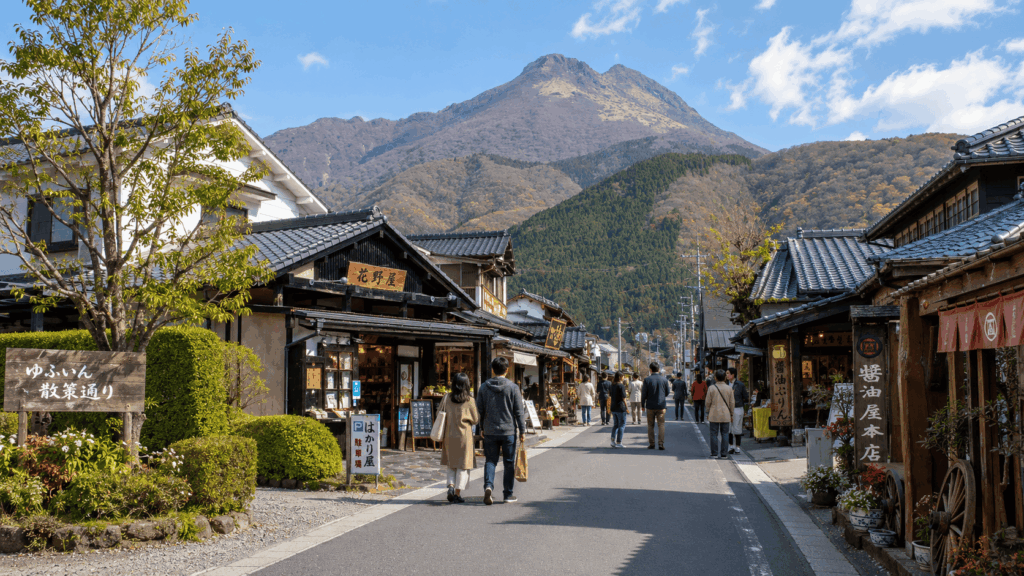
Most coach tours arrive around 10:00 AM and depart between 15:00 and 16:00. During those hours, Yunotsubo Kaido can feel crowded, and the popular food stalls have queues. By 17:00, the tour buses are gone. The shopping street quiets down, the shop shutters go up, and the town returns to a noticeably slower rhythm. The streetlights reflect off the wet cobblestones, and Mount Yufu stands alone against the evening sky.
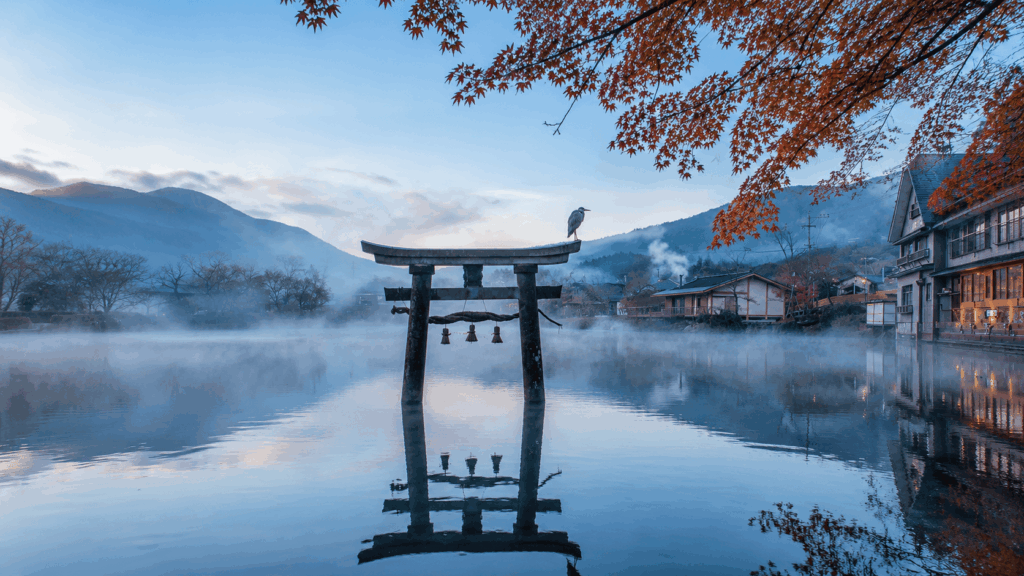
Then there is the morning. Kinrin Lake is famous for its mist, but the mist follows its own schedule. On cool mornings—especially from late autumn through winter—the fog rises from the warm spring-fed lake between roughly 5:30 and 7:30 AM. By 8:00, it has usually burned off. Day-trippers arriving on the first train rarely catch it. Overnight guests walk to the lake before breakfast and have it almost to themselves.
You should stay overnight if: you value quiet evenings, early morning photography, a full kaiseki dinner and Japanese breakfast experience, and the chance to soak in an onsen after dark.
A day trip works if: you are on a tight budget, staying elsewhere in Kyushu with limited itinerary room, or visiting mainly for the shopping and cafés. If you decide not to stay, check out our Yufuin day trip itinerary to make the most of your limited time.
Kai’s tip: The most common mistake I see is travelers arriving on the 09:17 Yufuin no Mori from Hakata, enjoying a pleasant afternoon, and heading back on the 15:56 return—completely unaware that the town changes character two hours later. If your schedule allows even one night, shift your itinerary. The evening and early morning are what make Yufuin memorable, not the midday crowds.
Understanding Yufuin’s Layout—Four Areas in One Compact Town
Before choosing a ryokan, it helps to picture the town. Yufuin is small. From JR Yufuin Station to Kinrin Lake is roughly 1.5 kilometers, a 20- to 30-minute walk along Yunotsubo Kaido, the main shopping street. You can comfortably walk from one end of the town to the other in about half an hour. Bicycles are available for rent at the station (about 250 yen per hour or 1,250 yen per day), but most visitors cover the central areas on foot.
The town breaks down into four distinct zones:
| Area | Walking time from station | Best for | Atmosphere |
|---|---|---|---|
| Station Area (Ekimae-dori) | 0–5 min | Convenience, first-timers, early departures | Practical, easy access to buses and taxis |
| Yunotsubo Kaido & Town Center | 5–15 min | Classic ryokan experience, shopping, dining | Lively by day, quiet alleys just off the main street |
| Kinrin Lake Area | 15–30 min | Scenery, morning mist, peaceful atmosphere | Serene, lakeside, few shops |
| Hills & Outskirts | 20–30 min (or shuttle) | Views, solitude, private open-air baths | Remote, nature-focused, requires transport |
Most ryokan offer a free pickup from Yufuin Station if you arrange it in advance. This means even lodgings on the outskirts are easy to reach—you simply drop your luggage at the station’s coin lockers or leave it at the tourist information center, explore the town hands-free, and meet your ryokan’s shuttle at a set time in the afternoon.
Where to Stay in Yufuin—By Area
Station Area (Ekimae-dori)—Best for Convenience & First-Timers
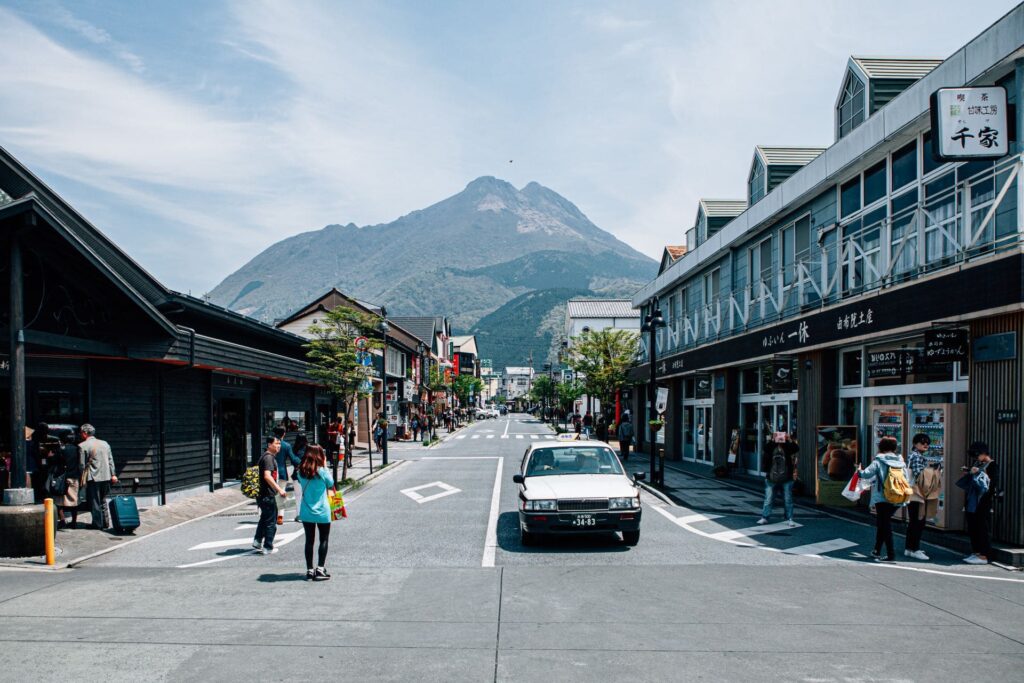
The area immediately around JR Yufuin Station is the most practical base in town. You step off the train, walk a few minutes, and you are at your ryokan. Restaurants, convenience stores, the bus terminal, and bicycle rental are all within a two-minute radius. This is a solid choice if you are arriving late, leaving early, or want to minimize walking with luggage.
Yufuin Akarinoyado is a strong mid-range pick just minutes from the station. Guests consistently mention the friendly English-speaking staff and the private reservable onsen (40-minute slots, free of charge)—a real advantage for travelers who are shy about communal bathing or want a private soak as a couple or family. The rooms are a mix of Japanese-style tatami and Western beds. Rates typically start around the mid-range for Yufuin.
Yuhuroten Toki No Manimani is a different proposition: a modern, design-forward rental house rather than a traditional ryokan. It sleeps up to four guests across two levels, with views of Mount Yufu from the bedrooms and rice paddies from the back. It is located behind the station, so it feels quieter than the front side. Best for a group of friends or a family who want a whole house rather than a ryokan room.
Yunotsubo Kaido & Town Center—Best for the Classic Ryokan Experience
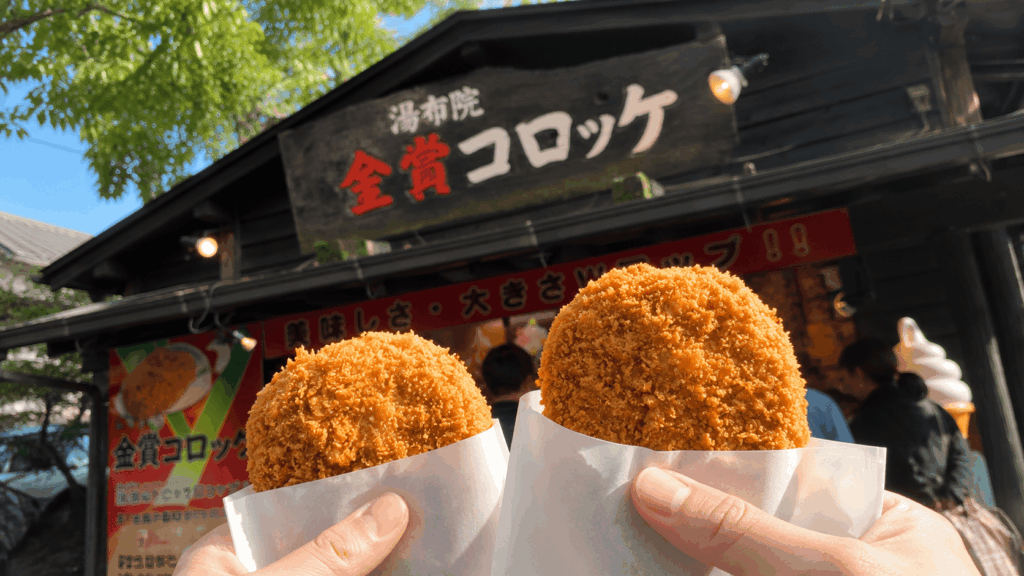
This stretch between the station and the lake is where most of Yufuin’s energy is concentrated. Staying here means you are at the center of the action: shops, galleries, bakeries, and cafés are all within a short walk. The ryokan in this area tend to offer a more complete onsen experience with kaiseki dinner and breakfast included.
Kai’s tip: Yunotsubo Kaido itself can feel busy between 11:00 and 15:00, especially during autumn leaf season. But the ryokan here are not on the main street itself—they are set back one block. That single block changes everything. The crowds vanish, and you get the convenience of the shopping street with the quiet of a residential lane. When comparing locations, look at the ryokan’s position on a map rather than the area name alone.
Onsen Hinoharu Ryokan is a classic mid-range ryokan about a 15-minute walk from the station, with both indoor and outdoor hot spring baths. The kaiseki dinner uses local Oita ingredients, and the rooms are spacious Japanese-style. It is close enough to Yunotsubo Kaido for afternoon exploring but set back enough to feel calm. Rates start around $170 per person per night with two meals included.
Yufuin Onsen Seikoen sits a little further from the station but offers a complimentary shuttle (arrange in advance). The selling point here is the reservable family bath—a private onsen that can be used by a group together, which is a rarity at this price point. The meals receive consistently strong reviews from international guests. It is a practical choice if you want a full ryokan meal plan and private bathing without the luxury price tag.
Kinrin Lake Area—Best for Scenery & Morning Mist
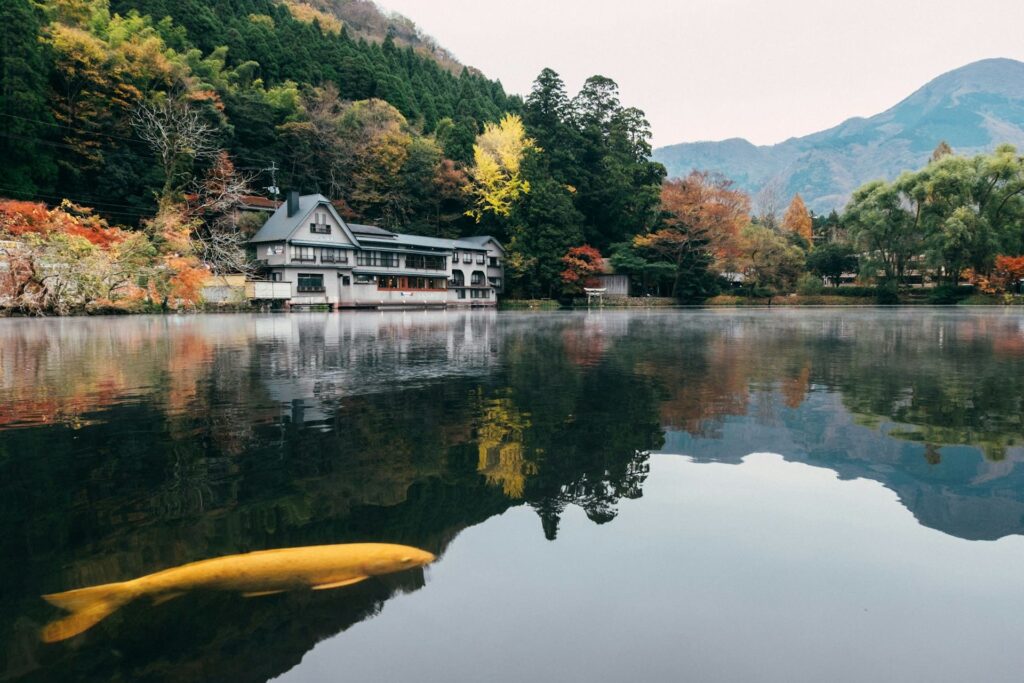
The lake is Yufuin’s natural centerpiece, and the ryokan clustered around it offer the most atmospheric setting in town. You trade some convenience—there are fewer restaurants and shops within immediate walking distance—for the kind of view that makes the stay memorable. In the early morning, you can walk from your ryokan to the lake in a few minutes, before any day-trippers have arrived.
Pension Kirinko Toyonukuni is one of the most budget-friendly options in the lakeside area, with rates starting around $70 per person per night. The onsen faces the lake, and the dining room serves simple but satisfying Japanese meals. It is closer to a guesthouse than a full-service ryokan—expect a more casual atmosphere, shared bathrooms for some rooms, and limited English. Best for solo travelers or couples on a budget who prioritize location over luxury.
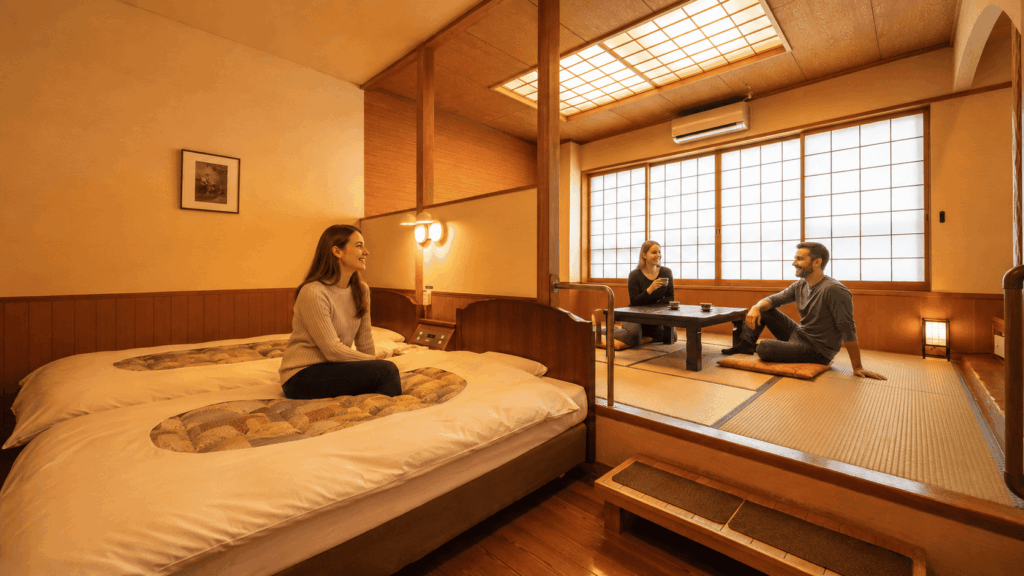
Yawaragi-no-Sato Yadoya sits near the Comico Art Museum, a short walk from the lake, and receives outstanding reviews for its hospitality. The ryokan has multiple indoor and outdoor baths, including a reservable private onsen at no extra charge. Rooms are Japanese-style with exposed wooden beams, and the kaiseki dinner is served in-room. This is a mid-range pick that consistently outperforms its price point on service quality.
Kamenoi Besso is the address in Yufuin if you are looking for something truly special. Established in the 1930s, this is one of Japan’s most celebrated ryokan, consistently featured in luxury travel guides and Michelin selections. The property is a collection of detached cottages scattered across a private garden beside the lake. Each room has a distinct character, and the onsen draws directly from the same spring that feeds Kinrin Lake. Dinner is a multi-course kaiseki of extraordinary precision. Rates reflect the caliber—expect to pay premium prices, starting well above typical mid-range—but for travelers who value a once-in-a-lifetime Japanese inn experience, it delivers.
Hills & Outskirts—Best for Solitude, Views & Space
The hills south and east of Yufuin offer a completely different stay: open views of Mount Yufu, larger rooms or private cottages, and often a private open-air bath in each room. The trade-off is distance from the town center. Most ryokan in this area offer a free shuttle from the station (book in advance), and you will want to have dinner at the ryokan since there are few nearby restaurants.
Yufunosato Ryoso Makibanoie is a collection of separate cottages, some with thatched roofs, set among rice paddies and gardens. It is an easy 10-minute walk from the station, which makes it more accessible than the other hillside options. Each cottage has a semi-open-air bath, and the property has a communal onsen as well. The atmosphere is rustic and quiet—ideal for couples who want privacy.
Yama no Hotel Musouen sits on a hill south of the town center and offers one of the most dramatic onsen views in Yufuin: a large open-air bath overlooking the valley and Mount Yufu. Some cottages come with a private open-air bath on the deck. The hotel has a free shuttle from the station. This is a strong choice for travelers who want a room with a view and don’t mind relying on the shuttle for meals and exploration.
Yufuin Baien Garden Resort offers detached villas with semi-open-air baths, plus two reservable private family baths. The main appeal is the sense of space—each villa has a garden area, and the resort is set among plum and maple trees. It is a good fit for families who want separate sleeping areas and the freedom of a private bath without the cost of a luxury ryokan.
Ryokan Quick-Pick by Traveler Type & Budget
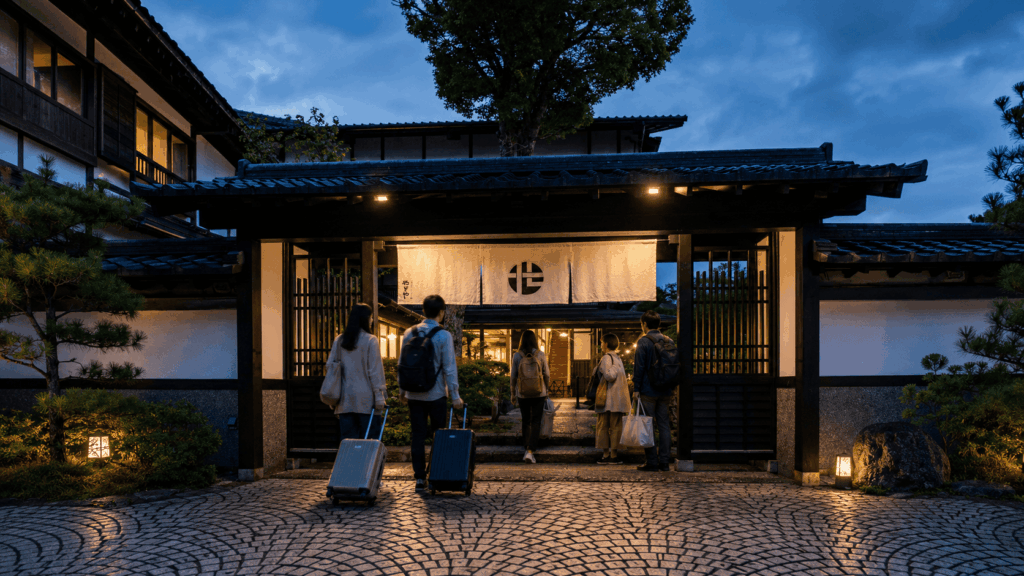
If you are short on time, this table summarizes the best match for your situation:
| Traveler type | Mid-range pick | Splurge pick | Why |
|---|---|---|---|
| Solo traveler | Pension Kirinko Toyonukuni | Yawaragi-no-Sato Yadoya | Budget-friendly lakeside options; solo-friendly atmosphere |
| Couple, first visit | Onsen Hinoharu Ryokan | Kamenoi Besso or Ryotei Tanokura | Romantic setting with kaiseki dinner and private bath options |
| Family with kids | Enokiya or Yufuin Baien Garden Resort | Yufunosato Ryoso Makibanoie | Separate rooms, private baths, more space |
| Group of 3–4 friends | Yuhuroten Toki No Manimani | — | Entire house rental; modern design; group-friendly |
| Luxury seeker | — | Kamenoi Besso, Hoshino Resorts KAI Yufuin | Highest level of service, dining, and bathing |
| Budget-conscious | Yufuin Akarinoyado or Pension Kirinko | — | Good value without sacrificing the onsen experience |
If you fall into the first-time visitor camp—you want the lake within reach, but you also do not want to feel cut off from town—Yufuin Yawaraginosato Yadoya is the ryokan-style booking to compare first.
Why I’d book this one
- Recent travelers consistently point to the location as a major strength: close enough to both Yunotsubo Kaido and Kinrin Lake, without feeling like a station-only compromise.
- It works for couples and families because the property is reviewed well for hospitality, meals, and private onsen-style comfort rather than just a cheap bed.
- It is a low-friction comparison point: you can check room plans, meal inclusions, cancellation terms, and recent reviews before deciding whether to splurge higher or go cheaper.
See live dates, room types, and recent traveler reviews for Yufuin Yawaraginosato Yadoya on Klook.
What to Look for When Booking a Ryokan in Yufuin
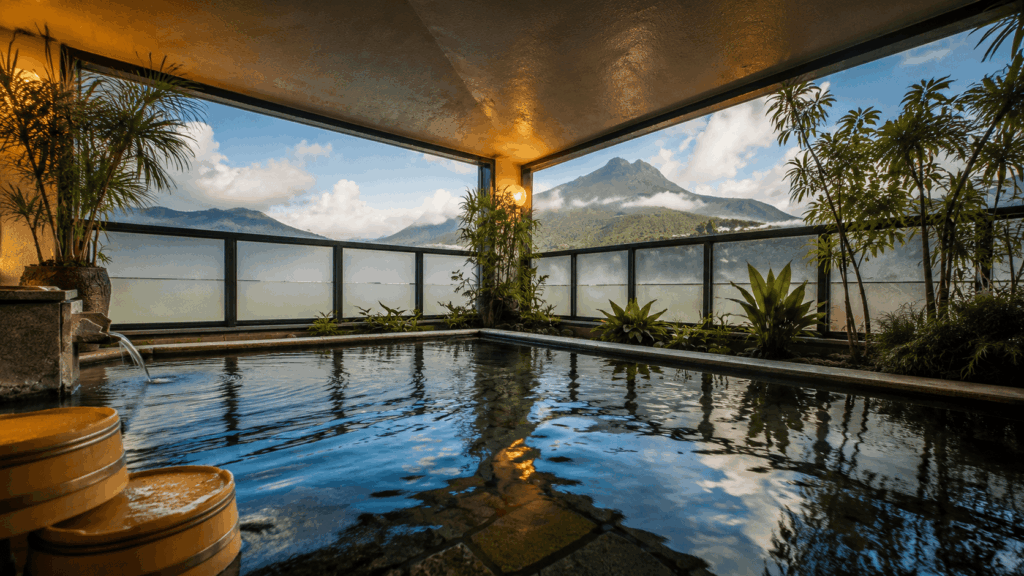
Ryokan are different from hotels. Here is what matters most when comparing options in Yufuin:
Private onsen access. Some ryokan offer a free-of-charge reservable private bath (kashikiri onsen) for 40–60 minutes. Others have private baths that require an additional fee, or none at all. If bathing privately as a couple or family is important to you, check the facility details before booking. Yufuin Akarinoyado, Yawaragi-no-Sato Yadoya, and Enokiya all offer free reservable private baths.
Meal plan. Most mid-range and luxury ryokan in Yufuin include a multi-course kaiseki dinner and Japanese breakfast in the room rate. This is one of the main reasons to stay rather than day-trip. If the meal plan is important to you, confirm that it is included—some budget ryokan offer room-only rates.
Free station pickup. The majority of ryokan offer a complimentary shuttle from Yufuin Station if you call or email ahead. The standard model is: arrive at the station, store your luggage in a coin locker or at the tourist information center, explore the town hands-free, and meet the shuttle at a designated time (usually 14:00–17:00). Check the shuttle schedule when booking.
Kai’s tip: In busy seasons—November’s autumn colors, Golden Week, and the New Year period—the best ryokan can be fully booked two to three months in advance. I have spoken to travelers who left their Yufuin accommodation to the last minute and ended up staying in Oita City instead. If your dates are fixed, I recommend booking as soon as you have confirmed your Japan itinerary. Also note that some ryokan close on certain weekdays due to staff schedules—if you are looking at a specific property, check the availability calendar before falling in love with it.
Getting to Yufuin & Arrival Logistics

From Hakata Station in Fukuoka, the journey to Yufuin takes about 2 hours and 15 minutes on the Yufuin no Mori limited express train. This is a scenic sightseeing train with large windows, wood-paneled interiors, and a small café car. The fare is approximately 5,690 yen one way (all seats reserved). If you hold a JR Pass, you can ride at no additional cost but must reserve a seat in advance—these seats sell out quickly during peak seasons. For a complete breakdown of transportation options, see our complete guide on how to get to Yufuin.
From Beppu, a direct bus runs to Yufuin in about 50 minutes for around 1,100 yen. The train via Oita takes about 80 minutes and costs around 1,300 yen (covered by JR Pass).
Here is a practical arrival sequence that works well: arrive at Yufuin Station around lunchtime, store your luggage at a coin locker or the tourist information center (open 9:00–17:00, right outside the station). Walk Yunotsubo Kaido toward Kinrin Lake at a relaxed pace—about 30 minutes each way with stops for food and shopping. (For ideas on what to see along the way, read our guide on things to do in Yufuin.) Return to the station area around 15:00–16:00, retrieve your luggage, and meet your ryokan’s shuttle. Check in, enjoy a soak before dinner, and experience the evening quiet of the town.
If you arrive later in the afternoon, head straight to your ryokan via shuttle. Many ryokan offer an onsen immediately on arrival, and the kaiseki dinner is typically served between 18:00 and 19:00.
FAQ
Should I book a ryokan through Booking.com, Rakuten Travel, or directly?
Each has its advantages. Booking.com and Agoda are convenient if you want to manage all your Japan accommodation in one place, and many offer free cancellation. Rakuten Travel often has better Japanese domestic inventory and occasional member-only deals. Booking directly with the ryokan can sometimes yield the best rate or a room upgrade, but requires Japanese-language proficiency or a willingness to communicate in simple English. For most first-time visitors, an OTA with free cancellation offers the best combination of ease and flexibility.
Is it possible to visit Kinrin Lake as a day-tripper?
Yes, absolutely. The lake is a public park and accessible to everyone regardless of where you are staying. The difference is timing. Day-trippers typically reach the lake between 10:00 and 15:00, when the morning mist has long since dissipated and the lakeside path is at its busiest. The lake is beautiful at any time of day, but the famous mist—which creates the postcard image of Yufuin—is an early morning phenomenon best experienced as an overnight guest.
Do ryokan in Yufuin accommodate dietary restrictions?
Many do, but the level of flexibility varies. Kaiseki dinners are carefully plated multi-course meals, and some ingredients are difficult to substitute at short notice. If you have allergies (shellfish, nuts, gluten) or dietary preferences (vegetarian, vegan, halal), I recommend notifying the ryokan at least a week in advance by email. Ryokan with higher international guest volume, such as Yufuin Akarinoyado and Onsen Hinoharu Ryokan, tend to be more accustomed to accommodating dietary needs. Smaller, traditional ryokan may have more limited flexibility.
What is the difference between Yufuin and Beppu for an onsen stay?
Yufuin is smaller, more curated, and centers around a single scenic lake and a walkable shopping street. Beppu is larger, more industrial, and offers a wider variety of onsen types (sand baths, mud baths, steam baths) across multiple districts. If you want a quiet, romantic ryokan stay with a full kaiseki dinner and morning lake views, choose Yufuin. If you want to experience eight different onsen in one day, visit Beppu. Many travelers combine both: one night in Yufuin for atmosphere, one or two nights in Beppu for variety.
Is it worth visiting Yufuin in summer when there is no mist on the lake?
Yes, for different reasons. Summer in Yufuin means lush green hills, lively festivals (the Yufuin Floral Village is in full bloom), and a more relaxed pace. The lake is still scenic—it reflects the surrounding greenery and the summer sky—but the mist is most reliably seen from November through February. If you visit in summer, prioritize a ryokan with a good open-air bath where you can enjoy the evening breeze and the sound of the river.
Final Verdict—Which Yufuin Stay Is Right for You?
Yufuin is small enough to see in a day, but the full experience requires a night. The choice of where to stay comes down to what kind of experience you are after.
Choose the Station Area (Yufuin Akarinoyado, Toki No Manimani) if: you arrive late, leave early, or want maximum flexibility with luggage and onward travel. This is the most practical base for travelers connecting to Beppu, Kurokawa, or Hakata the following morning.
Choose the Town Center (Onsen Hinoharu Ryokan, Yufuin Onsen Seikoen) if: this is your first time in Yufuin and you want a complete ryokan experience—kaiseki dinner, onsen, and easy access to the shopping street—without the high-end price tag.
Choose Kinrin Lake (Yawaragi-no-Sato Yadoya, Kamenoi Besso) if: you are willing to pay a premium for location and atmosphere. The lakeside ryokan offer the most memorable setting, especially if you plan to wake up early for the morning mist.
Choose the Hills & Outskirts (Yufunosato Ryoso Makibanoie, Yama no Hotel Musouen, Yufuin Baien Garden Resort) if: you value space, privacy, and a room with a private open-air bath over proximity to the town center. These are ideal for couples and families who plan to spend most of their time at the ryokan itself.
For first-time visitors: I would recommend the Yunotsubo Kaido area or a lakeside ryokan. The combination of a full kaiseki dinner, an evening onsen, and an early morning walk to Kinrin Lake is the version of Yufuin that most lives up to the reputation.
For repeat visitors: Try the hills. The private baths and mountain views offer a completely different perspective on the same town.
For families: Prioritize ryokan with a reservable private onsen (Enokiya, Yufuin Baien Garden Resort, or Yawaragi-no-Sato Yadoya). Having a guaranteed private bath slot takes the stress out of bathing with young children.
For travelers on a tight budget: Stay at Pension Kirinko Toyonukuni near the lake or Yufuin Akarinoyado near the station. Both offer an onsen experience and a comfortable night at a fraction of the cost of the luxury ryokan—and you still get the morning mist.
For a more practical station-area stay, compare current room plans and onsen details for Yufuin Akarinoyado on Klook before you lock in your dates.
Hi, I’m Kai. I’m a Tokyo-based travel writer, tourism industry insider, and the author of a published guidebook for international visitors to Japan. With over 10 years of professional experience at a leading Japanese tourism company, my mission is to help you skip the tourist traps and navigate Japan’s best destinations like a local. I believe the perfect day trip is like a traditional kaiseki meal: a beautiful balance of precise planning and unforgettable seasonal discovery. When I’m not out conducting field research, you’ll usually find me drafting new itineraries with one of my favorite fountain pens!