
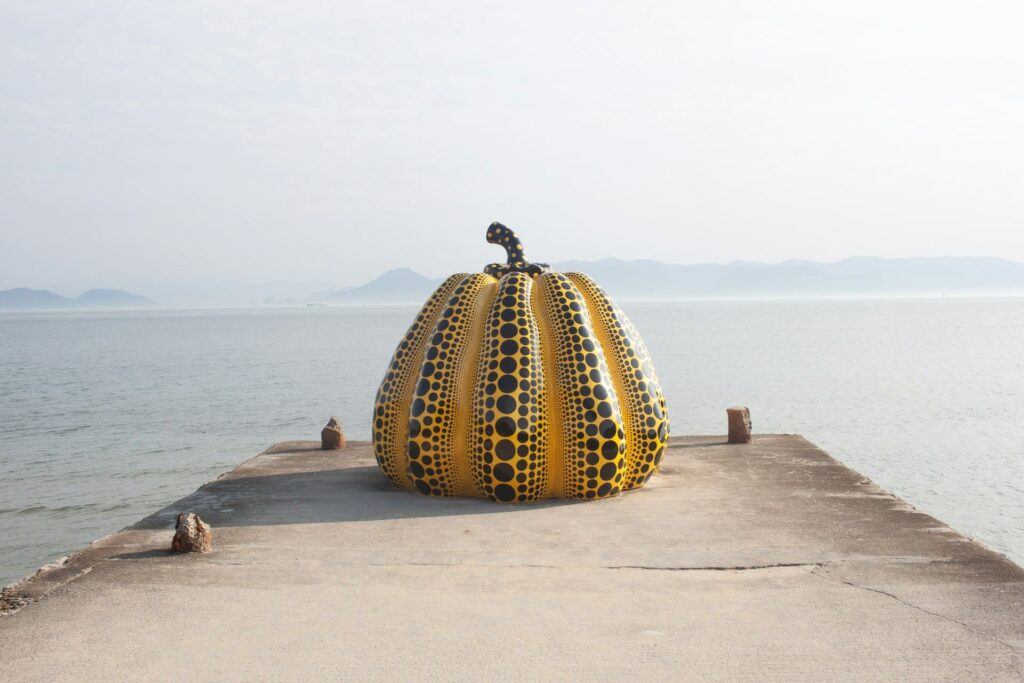
Naoshima is the island that launched a thousand Instagram scrolls—Yayoi Kusama’s yellow pumpkin perched on a pier, Tadao Ando’s concrete masterpieces buried in hillsides, and a bathhouse you can actually soak in. But between the ferry fare, timed-entry tickets, and the nagging question of whether contemporary art on a remote island is your kind of day out, the decision to go is more complicated than the photos suggest.
This guide gives you an honest verdict by traveler type, a realistic budget for a day trip, and the planning shortcuts that save you from showing up to closed doors. If you’re weighing Naoshima against another day in Tokyo or a slower pace in Kyoto, here’s what you need to know.
If your main worry is not the art but the logistics—timed tickets, ferries, island buses, and making the day feel worthwhile—it is worth checking a guided option early. Compare live availability, start times, and recent traveler reviews for this Naoshima private guided tour before you decide whether to DIY the island.
Quick Answer: Is Naoshima Worth It?
Yes, if: You’re drawn to site-specific architecture, enjoy art that asks you to sit still and feel a space rather than look at objects, and you can plan ahead (book tickets, check Monday closures). The island delivers experiences you cannot replicate anywhere else—Monet’s Water Lilies in a room of hand-cut marble tiles, a dark room where your eyes adjust to nothing, and a museum built so low into the ground that it looks like a scoop in the earth from above.
Probably not, if: You have only one day on a Kansai itinerary and the art is a casual curiosity rather than the draw. The time commitment (ferry + bus + queue + timed entry) eats most of a day, and several major venues ban photography entirely. If you prefer interactive, hands-on museums or want a relaxed afternoon strolling, Naoshima can feel like homework.
Who Should Visit Naoshima (And Who Should Give It a Pass)
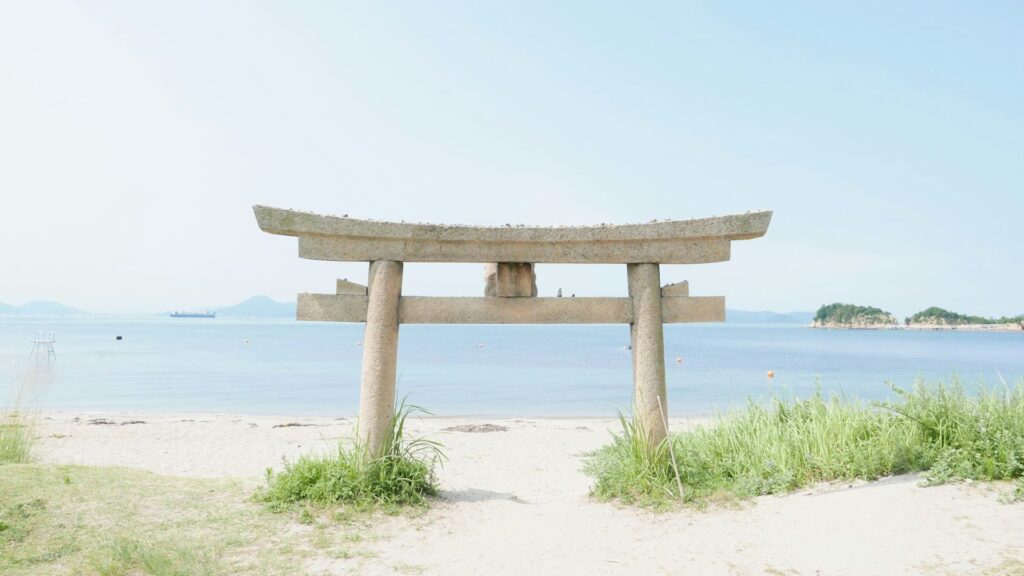
Worth It For
- Tadao Ando architecture enthusiasts: The man has built nine projects on the island, and a tenth—the Naoshima New Museum of Art—opened in May 2025. Nowhere else concentrates this much of his work in one place.
- Contemporary art fans who know their Turrell from their De Maria: The Chichu Art Museum alone houses James Turrell’s Open Sky, Walter De Maria’s Time/Timeless/No Time, and Monet’s Water Lilies in spaces designed by Ando specifically for these works.
- Slow travelers with an overnight stay: If you can book Benesse House (the museum-hotel), you get after-hours access to the galleries and a sunset that feels private. But more on the reality of that cost below.
- Minimalist photographers: Even where photography is banned indoors (Chichu, most of Benesse House Museum), the architecture itself—concrete, light, shadow, sea—is worth a camera.
Probably Skip If
- You’re day-tripping from Kyoto or Osaka with only one free day: Door to door, it takes about 2.5–3 hours each way including the ferry. You’ll see more by spending that day in Nara or Kurashiki.
- You expect hands-on, interactive art: Most experiences here are contemplative, quiet, and photography-free. The Art House Project, especially, asks you to sit in a dark room for ten minutes or walk through an abandoned dental clinic.
- You found one white-walled gallery and thought “”that’s enough””: Naoshima multiplies that experience across a dozen venues. If minimal contemporary art leaves you cold, the logistics will feel like a chore.
- You’re traveling on a strict budget: A day trip covering two museums and basic meals runs about ¥5,000–¥8,000 per person before you even factor in the ferry. It adds up fast.
What First-Time Visitors Get Wrong About Naoshima
The mistake I see most often is treating Naoshima like a casual day out. You can’t just show up at 11 a.m., buy a ticket, and wander. The island has a rhythm—timed slots, Monday closures, a free shuttle that only runs between certain hours—and visitors who ignore it end up spending more time waiting than looking.
Another common surprise: the sheer cost of entry. It’s not the ferry that stings—¥300 from Uno Port is negligible. But Chichu alone costs ¥2,500–¥3,000 depending on the day, and if you add Benesse House Museum (¥1,300), Lee Ufan Museum (¥1,200), and an Art House Project multi-site ticket (¥1,200), you’re looking at over ¥7,000 just in admission. That’s before lunch, coffee at Hifumiyo, and a bath at I♥湯 (¥660).
Recent visitors consistently report that the island rewards advance planning. Those who book Chichu and Minamidera slots before the ferry departs describe a smooth, meditative day. Those who try to wing it often find Chichu sold out and end up seeing outdoor works and the bathhouse—which, to be fair, is still a good day, but not what they came for.
If you fall into that camp—you want Chichu, Benesse, and the Art House Project to make sense, but you do not want the island logistics to dominate the day—this is the one booking I’d push you toward.
Why I’d book this one
- Recent travelers consistently mention that the guide helps them use limited island time better, especially when moving between museums, villages, and ferry connections.
- It is a better fit for visitors who want English context for the art and architecture, not just transport from one ticketed venue to the next.
- The flexible structure matters on Naoshima: you can shape the day around the sites you care about most instead of forcing every museum into one rushed loop.
Check live availability, start times, cancellation terms, and recent traveler reviews for the Naoshima FullDay Private Tour with a government-licensed guide.
How Much Does a Day on Naoshima Actually Cost?
Here’s a realistic budget range for a solo day-tripper from Uno Port ticking the major highlights:
| Item | Cost (JPY) |
|---|---|
| Round-trip ferry (Uno ↔ Miyanoura) | ¥600 |
| Town bus (2–3 rides at ¥100 each) | ¥200–300 |
| Chichu Art Museum (online, weekday) | ¥2,500 |
| Benesse House Museum (online) | ¥1,300 |
| Art House Project Multi-Site Ticket | ¥1,200 |
| Minamidera (separate reservation) | ¥600 |
| Lunch (Aisu Nao or Hifumiyo Coffee) | ¥1,000–1,500 |
| Naoshima Bath “”I♥湯”” | ¥660 |
| Total (moderate day) | ¥8,000–¥9,000 |
If you skip a couple of venues, the total comes down to around ¥4,500–¥5,500. If you add the Naoshima New Museum of Art (¥1,500 online) and Lee Ufan Museum (¥1,200), expect ¥10,000+.
Overnight reality check: Benesse House rooms start around ¥50,000 per night (roughly $330) and go up sharply from there. The Oval, the most exclusive wing, can exceed ¥150,000 ($1,000+). Reservations open months ahead, and as of August 2026, the booking system is transitioning—check the Benesse House site for the latest process. For most travelers, a day trip is the realistic option.
What to See on Naoshima (An Honest Breakdown)
Chichu Art Museum – The Headliner
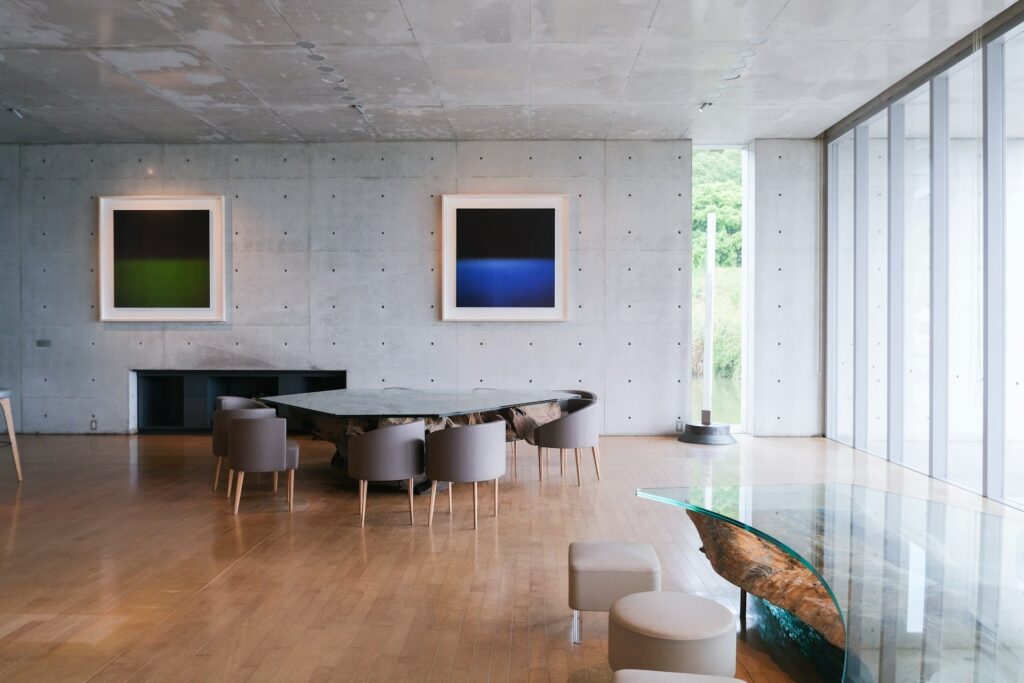
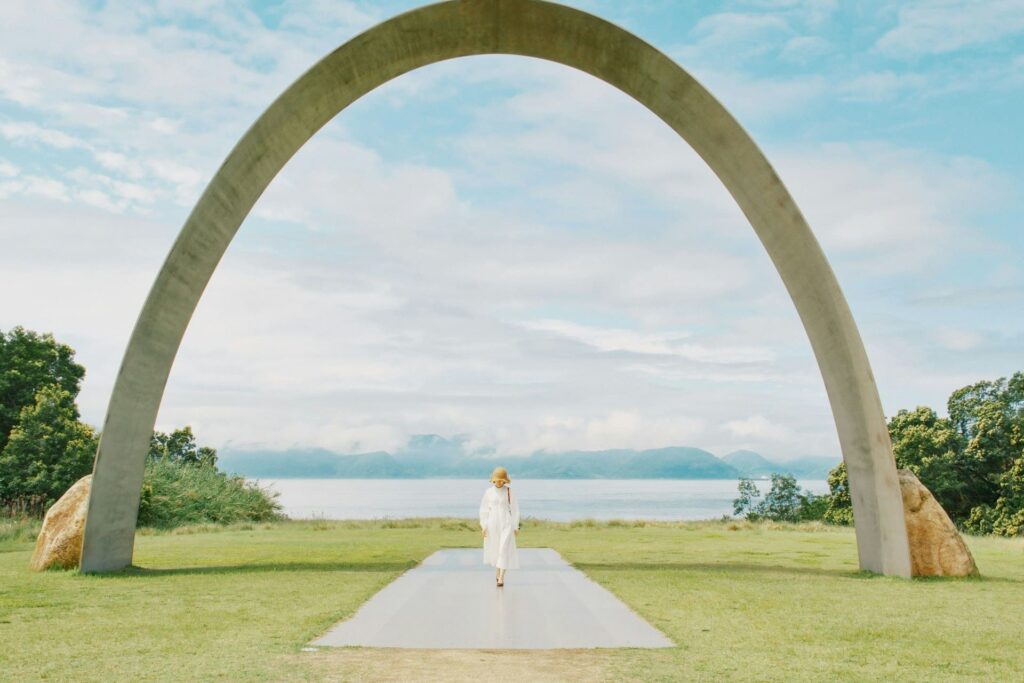
Chichu is the reason most people come to Naoshima, and it delivers. Tadao Ando built it entirely underground—from above, all you see are geometric cuts in the hillside that let in natural light. Inside, three permanent installations were designed specifically for the spaces they occupy: Claude Monet’s Water Lilies in a hall of pale marble tiles, James Turrell’s Open Sky (a room with a ceiling cut open to the sky), and Walter De Maria’s Time/Timeless/No Time—a 30-meter-long chamber with a gold-leafed sculpture and 21 wooden pillars.
The experience is quiet, deliberate, and entirely photography-free. Cameras are banned inside, and you check your bag at a locker before entering. The museum controls the number of visitors per slot, which means you never feel rushed or crowded. Most people spend 60–90 minutes here.
Booking required: Yes, timed-entry only. Book online before your ferry departs—same-day slots sell out, especially on weekends and in autumn.
Naoshima New Museum of Art – The Fresh Face
This is the island’s newest venue, opened in May 2025, and most online guides haven’t caught up yet. It’s Tadao Ando’s tenth project on the island, and it houses works by Takashi Murakami (a massive flat sculpture), Cai Guo-Qiang (gunpowder drawings), and Makoto Aida (a controversial war-themed piece). The building sits on a hill above Honmura, with a cafe terrace that overlooks the Seto Inland Sea.
What surprised me most about the New Museum is how different it feels from Chichu. Chichu is pure Minimalist silence; the New Museum is playful, political, and colorful. If you found Chichu beautiful but cold, this might be the space that clicks for you.
Booking recommended: Online tickets are ¥1,500 (vs ¥1,700 at the door). The cafe alone is worth a stop.
Benesse House Museum & Valley Gallery
The original museum on the island, built in 1992, is part gallery and part hotel. The indoor collection shifts regularly, but the Valley Gallery—a long corridor of outdoor installations set into the hillside—is the real draw. You’ll find works by Hiroshi Sugimoto, Bruce Nauman, and others integrated into the landscape. Photography is allowed outdoors but restricted inside the galleries.
Online ticket: ¥1,300 (cheaper than the ¥1,500 door price).
Art House Project – The Most Polarizing Experience
This is where Naoshima splits its audience. The Art House Project turns abandoned traditional houses in Honmura into site-specific installations by contemporary artists. Some are beautiful; some are baffling. Here’s the honest breakdown:
- Minamidera (James Turrell): You enter a dark room in total blackness. Not dim—zero light. After about five minutes your eyes adjust to… nothing. It’s a meditation on perception, but also a test of patience. Some visitors call it profound; others call it ten minutes of waiting. Reservation required. Children under 5 not admitted.
- Haisha (Shinro Ohtake): An old dental clinic filled with collages, found objects, and layered imagery. It’s chaotic, dense, and deliberately disorienting. If you like walking through someone else’s fever dream, this is for you.
- Kinza (Rei Naito): A tiny wooden structure perched on the Honmura shoreline. One person per slot. The experience lasts exactly as long as it takes to sit, look through a small opening, and notice light on water. Quiet and beautiful.
The multi-site ticket (¥1,200) covers Kadoya, Go’o Shrine, Ishibashi, Gokaisho, and Haisha. Minamidera and Kinza require separate timed-entry reservations.
How to Get to Naoshima (Uno vs. Takamatsu)
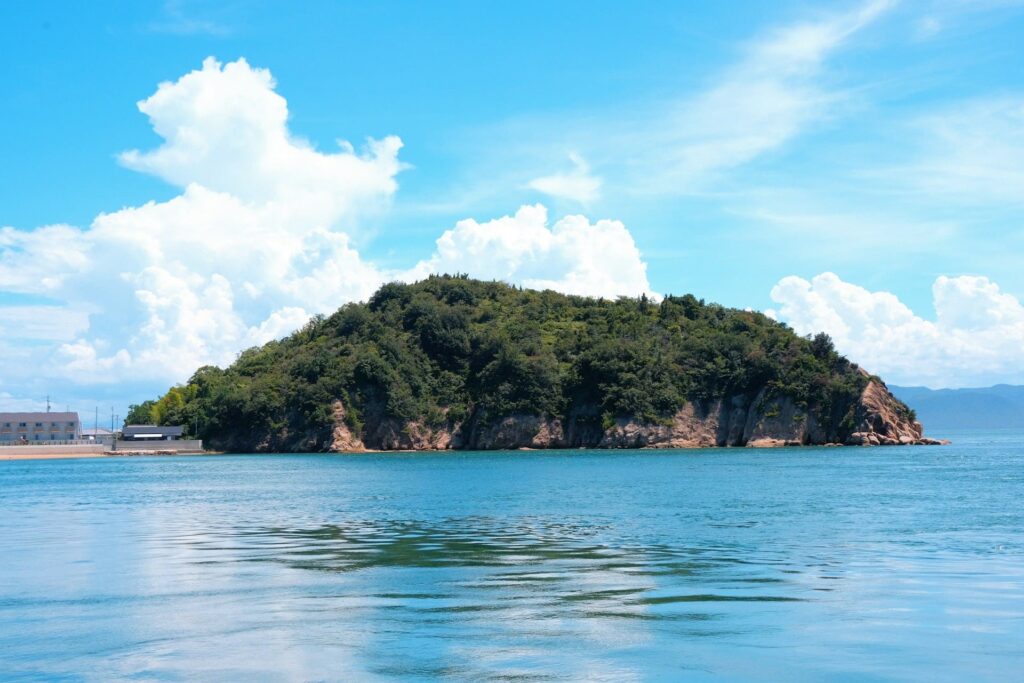
Naoshima has two mainland gateways: Uno Port (Okayama) and Takamatsu Port (Kagawa). Your choice depends on where you’re coming from and how much time you have. For a step-by-step breakdown, check out our comprehensive guide on how to get to Naoshima.
| From Uno Port | From Takamatsu Port | |
|---|---|---|
| Ferry time | ~20 min | ~50 min |
| Ferry cost | ¥300 | ¥1,215 |
| High-speed boat | ~15 min (¥400–500) | ~30 min (¥1,600–1,700) |
| Best for | Travelers coming from Okayama, Kurashiki, or Himeji | Travelers based in Takamatsu or coming from Shikoku |
| Arrives at | Miyanoura Port (main port) | Miyanoura Port |
Uno Port is the cheaper, faster option, but it’s a 15-minute walk from JR Uno Station with limited locker space. Takamatsu has more ferry connections per day and better luggage storage at the port, but the crossing is longer.
Getting Around the Island (The Right Way)
The island has three main transport options: the town bus (¥100 per ride), a free shuttle bus that connects Tsutsuji-so to the Benesse House area and Chichu, and rental bicycles. Each has its role, and the mistake is assuming one works everywhere.
Kai’s tip: The “”cycle around the island”” dream dies when you reach Benesse property. The entire Benesse House campus—where Chichu, Benesse House Museum, Lee Ufan Museum, the Valley Gallery, and the New Museum are clustered—is closed to bicycles. You have to park your bike at Tsutsuji-so and switch to the free shuttle or walk. The most efficient approach is to take the town bus from Miyanoura to Tsutsuji-so (¥100), then use the free shuttle to hop between the Benesse venues. Rent a bike only if you plan to spend time exploring Honmura’s backstreets and the Art House Project houses.
Town bus: Runs between Miyanoura Port, Honmura, Tsutsuji-so, and Chichu. One ride is ¥100—bring small coins. Roughly every 15–30 minutes.
Free shuttle: Runs between Tsutsuji-so, Benesse House Museum, Chichu, and Lee Ufan Museum. No ticket needed. Good for the hill climbs between venues.
On foot: The Benesse cluster is walkable if you’re comfortable with hills. From Tsutsuji-so to Chichu is about a 15-minute uphill walk through a sculpture-dotted path.
What You MUST Book in Advance (And What You Can Wing)
The reservation system is the single biggest source of stress for first-time visitors. Here’s the clear breakdown:
| Venue | Reservation Required? | Notes |
|---|---|---|
| Chichu Art Museum | Yes – timed entry | Book before ferry. Cameras banned. Lockers provided. |
| Minamidera (Art House Project) | Yes – timed entry | Separate ticket from multi-site pass. Ages 5+ only. |
| Kinza (Art House Project) | Yes – timed entry | One person per slot. Only the Art House multi-site ticket holders can book. |
| Hiroshi Sugimoto Gallery | Yes – timed entry | Tea and sweets option available. Closes early. |
| Ring of Fire (Lunar/night) | Yes – timed entry | Only open for evening sessions. |
| Benesse House Museum | Recommended (online) | Online ¥1,300 vs ¥1,500 at door. Walk-in possible if not sold out. |
| Lee Ufan Museum | Recommended (online) | Online ¥1,200 vs ¥1,400 at door. |
| Naoshima New Museum of Art | Recommended (online) | Online ¥1,500 vs ¥1,700 at door. |
| Art House Project Multi-Site | Recommended (online) | Covers 5 houses. Walk-in at Honmura Lounge possible if tickets remain. |
| Outdoor works (Pumpkins, Pavilion) | Not required | Free, 24/7. But subject to seasonal maintenance removal. |
| Naoshima Bath “”I♥湯”” | Not required | ¥660. Closed Mondays. Bring a small towel. |
Kai’s tip: Chichu has three specific rules that catch people out. First, book the earliest slot if you’re on a day trip—around 10:00 a.m.—so you have the rest of the afternoon for Honmura. Second, no cameras permitted inside at all, not even phone photography. Third, bags must go in a coin locker (change available at the counter). If you arrive with luggage from the ferry, store it at Miyanoura Port first—Chichu’s lockers are small. Also worth noting: during winter (typically January–February), Kusama’s Yellow Pumpkin and other outdoor works are removed for maintenance. The island’s most photographed object can simply be gone.
Best Time to Visit + Seasonal Pitfalls
Spring (April–May) and autumn (October–November) are ideal: mild temperatures, clear light, and no rain to complicate the outdoor installations. The Setouchi Triennale (held in 2025, next in 2028) draws huge crowds in these months, but even off-years see steady visitor numbers.
Summer (June–September) is hot and humid. The indoor museums are air-conditioned, but the hillside walks and outdoor works are less pleasant in high heat. Typhoon season peaks in August–September, which can cancel ferries.
Winter (December–February) is the trickiest season. The light is beautiful and crowds are thin, but the trade-offs are significant:
- The Yellow Pumpkin is removed from early January through late February for maintenance.
- The Hiroshi Sugimoto Gallery closes for an extended winter break (e.g., January 13–February 28 in 2026).
- Benesse House Museum and some other venues may close for maintenance in mid-January (e.g., January 13–19 in 2026).
- Ferries run on a reduced winter schedule—fewer departures, earlier final return times.
If you’re planning a winter visit, run your intended dates through the Benesse Art Site official calendar before booking anything else, and read our complete season-by-season guide to visiting Naoshima.
Kai’s tip: The single biggest trip-ruiner on Naoshima is a Monday. Most Benesse-managed venues—Chichu, Benesse House Museum, Lee Ufan Museum, the Art House Project houses, and the Sugimoto Gallery—close on Mondays (or Tuesday if Monday is a national holiday). The Naoshima Bath “”I♥湯”” also closes Monday. If you arrive on a Monday, you can see the outdoor pumpkins and the New Museum of Art (which is open seven days a week), but the island’s core indoor experiences will be locked. Check the calendar before you book your ferry.
Sample One-Day Itinerary (from Uno Port)
This assumes you book Chichu for the earliest available slot (around 10:00 a.m.) and the Minamidera reservation for late afternoon. For more in-depth pacing and transport tips, see our full Naoshima one-day itinerary.
- 8:00 a.m. – Depart for Uno Station. Park at the coin lot near the port if driving, or walk 15 minutes from JR Uno Station.
- 8:30 a.m. – Ferry from Uno to Miyanoura Port. Arrive by 9:00 a.m.
- 9:00–9:30 a.m. – See the Red Pumpkin at Miyanoura Port. Town bus to Tsutsuji-so (¥100).
- 9:30–10:00 a.m. – Free shuttle up the hill to Chichu. Arrive early for your timed slot.
- 10:00–11:30 a.m. – Chichu Art Museum. Lockers out. No photos.
- 11:30 a.m.–12:30 p.m. – Walk downhill through the Valley Gallery outdoor installations to Benesse House Museum.
- 12:30–1:30 p.m. – Lunch at Benesse House Museum cafe or take the free shuttle back toward Honmura for Aisu Nao (genmai set meal) or Hifumiyo Coffee (sandwiches and excellent coffee).
- 1:30–3:00 p.m. – Art House Project in Honmura. If you booked Minamidera or Kinza, slot this here. The multi-site houses (Haisha, Kadoya, etc.) are walkable in 45–60 minutes.
- 3:00–4:00 p.m. – Naoshima New Museum of Art on the hill above Honmura. Cafe terrace for the view.
- 4:00–4:30 p.m. – Town bus back to Miyanoura Port. See the Yellow Pumpkin on the beach (weather permitting—it’s removed in winter).
- 4:30–5:00 p.m. – Naoshima Bath “”I♥湯”” for a soak before the ferry, or head straight to the port.
- ~5:00–5:30 p.m. – Ferry back to Uno. Check the final departure time—it varies by season.
Frequently Asked Questions
Can I see both the Yellow and Red Pumpkin in one day?
Yes. The giant Red Pumpkin sits at Miyanoura Port, where your ferry arrives. The Yellow Pumpkin is on a small beach near Honmura, about a 10-minute town bus ride or 25-minute walk along the coast. Both are outdoors, free, and accessible 24/7—but the Yellow Pumpkin is typically removed for maintenance from early January through late February each year. If you’re visiting in winter, adjust your expectations accordingly.
What if Chichu Art Museum is sold out on my day?
It’s disappointing, but not a trip-wrecker. The Naoshima New Museum of Art (opened 2025) offers a completely different—and equally strong—experience with works by Murakami and Cai Guo-Qiang. Benesse House Museum and the outdoor Valley Gallery are also walk-in friendly. The Art House Project houses in Honmura (many with advance tickets still available) and a soak at I♥湯 make a full day even without Chichu. Book Chichu as early as possible, but don’t cancel the trip if it’s full.
Is Naoshima better than Teshima?
They’re different. Naoshima has more venues—multiple museums, the Art House Project, outdoor installations—and a full day of structured looking. Teshima has one knockout building (the Teshima Art Museum by Ryue Nishizawa, a single, breathtaking water-lit space) and a much quieter, rural atmosphere. If you have only one day for the art islands, pick Naoshima for variety and logistics; pick Teshima for a single, meditative experience. If you have two days, do both. For a deeper dive into the differences, see our detailed comparison of Naoshima vs. Teshima.
Can I bring a large suitcase to Naoshima?
You can, but I’d advise against it. The town bus has limited luggage space, Chichu’s lockers are sized for daypacks, and the Benesse-area paths involve stairs and gravel. Coin lockers at Miyanoura Port hold larger bags (¥300–500), but they fill up by mid-morning. Best plan: leave your main luggage at a coin locker at Uno Station or Takamatsu Station, and bring only a daypack to the island.
Is English signage good on Naoshima?
Excellent at the main museums. Chichu, Benesse House Museum, and the New Museum all have English descriptions for every work. The Art House Project is more mixed—some houses (like Haisha) rely heavily on the sensory experience with little English text. I recommend downloading the official Benesse Art Site app, which has English audio guides for most venues. The ferry terminal staff and museum counters also speak enough English to handle ticketing and directions.
How early should I book Chichu and Minamidera tickets?
As soon as your travel dates are firm. Chichu tickets open one month in advance on the official site and sell out 3–7 days ahead during peak seasons (April–May, October–November, and holidays). Minamidera is slightly easier but still books up on weekends. Book both on the Benesse Art Site’s online portal—it accepts foreign credit cards without issues.
What happens if I miss the last ferry back to the mainland?
You’re staying overnight. Naoshima has a handful of guesthouses and minshuku (family-run inns), but they also book up fast. The last ferry from Miyanoura to Uno typically departs between 5:00 p.m. and 8:30 p.m. depending on the season; to Takamatsu, it’s between 4:30 p.m. and 7:00 p.m. Check the current schedule at the port information desk when you arrive—it’s posted in English. If you’re day-tripping, set a phone alarm for 90 minutes before the last departure to ensure you’re not stranded at Honmura when the bus stops running.
Final Verdict: Who Should Go—and Who Should Choose Something Else
Choose Naoshima if…
- You’re a first-time visitor to Japan who has already seen the major cities and wants something that feels local, specific, and unrepeatable. Naoshima is the kind of place you’ll recommend to friends who like travel, not just tourism.
- You’re a Tadao Ando fan and want to see a decade-spanning body of work—from the 1992 Benesse House Museum to the 2025 New Museum—woven into one island landscape.
- You have an extra day in the Okayama / Takamatsu area and can afford a slow, logistics-heavy outing. The island rewards patience and planning.
- You’re looking for a quiet, contemplative travel experience that isn’t about crowds, shopping, or nightlife. Naoshima is art as meditation.
Pass on Naoshima if…
- You have only one day in the Kansai region and must choose between Naoshima and, say, Himeji Castle, Kurashiki’s canal district, or a full day in Kyoto’s northern temples. Those options require less travel logistics and deliver more immediate reward.
- You’re traveling with children under 10 who don’t yet have the patience for silent, photography-free galleries. The Art House Project has age restrictions (Minamidera: 5+), and most experiences ask kids to be still and quiet. The outdoor pumpkins and the bathhouse are fun, but the island is not designed for family entertainment.
- You associate “”art island”” with interactive, Instagram-friendly installations and found white-cube galleries boring in the past. Naoshima is serious, quiet, and demands your attention on its own terms.
- You’re on a shoestring budget and the ¥8,000+ day feels like a poor trade against a free temple garden and a ¥700 bowl of udon. There’s nothing wrong with admitting this island isn’t for you.
What I’d tell a friend visiting Japan for the first time: If you have even a mild interest in architecture or contemporary art—and you can deal with a ferry schedule—Naoshima is the day trip that will linger in your memory long after the temples and torii gates blur together. The dark room at Minamidera, the weight of Monet’s water lilies in a marble hall, the yellow pumpkin glowing against a grey sea… these are experiences no guidebook photo can prepare you for. But if your gut says “”not my thing,”” trust it. Naoshima is not a box to check. It’s a choice.

Hi, I’m Kai. I’m a Tokyo-based travel writer, tourism industry insider, and the author of a published guidebook for international visitors to Japan. With over 10 years of professional experience at a leading Japanese tourism company, my mission is to help you skip the tourist traps and navigate Japan’s best destinations like a local. I believe the perfect day trip is like a traditional kaiseki meal: a beautiful balance of precise planning and unforgettable seasonal discovery. When I’m not out conducting field research, you’ll usually find me drafting new itineraries with one of my favorite fountain pens!