
If you are planning a trip from Tokyo to Kanazawa, the fastest and most convenient option is the Hokuriku Shinkansen. The direct train takes about 2.5 to 3 hours and usually costs around ¥14,000 to ¥15,000 for an ordinary one-way ticket, depending on seat type and booking conditions.
If saving money is your priority, a highway bus can be much cheaper, with some fares starting from around ¥3,500 on selected dates. The trade-off is time: the bus usually takes about 8 to 10 hours.
This guide compares the main ways to get from Tokyo to Kanazawa by travel time, cost, comfort, JR Pass coverage, and ease of use. It also explains the current routes from Osaka and Kyoto after the Hokuriku Shinkansen extension to Tsuruga.
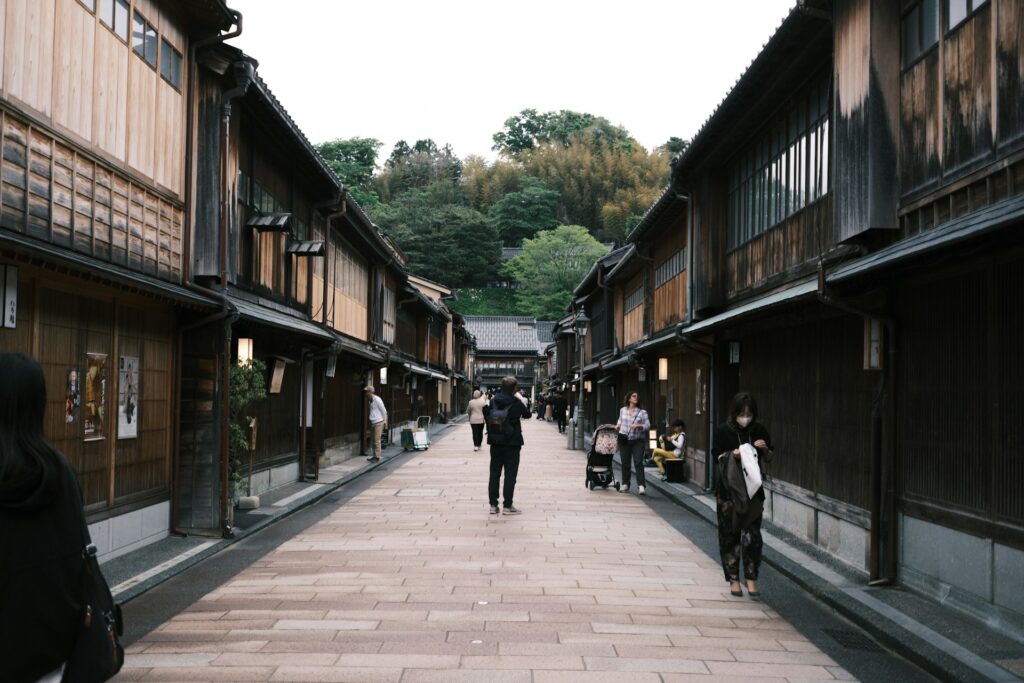
Quick Answer: Best Ways to Get from Tokyo to Kanazawa
- Best overall: Take the Hokuriku Shinkansen from Tokyo Station to Kanazawa Station.
- Fastest train: The Kagayaki service takes about 2 hours 25 minutes on the fastest schedules and requires a seat reservation.
- Most flexible train: The Hakutaka service is slower, usually around 3 hours, but offers more departure options and some non-reserved seating.
- Cheapest option: Take a highway bus, especially an overnight bus, if budget matters more than comfort or speed.
- Best with a Japan Rail Pass: Use the Hokuriku Shinkansen. Ordinary reserved seats are covered on this route.
- From Osaka or Kyoto: Take the Thunderbird Limited Express to Tsuruga, then transfer to the Hokuriku Shinkansen for Kanazawa.
- Day trip possible? Yes, but an overnight stay is usually better if you want to enjoy Kanazawa at a relaxed pace.
If you are deciding between individual train tickets and a rail pass, compare your full Japan itinerary before booking. A pass can make sense for multi-city trips, but it is usually not worth buying only for a Tokyo to Kanazawa round trip.
👉 Check current Japan Rail Pass prices and options
Tokyo to Kanazawa at a Glance
| Option | Typical Travel Time | Typical One-Way Cost | Transfers | JR Pass? | Best For |
|---|---|---|---|---|---|
| Kagayaki Shinkansen | About 2h 25min to 2h 30min | Around ¥14,500+ for ordinary reserved seat | None | Yes | Speed, day trips, tight schedules |
| Hakutaka Shinkansen | About 2h 55min to 3h 10min | Around ¥14,000+ for ordinary non-reserved / reserved seats | None | Yes | Flexible departures, easier availability |
| Highway Bus | About 8 to 10 hours | From around ¥3,500 on some dates; often higher | None | No | Budget travelers, overnight savings |
| Flight via Komatsu Airport | Usually 3 hours or more door to door | Varies widely by airfare, plus airport bus | Airport bus required | No | Only useful in specific flight-based itineraries |
Fares and travel times are planning estimates checked for 2026-style travel. Actual prices vary by date, season, seat type, operator, and booking channel. Always confirm the latest schedule and fare before buying tickets.
Option 1: Hokuriku Shinkansen — Best Overall
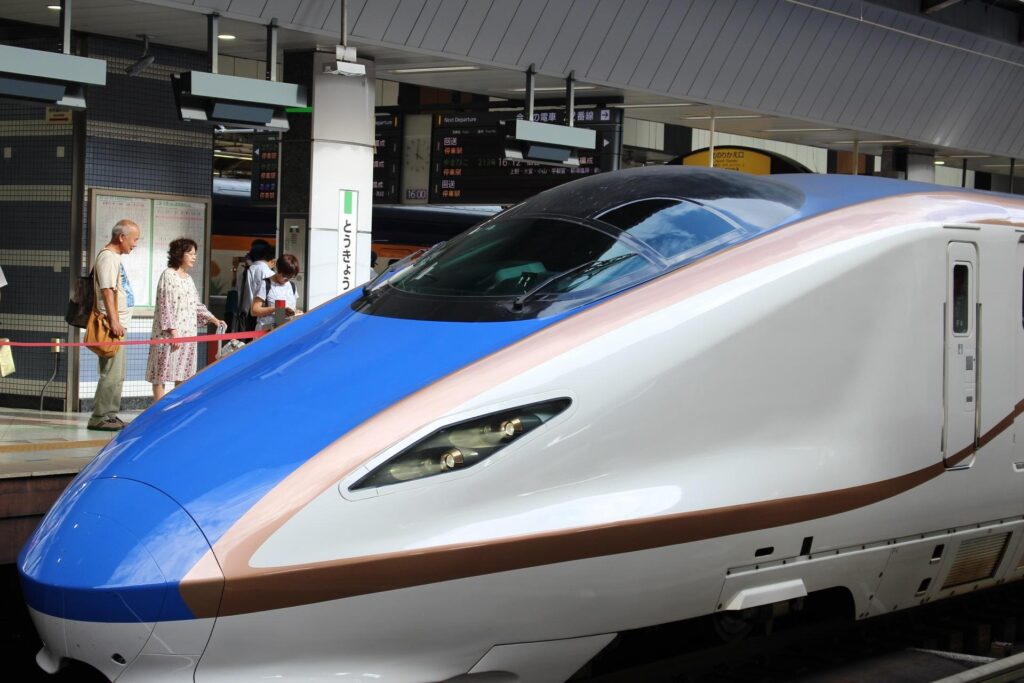
For most travelers, the Hokuriku Shinkansen is the best way to travel from Tokyo to Kanazawa. It runs directly from Tokyo Station to Kanazawa Station, so you do not need to change trains, use airport transfers, or spend most of the day on the road.
The train is more expensive than the bus, but it saves a huge amount of time. If you are visiting Kanazawa for only one or two days, the Shinkansen is usually worth the extra cost.
Kagayaki vs Hakutaka: Which Shinkansen Should You Take?
| Kagayaki | Hakutaka | |
|---|---|---|
| Speed | Fastest, about 2h 25min on the quickest services | Slower, usually around 3 hours |
| Stops | Fewer stops | More stops, including smaller stations |
| Seat reservation | All seats reserved | Reserved seats plus some non-reserved seating |
| Flexibility | Best if you can book a specific train | Better if your departure time is less fixed |
| Best for | Day trips, business travel, short stays | Flexible itineraries, families, fallback option when Kagayaki is full |
Choose Kagayaki if you want the fastest route and are happy to reserve a seat in advance. Choose Hakutaka if you want more flexibility or if the fastest trains are fully booked.
Hakutaka services usually include non-reserved seating, but the exact car numbers can vary by train and timetable. Check the latest train layout when booking or ask at the JR ticket office before boarding.
Seat Classes and Approximate Fares
| Seat Type | Approximate Tokyo to Kanazawa Fare | Notes |
|---|---|---|
| Ordinary non-reserved | Around ¥14,000+ | Available on Hakutaka services. Seats are first-come, first-served. |
| Ordinary reserved | Around ¥14,500+ | Recommended for most travelers. Required on Kagayaki. |
| Green Car | Around ¥21,000+ | More space and a quieter ride. Green JR Pass holders can use Green Car seats on covered services. |
| Gran Class | Usually significantly higher than Green Car | Available on some Hokuriku Shinkansen services. Service details and inclusions vary, so check when booking. |
These are practical planning ranges, not guaranteed fares. Shinkansen prices can change slightly by season, seat type, reservation status, and future fare revisions.
First and Last Train / Frequency
The Hokuriku Shinkansen runs from early morning until evening, with frequent daytime departures between Tokyo and Kanazawa. On some schedules, early morning Kagayaki services can get you to Kanazawa before 9:00 AM, making a same-day visit possible.
Do not rely on a fixed train time from an old blog post. Before your travel date, check the latest schedule on the JR West route and fare search, JR-EAST Train Reservation, or another current timetable service.
How to Book Shinkansen Tickets
- Online: Use official JR booking services where available, or a reliable ticket platform that supports your route and language.
- At the station: Buy tickets from JR ticket machines or the Midori-no-Madoguchi ticket office at major stations such as Tokyo Station or Ueno Station.
- With a Japan Rail Pass: Reserve an ordinary seat at a JR ticket office, reserved seat machine, or eligible online reservation system. Kagayaki requires a reserved seat.
If you are traveling during cherry blossom season, Golden Week, Obon, autumn foliage season, New Year, or a long weekend, reserve seats as early as your booking method allows.
Option 2: Highway Bus — Cheapest Option
If your priority is keeping costs low, a highway bus is usually the cheapest way to travel from Tokyo to Kanazawa. The journey normally takes about 8 to 10 hours, so it is much slower than the Shinkansen.
Overnight buses are popular because they can save one night of accommodation. This can make the bus attractive for solo travelers or backpackers, but it is less comfortable if you are traveling with children, large luggage, or a tight schedule after arrival.
Typical Bus Fare and Operators
| Operator / Booking Site | Typical Tokyo Departure Area | Fare Notes | Best For |
|---|---|---|---|
| Willer Express | Often Shinjuku or other major bus terminals | Some fares start from around ¥3,500 on selected dates; prices rise by seat type and season | English booking, budget and overnight options |
| JR Bus / highway bus networks | Often Tokyo Station, Ueno, or major terminals depending on service | Fares vary by route, date, and seat type | Travelers who prefer established bus operators |
| Third-party booking sites | Varies by operator | Useful for comparing availability, but always check conditions carefully | Comparing multiple bus options |
Bus fares fluctuate heavily by day of week, booking timing, holidays, and seat type. Treat any fare as a current search result, not a fixed year-round price.
Day Bus vs Overnight Bus
- Overnight bus: Best if you want to save money and do not mind sleeping on the bus. You may arrive early in the morning before attractions open.
- Daytime bus: Easier on travelers who dislike overnight rides, but it uses most of a travel day.
Where to Board in Tokyo
- Shinjuku Expressway Bus Terminal: A common departure point for many highway buses.
- Tokyo Station area: Useful if you are staying near Tokyo Station, Nihonbashi, Ginza, or Marunouchi.
- Ueno area: Convenient for some travelers staying in northern or eastern Tokyo.
Check bus availability on Willer Express, Kousokubus.net, or 12Go.
Option 3: Flying to Komatsu Airport — Usually Not Worth It
You can fly from Tokyo to Komatsu Airport, then take an airport bus to Kanazawa. The flight itself is short, but the total door-to-door journey is usually not faster than the Shinkansen once you include travel to the airport, check-in time, baggage, and the bus from Komatsu Airport to Kanazawa.
The Komatsu Airport to Kanazawa Station airport bus takes around 40 minutes, depending on traffic and stop pattern. The fare to central Kanazawa is around ¥1,300 as of June 2026, but you should check the latest bus information before travel.
For most travelers, flying is not the best choice for Tokyo to Kanazawa. Consider it only if you have a specific reason, such as a flight connection, airline miles, or a wider itinerary involving Komatsu Airport.
Does the Japan Rail Pass Cover Tokyo to Kanazawa?
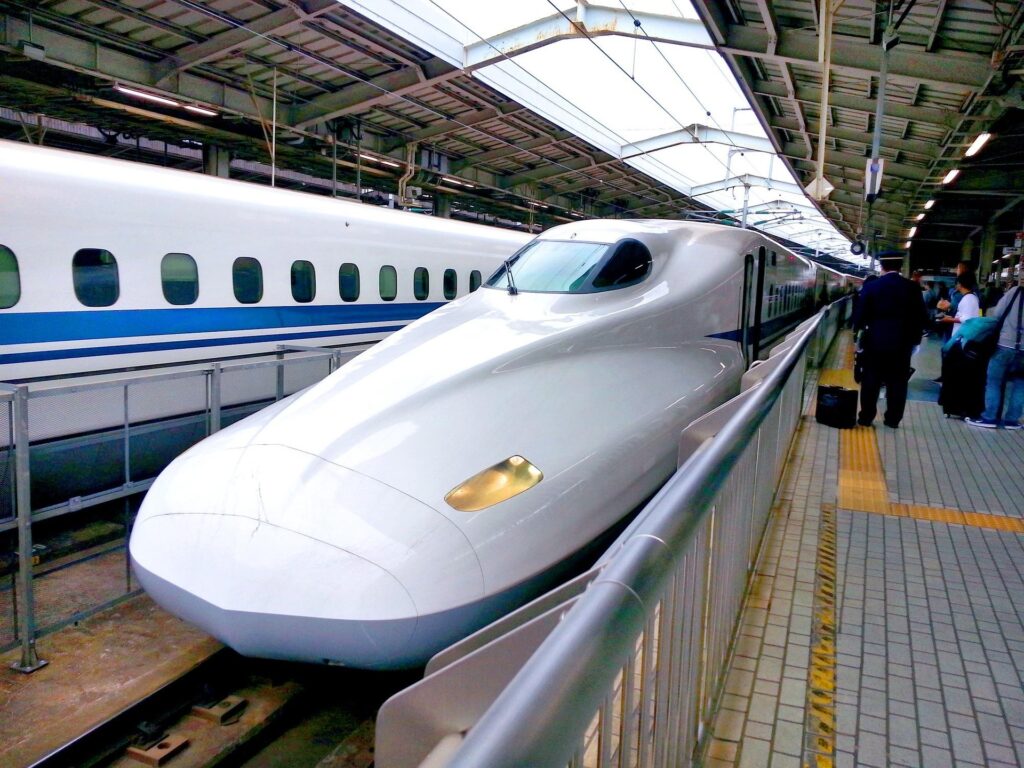
Yes. The nationwide Japan Rail Pass covers the Hokuriku Shinkansen between Tokyo and Kanazawa, including both Kagayaki and Hakutaka services.
For ordinary JR Pass holders, ordinary reserved seats are included on covered services. Green Car seats are covered if you have a Green JR Pass. Gran Class is not covered in the same simple way, so expect extra charges if you want that seat class.
Is the JR Pass Worth It Just for Tokyo to Kanazawa?
Usually, no. A Tokyo to Kanazawa round trip by ordinary Shinkansen is roughly around the high-¥20,000 range, while a 7-day nationwide Japan Rail Pass costs ¥50,000 for Ordinary Class as of June 2026.
The JR Pass may be worth checking if Kanazawa is part of a larger route, such as Tokyo → Kanazawa → Kyoto/Osaka → Hiroshima → Tokyo. If you are only doing Tokyo → Kanazawa → Tokyo, individual tickets are usually cheaper.
Other Rail Pass Options Worth Checking
- Hokuriku Arch Pass: A 7-day pass that can be useful if your route connects Tokyo, Kanazawa, and Osaka/Kyoto via the Hokuriku route. The adult price is ¥35,000 as of June 2026. It does not cover the faster Tokaido Shinkansen route between Tokyo and Kyoto/Osaka.
- Kansai-Hokuriku Area Pass: Better suited to travelers starting from Osaka, Kyoto, or elsewhere in Kansai who plan to visit Kanazawa and nearby Hokuriku destinations.
Before buying any pass, compare the pass price against the exact long-distance train rides in your itinerary. A rail pass is only good value when it saves money or adds enough convenience to justify the cost.
👉 Compare current Japan Rail Pass options before booking
How to Get to Kanazawa from Osaka and Kyoto
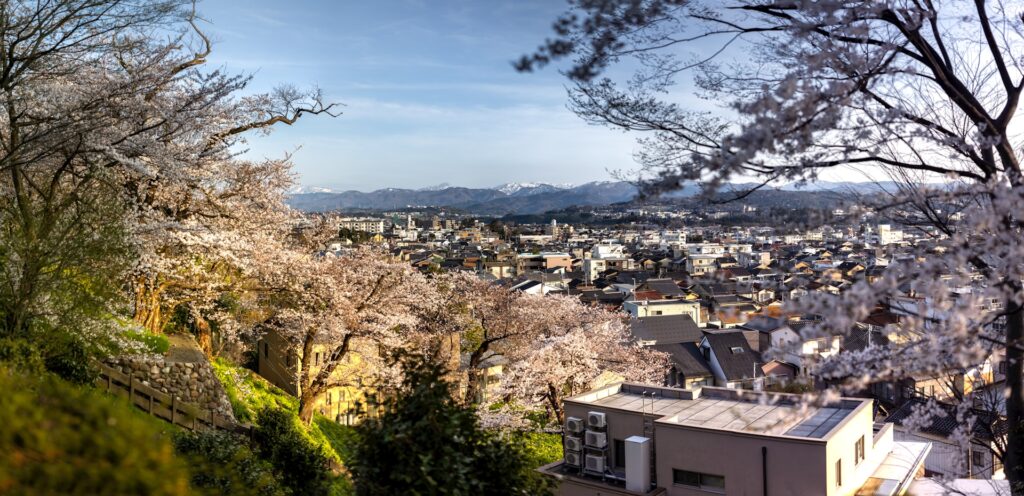
If you are coming from Kansai, getting to Kanazawa is still straightforward, but it is no longer the old direct Thunderbird ride all the way to Kanazawa. After the Hokuriku Shinkansen extension to Tsuruga, the standard train route is:
- Take the Thunderbird Limited Express from Osaka Station or Kyoto Station to Tsuruga Station.
- Transfer at Tsuruga to the Hokuriku Shinkansen bound for Kanazawa.
The transfer at Tsuruga is designed for this connection and is clearly signposted. You normally stay within the station, but you should still allow enough time to follow signs, move with luggage, and find your platform.
Osaka / Kyoto to Kanazawa by Train
| Route | Typical Travel Time | Typical One-Way Fare | Transfer | JR Pass Coverage |
|---|---|---|---|---|
| Osaka to Kanazawa | About 2h 10min to 2h 30min | Around ¥8,000 to ¥10,000 | Tsuruga | Yes, with nationwide JR Pass |
| Kyoto to Kanazawa | About 1h 45min to 2h | Around ¥7,500 to ¥8,500 | Tsuruga | Yes, with nationwide JR Pass |
These are approximate standard planning fares. Discount tickets and limited-time products may be available, so check current JR pricing before booking.
Highway Bus from Osaka and Kyoto to Kanazawa
Because Osaka and Kyoto are closer to Kanazawa than Tokyo is, the bus is a more realistic daytime option from Kansai. It is slower than the train but can be cheaper and may avoid the Tsuruga transfer.
- From Osaka: Usually about 5 to 6 hours
- From Kyoto: Usually about 4 to 5 hours
- Typical fares: Often from around ¥2,500 to ¥5,000 on selected dates, with higher prices during busy periods
Choose the train if you want the fastest and easiest route, especially with a JR Pass. Choose the bus if you want a cheaper direct ride and your schedule is flexible.
Which Option Should You Choose? By Traveler Type
| Traveler Type | Best Option | Why |
|---|---|---|
| First-time visitor | Hokuriku Shinkansen | Direct, fast, simple, and easy to understand. |
| Tokyo day-tripper | Kagayaki Shinkansen | The fastest services give you the most sightseeing time in Kanazawa. |
| Budget solo traveler | Overnight highway bus | Can save around ¥10,000 or more compared with the train, depending on date and fare. |
| Family with kids | Reserved Shinkansen seat | Shorter ride, bathrooms onboard, less fatigue, and easier timing. |
| JR Pass holder | Hokuriku Shinkansen | The route is covered, and ordinary reserved seats are included. |
| Traveler with large luggage | Reserved Shinkansen seat or luggage delivery | More predictable than a bus. Consider luggage delivery if bags are bulky. |
| From Osaka or Kyoto without a pass | Train for speed, bus for savings | The train is much faster, but the bus can be cheaper and direct. |
Quick Decision Guide
- Want the easiest answer? Take the Hokuriku Shinkansen.
- Want the fastest trip? Book Kagayaki if seats are available.
- Want a little more flexibility? Take Hakutaka.
- Want the lowest price? Compare overnight highway buses.
- Already have a JR Pass? Use the Shinkansen and reserve your seat.
- Coming from Osaka or Kyoto? Use Thunderbird + Hokuriku Shinkansen, or take the bus if saving money matters more than speed.
Arrived in Kanazawa? How to Make the Most of Your Time
Kanazawa is compact compared with Tokyo or Osaka, but its main sights are spread across different parts of the city. Higashi Chaya District, Kenrokuen Garden, Omicho Market, Nagamachi Samurai District, and the 21st Century Museum of Contemporary Art are all manageable, but moving between them still takes planning.
If you are arriving after a long train or overnight bus ride, it helps to have a clear route before you leave Kanazawa Station. For a self-guided visit, use a structured Kanazawa day trip itinerary to avoid backtracking.
Self-Guided vs Private Local Guide
- Self-guided: Best for budget travelers who are comfortable using buses, maps, and walking routes.
- Private local guide: A practical upgrade if you are short on time, traveling with family, arriving tired, or want a more personalized introduction to the city.
A guide will not remove all walking or guarantee perfect weather, but it can reduce planning stress and help you focus on the parts of Kanazawa that interest you most.
👉 Check current availability, inclusions, and prices for a Kanazawa private walking tour with a local
Frequently Asked Questions
Is there a direct train from Tokyo to Kanazawa?
Yes. The Hokuriku Shinkansen runs directly from Tokyo Station to Kanazawa Station with no transfer required.
How long does the Shinkansen take from Tokyo to Kanazawa?
The fastest Kagayaki services take about 2 hours 25 minutes. Hakutaka services usually take closer to 3 hours because they stop at more stations.
How much does Tokyo to Kanazawa cost by Shinkansen?
An ordinary one-way ticket usually costs around ¥14,000 to ¥15,000, depending on seat type and booking conditions. Green Car and Gran Class cost more.
Is Kagayaki or Hakutaka better?
Kagayaki is better if you want the fastest journey and can reserve a seat. Hakutaka is better if you want more flexibility, more departure choices, or access to non-reserved seating on some services.
Do I need to reserve a seat?
You must reserve a seat if you take Kagayaki because all seats are reserved. For Hakutaka, non-reserved seating is usually available, but a reserved seat is still recommended during weekends, holidays, and busy travel seasons.
Does the Japan Rail Pass cover Kagayaki to Kanazawa?
Yes. The nationwide Japan Rail Pass covers Kagayaki and Hakutaka on the Hokuriku Shinkansen between Tokyo and Kanazawa. Ordinary reserved seats are included for Ordinary Pass holders.
Can you visit Kanazawa as a day trip from Tokyo?
Yes, it is possible. The Shinkansen is fast enough for a same-day visit if you leave early and return in the evening. However, Kanazawa has enough to fill at least one full day, so staying overnight is usually more enjoyable.
Is the highway bus worth it?
Yes, if saving money is more important than comfort or speed. From Tokyo, the bus takes 8 to 10 hours, so it works best as an overnight option. From Osaka or Kyoto, the bus is shorter and can be a more realistic daytime budget choice.
Is flying from Tokyo to Kanazawa worth it?
Usually not. Flying to Komatsu Airport may look fast on paper, but once you include airport access, check-in, baggage, and the bus to Kanazawa, it is rarely more convenient than the Shinkansen.
Is there still a direct train from Osaka or Kyoto to Kanazawa?
No. The old direct Thunderbird route no longer runs all the way to Kanazawa. You now take the Thunderbird Limited Express to Tsuruga and transfer to the Hokuriku Shinkansen for Kanazawa.
What about luggage on the Hokuriku Shinkansen?
Unlike the Tokaido, Sanyo, Kyushu, and West Kyushu Shinkansen lines, the Hokuriku Shinkansen does not require a special oversized luggage reservation. Standard suitcases usually fit on overhead racks, but very large bags can still be inconvenient during busy periods. If you have bulky luggage, consider reserving seats, boarding early, or using luggage delivery.
Which Tokyo station should I use?
Tokyo Station is the easiest choice for most travelers because it has frequent Hokuriku Shinkansen departures and good connections. Ueno Station may be more convenient if you are staying in northern or eastern Tokyo. For highway buses, common departure areas include Shinjuku, Tokyo Station, and Ueno, depending on the operator.
Is Kanazawa worth visiting in winter or rainy weather?
Yes. Kanazawa can be beautiful in winter, especially Kenrokuen Garden in snow, but weather can affect walking comfort and transport timing. Rain is also common, so pack accordingly and keep some indoor options such as Omicho Market or museums in your plan.
Final Verdict
Choose the Hokuriku Shinkansen if…
You want the fastest, easiest, and most reliable way to travel from Tokyo to Kanazawa. This is the best choice for most first-time visitors.
Choose Kagayaki if…
You are on a tight schedule, planning a day trip, or want to maximize your time in Kanazawa. Reserve your seat in advance.
Choose Hakutaka if…
You want more flexibility, are traveling with children, or prefer having more departure options.
Choose the highway bus if…
You are a budget traveler, do not mind a long ride, and want to save money on transportation or accommodation by taking an overnight bus.
Choose the train from Osaka or Kyoto if…
You want the fastest Kansai to Kanazawa route and do not mind transferring at Tsuruga.
Choose the bus from Osaka or Kyoto if…
You want a cheaper direct ride and your schedule is flexible enough for a slower journey.
Already have a Japan Rail Pass?
Take the Hokuriku Shinkansen and reserve your seat. For a larger Japan itinerary, this is one of the easiest and most comfortable ways to reach Kanazawa.
Prices, opening hours, transport schedules, pass conditions, seat rules, tour inclusions, payment methods, and seasonal operations can change. Always check official sources and your selected booking page before finalizing your trip.

Hi, I’m Kai. I’m a Tokyo-based travel writer, tourism industry insider, and the author of a published guidebook for international visitors to Japan. With over 10 years of professional experience at a leading Japanese tourism company, my mission is to help you skip the tourist traps and navigate Japan’s best destinations like a local. I believe the perfect day trip is like a traditional kaiseki meal: a beautiful balance of precise planning and unforgettable seasonal discovery. When I’m not out conducting field research, you’ll usually find me drafting new itineraries with one of my favorite fountain pens!